-
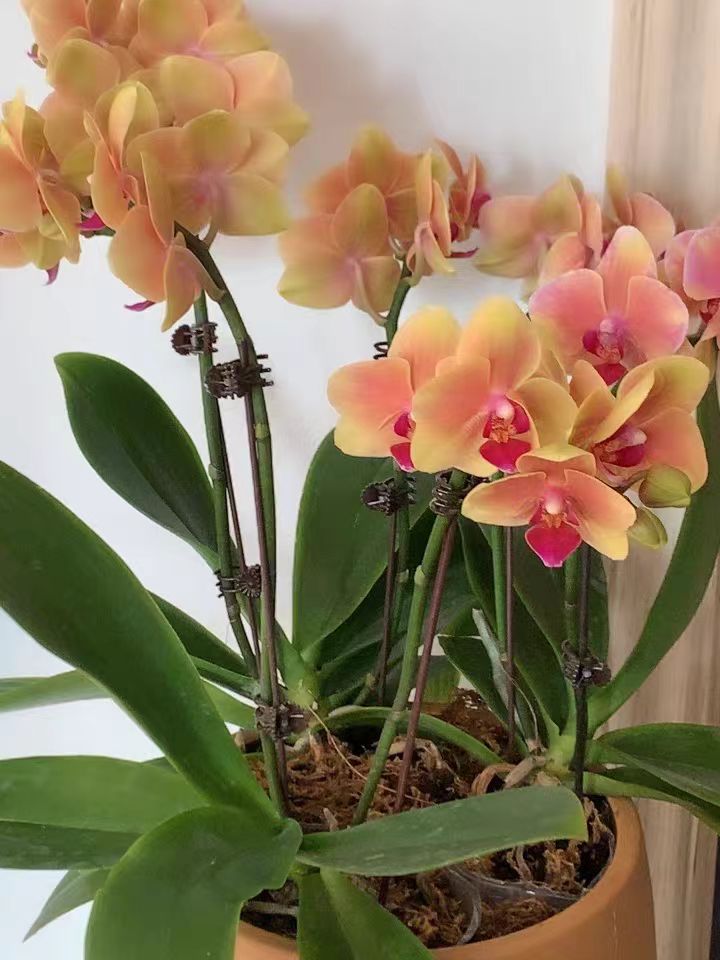
Should the roots of phalaenopsis orchids be buried?
Phalaenopsis orchids, an elegant and charming orchid variety, are deeply loved by flower enthusiasts for their unique growth habits and beautiful flowers.
-

Should Phalaenopsis roots be left exposed or buried?
Phalaenopsis, this elegant and charming orchid variety, is deeply loved by flower enthusiasts for its unique growth habits and beautiful flowers. When growing Phalaenopsis, a question often arises: should the roots of Phalaenopsis be left exposed? Do the roots need to be buried? First, we need to understand the root system characteristics of Phalaenopsis.
-

Are Phalaenopsis Orchid Flower Buds Green? Analyzing the Difference Between Flower Buds and Root Buds
When caring for Phalaenopsis orchids, understanding their growth characteristics, especially the difference between flower buds and root buds, is crucial for promoting healthy plant growth and blooming. Understanding these differences helps us better care for Phalaenopsis orchids and promote their healthy growth and blooming. The color of Phalaenopsis flower buds is not fixed; it may
-

How long can a Phalaenopsis (moth orchid) go without water before its roots become hollow or it even dies of drought?
Phalaenopsis (moth orchid), as a beautiful ornamental flower, has specific requirements for its growing environment. During care, everyone wonders whether Phalaenopsis is drought-tolerant, and how long a drought will cause its roots to become hollow. Phalaenopsis is not drought-tolerant. Although a short period without water will not cause fatal damage, a prolonged drought will cause the moth orchid to
-

How to Handle a Phalaenopsis Orchid with Too Many Roots That Have Filled the Pot
Phalaenopsis orchids, long known as the "Queen of Orchids", are favored by flower lovers for their elegant bearing and brilliant blooms. However, during care, many growers may run into this problem: the roots of the Phalaenopsis have grown so vigorously that they have even filled the pot. So how should this be handled? Phalaenopsis belongs to the typical
-

Can a Phalaenopsis Still Bloom When Root Rot Strikes While It Is Growing a Flower Spike? Plus the Best Treatment Methods
As a beautiful flowering plant, the Phalaenopsis (moth orchid) is much loved for its vivid flower colors and long blooming period. Its fleshy roots are quite sensitive to ventilation and watering conditions, and once care is mismanaged, root rot easily develops. This is especially true during the critical period when the Phalaenopsis is growing a flower spike: if root rot is discovered, growers often worry: can it still
-
Is the Phalaenopsis Pink Pearl easy to care for? Root rot causes explained
Today I have to recommend a standout in the world of Phalaenopsis - Pink Pearl, which also has a very imposing name: Peerless Duo. Phalaenopsis Pink Pearl stands out among many flowers with its unique charm, and once won third place at a Taiwan, China orchid show! Its flower shape and flower color are similar to the second-place Bao
-

How to Handle Root Neck Rot in Phalaenopsis Leaves and How to Judge the Extent of the Damage
As a beautiful tropical plant, the Phalaenopsis (moth orchid) may encounter the problem of leaves rotting from the root neck during care, which not only affects its appearance but may also threaten the plant's survival. How to handle root neck rot in Phalaenopsis leaves: Cause analysis: Leaves rotting from the root neck may be caused by a variety of reasons
-

Emergency Treatment and Aftercare Methods for Root Rot in Phalaenopsis Orchids
In the process of growing Phalaenopsis orchids, root rot is a problem that often troubles people. So, once root rot appears in a Phalaenopsis orchid, does it need to be treated immediately? And how should it be managed after the root rot has been dealt with? Root rot in Phalaenopsis orchids is undoubtedly a serious problem. Root rot not only affects the plant's growth, but may also lead to the death of the entire plant.
-

Why should Phalaenopsis orchids be grown in root-control pots, and what are the advantages?
This beautiful flower, the Phalaenopsis orchid, is quite particular about its growing environment, especially when it comes to the choice of pot. In recent years, root-control pots have gradually become the preferred pot for growing Phalaenopsis orchids thanks to their unique structure and function. So why must Phalaenopsis orchids be grown in root-control pots? A root-control pot, as the name suggests, is a type of cultivation container that controls the growth of the plant's main roots and encourages the development of lateral roots.
条件筛选