-

Detailed Explanation of Key Techniques for Root-Buried Propagation of Black Locust (Robinia pseudoacacia)
1. Site Selection and Land Preparation: The nursery site should be flat terrain, convenient for irrigation and drainage, with deep soil layers, fertile soil, and a groundwater level below 1.5-2m, preferably sandy loam or loam soil. Low-lying areas with excessively high groundwater levels, saline-alkali land, and heavy clay soil are not suitable for nurseries. 2. Selecting Seed Roots: 1-2 year old seedling roots should be selected, including residual root systems after lifting from the nursery or roots trimmed from seedlings. The length of seed roots is preferably 10-20 cm, with the thick end having a diameter of 1.5-4 cm. The collection time for seed roots can be from after leaf fall to before bud break, generally
-
Solanum aculeatissimum root
Solanum aculeatissimum, also known as prickly nightshade, is an erect subshrub, 0.5-1 m tall, with all parts covered in jointed long soft hairs and straight prickles. The leaves are papery, broadly ovate, up to 11 cm long or more, 4-9 cm wide, with a short-pointed or gradually pointed tip and a heart-shaped base, the margin 5-7-lobed or half-lobed, the lobes triangular, long-triangular or ovate, with shallowly wavy margins; the lateral veins are equal in number to the lobes, with straight prickles scattered on them; the petiole is up to 5 cm long. In summer and autumn it bears white flowers, several arranged in axillary cymes; the calyx is bell-shaped, covered outside with long soft hairs
-
Detailed Explanation of the No-Till Intercropping Model for Shallow-Water Lotus Root
Traditional one-crop-per-year cultivation of shallow-water lotus root fields has limited the improvement of economic returns because of the low utilization rates of land, temperature and light resources. In recent years, Suining County, Hunan Province, has vigorously promoted no-till three-dimensional planting models for shallow-water lotus root; generally each technique can increase returns by 300 yuan per mu, and the highest can reach 1,600 yuan. The 6 three-dimensional planting models are introduced below. Shallow-water lotus root - pak choi: after the shallow-water lotus root field has been drained for 3-5 days, evenly broadcast 0.5-0.6 kg per mu of cabbage seeds such as Siyue Man and Zao Shu No. 5; at the 3-leaf stage of the pak choi
-

How to Grow Ranunculus asiaticus (Persian Buttercup) and Solutions for Root Rot
Do you like growing ranunculus? Many gardening enthusiasts say that ranunculus is very difficult to grow and prone to root rot. Let's take a look below at how to solve these problems properly. We'll teach you how to become an expert at growing ranunculus. Ranunculus is relatively difficult to grow, and root rot can occur before it even sprouts.
-
How to store lotus root? Four practical methods shared
1. Sand storage method: Choose a spot with high terrain, sheltered from wind and rain, spread a layer of fine sand on the ground. The fine sand should have a moisture level such that it forms a ball when squeezed by hand and crumbles when released. Dig drainage ditches around the perimeter. Place a layer of lotus root, then a layer of fine sand, alternating sand and lotus root in this way, stacking 5~6 layers, and cover the top with wet sand about 10 cm thick. This method generally allows storage for about 60 days. Alternatively, you can build a burial pit indoors enclosed by bricks or wooden boards, spread a 5 cm thick layer of wet sand in the pit, arrange the dug-up lotus roots with mud in order, then stack layer by layer, one layer of lotus root and one layer of wet sand, stacking 5~6 layers, and on top
-
Introduction to several common propagation methods for lotus root
-- Lotus seed propagation. Since lotus seeds are covered with a hard shell, first crack the sunken end of the shell, then soak it in water at 26-30°C to promote germination. Once the sprout grows, it must still be kept in water to prevent dehydration and shriveling. When it reaches 4 leaves and 1 runner, it can be planted out in the field. Because lotus seed propagation grows slowly in the early stage, seedlings must be raised in a protected area 1 month in advance to form lotus root of commercial value in the same year. -- Whole lotus root propagation. Plant the entire main lotus root together with its daughter lotus roots and granddaughter lotus roots at a certain row and plant spacing. The planting method is to insert the top end
-

What are the reasons for the excessively high nitrate content in leafy vegetables and root vegetables?
Pesticide residues in vegetables and fruits have always been a concern for everyone, so what are the reasons for pesticide residues in vegetables and fruits? The problem of pesticide residues in vegetables and fruits is generally serious. Chen Shixiong, head of the Department of Agronomy at Chung Hsing University, pointed out that leafy vegetables are the crops most prone to nitrate residue. If you want to eat bok choy
-

How to Grow Lotus Root in Dry Land? Key Cultivation Techniques Explained
How to Grow Lotus Root in Dry Land
-
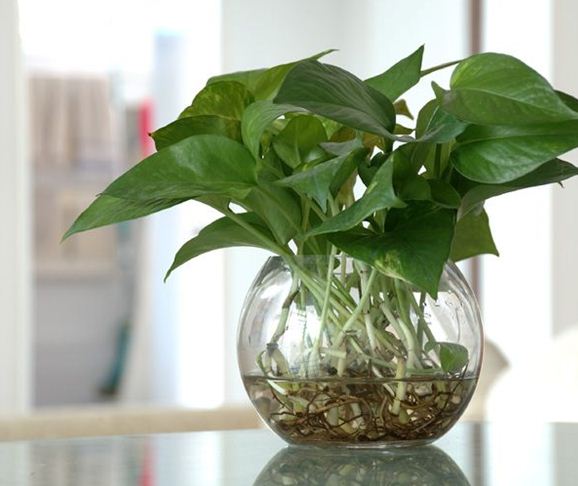
What to Do When the Roots of Hydroponic Pothos Turn Black? Causes and Solutions
Hydroponic pothos is a very common cultivation method, from large professional hydroponic planters to a small container with just a few pothos cuttings stuck in it. But some flower lovers see the roots of their hydroponic pothos turning black and do not know what the problem is. It is quite normal for the roots of hydroponic pothos to turn black
-

How to acclimate large bare-root rose plants? Methods and precautions
At this time of year, large field-grown bare-root plants are sold quite often. Compared with tiny rooted cuttings, many gardening enthusiasts do not know how to handle large plants. This article focuses on handling bare-root plants. Large bare-root plants come in two types: those with a soil ball and fully bare-root plants. As long as the survival rate is well managed, large bare-root plants still do very well.
条件筛选