-

Detailed Explanation of Soybean Cultivation Technology with Film Mulching Between Rows on Wide Ridges
Heilongjiang Province is China's main soybean production area, with its planting area accounting for 7% of the national total and its current total output accounting for 11% of the national total. In the course of soybean production development, the Heilongjiang Reclamation Area has vigorously promoted scientific and technological innovation, resulting in a relatively large increase in soybean yield per unit area and total output. From 2001 to 2005, the average yield per hectare reached 2531.7 kg; in 2005, the average soybean yield per mu reached 178 kg, reaching or approaching the soybean yields of advanced countries worldwide. Soybean cultivation technology with film mulching between rows on wide ridges
-
Occurrence and Damage Characteristics of the Bridgeworm Pest on Lingzhi
The bridgeworm (Noctuidea) belongs to the family Geometridae. The lingzhi bridgeworm of this family (name to be determined) is an important pest damaging lingzhi. 1. Morphology and habits: The adult is 12 mm long with a wingspan of 25-28 mm, a small grayish-black moth. The antennae are filiform; the forewings are triangular with 8 black spots along the outer margin and one larger black spot in the middle of the costal margin; the hindwings are grayish-white. The egg is flat and round, 0.6-0.7 mm long and 0.4-0.5 mm wide, milky white initially and grayish-green before hatching. The mature larva is 22-25 mm long,
-
Lily Cultivation Method Part Three: How to Carry Out High-Ridge Cultivation
Lily Cultivation Method Part Three: High-ridge cultivation. It is suitable for places with a relatively high groundwater table and more rainfall. For high-ridge cultivation in the south, plow the land after the previous crop is harvested to a depth of about 30CM, and apply 2500KG per mu as base fertilizer together with plowing. Generally, ridges are used for wide beds, with the base of the ridge 60CM wide, about 30CM wide needed, and 25-30CM high. Between the ridges are water furrows with a bottom width of about 30CM. In high-ridge cultivation, topdressing must be carried out throughout the growing period to promote growth and increase yield.
-
Introduction to the Breed Characteristics and Farming Techniques of Qingyuan Partridge Chicken
Qingyuan Partridge Chicken, commonly known as Qingyuan Chicken, gets its name because the back feathers of the hen are dotted with countless sesame-like spots. It is a famous small-sized high-quality meat chicken breed in our province, characterized by three yellows, two fines, and one partridge (namely yellow feet, yellow beak, yellow skin; fine head, fine bones; partridge-colored feathers). It has long been renowned in the markets of the province, Hong Kong, China and Macao, China for its golden-yellow skin, tender and smooth meat, crisp skin, soft bones, delicious fresh flavor, and unique taste. Qingyuan Partridge Chicken is of exceptional quality, versatile in use, and not limited to a single cooking method, and has been called the civil-and-martial chicken by famous chefs. Qingyuan Partridge Chicken production volume
-
Method for ridge cultivation of Gastrodia elata in plastic greenhouses
Cultivating Gastrodia elata in ridges inside plastic greenhouses can be done on either a large or small scale, with low investment, high returns, and savings in labor, effort, and arable land. It requires no fertilizer, no pesticide spraying, and no weeding, and delivers significant economic benefits. The technique is described below: 1. Site selection: It is advisable to choose a shady slope or a gentle slope with half shade and half sun, sandy soil with good permeability, and slightly acidic or neutral soil with a pH of 5.5-6.0 for building the site. 2. Greenhouse construction: Follow the construction method for vegetable greenhouses, facing north and south, with the size determined by the scale of Gastrodia elata cultivation, generally 8 m wide and the length depending on the terrain
-
What kind of duck is the Guangxi small partridge duck?
Origin (or distribution): Mainly produced along the banks of the Xijiang River in Guangxi. Main characteristics: Female ducks mostly have partridge-patterned feathers, with two types, yellow-brown partridge and black partridge. Male ducks have darker plumage, appearing brownish-red or blackish-gray, some with a white neck ring, and green speculum feathers on the head and secondary wing feathers. Adult weight of male ducks is 1.41-1.8 kg, and of female ducks 1.37-1.71 kg. Slaughter measurements: adult male ducks have a half-eviscerated rate of 80.42%, female ducks 77.57%; fully eviscerated male ducks 71.9%, female ducks 69.
-
How should reishi mushroom bridge worms be prevented and controlled?
The reishi mushroom bridge worm (scientific name to be determined) belongs to the order Lepidoptera, family Geometridae. This pest damages reishi mushroom fruiting bodies. Young larvae feed on the surface and edges of the cap, causing pits and notches. After the 3rd instar, they can bore directly into the interior of the fruiting body and excrete large amounts of frass, which not only contaminates the mushroom bodies but also encourages the proliferation of weeds such as green mold, harming reishi mushroom growth and reducing yield and quality. (1) Morphological characteristics. Adult: body length 12 mm, wingspan 25-28 mm, body grayish black; antennae filiform, outer margin of forewing with 8 small black spots, a larger black spot in the middle of the costal margin,
-

Taichung Flora Expo Flower Wishing Bridge invites the public to arrange flowers every weekend in January
Autumn and winter are the blooming season for lilies and dancing-lady orchids. To promote local flowers, the Taichung City Agriculture Bureau, starting yesterday (the 1st) for four consecutive days, is not only displaying floral art in the atrium of the Huizhong Building of the City Hall, but has also planned the second-floor sky bridge of the Lenong Hall in the Waipu area of the Flora Expo as a "..."
-

A Detailed Guide to the Cultivation Methods and Key Techniques of the Eight-Ridged Gourd
Cultivation Methods of the Eight-Ridged Gourd
-
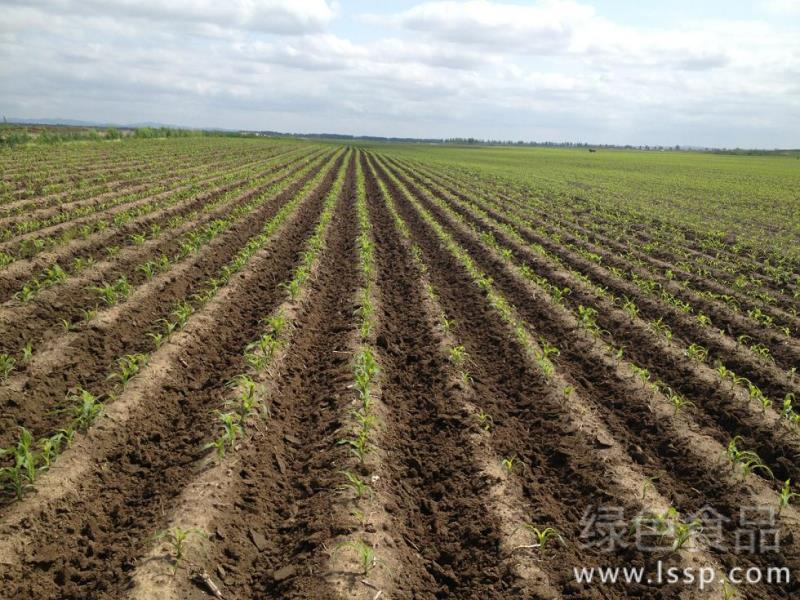
Soybean Ridge Three Cultivation Technique: Layered Fertilization with Double Rows on the Ridge
Soybean Ridge Three Cultivation Technique: Layered Fertilization with Double Rows on the Ridge
条件筛选