-

Temporary Corn Storage Price Cut: Should Corn Be Planted Next Year?
This year, the temporary corn storage price was cut for the first time, and grain farmers face the worry of a bumper harvest. A reporter went to Dunhua, Jilin to investigate - Should corn still be planted next year? ■ With domestic and international prices inverted and inventories piling up, adjusting the temporary corn purchase and storage policy is imperative ■ Policy adjustments should balance the interests of all parties and let corn prices gradually return to the market
-
Premium wheat shows clear price advantage, sowing area increases
Winter wheat sowing in main producing areas basically finished. Recently, reporters conducted a survey of winter wheat sowing in Henan, Hebei, Shandong and other provinces. As of now, winter wheat planting in the main producing areas is nearing completion, with Henan and other provinces having finished sowing. From the already sown
-
Corn prices keep falling, but the truth is that Chinese farmers are still running a slight surplus
Introduction: Every year in August, it is the period when new domestic corn has not yet hit the market and the price of old corn rises slightly, but this year domestic corn prices have been sliding all the way down. On September 18, the National Development and Reform Commission, the Ministry of Finance, the Agricultural Development Bank and other departments jointly issued a notice that starting in November, the state temporary storage corn listing purchase price will be set at 1 yuan per jin, 0.13 yuan per jin lower than last year's temporary storage price.
-
Low corn prices will affect breeding direction
This year, the state introduced a new temporary corn purchase and storage policy, and the corn purchase price was reduced by 0.12 yuan/jin compared with last year (a decrease of about 10%), but the actual reaction of markets in various regions was far more dramatic than this. Corn purchase prices and futures prices generally fell by more than 20%, among which the market price in the Huang-Huai-Hai region
-
China's Wheat Industry in 2015: Local Prices Fluctuate Slightly
Since entering mid-November, domestic wheat market purchases and sales have remained sluggish, wheat prices have been generally stable, with local prices fluctuating slightly. The state temporary storage wheat auctions proceeded as usual, with all lots failing to sell for the first time. International market: the USDA November supply and demand report
-
Domestic japonica rice procurement progress accelerates year-on-year, prices overall stable with a slightly stronger bias
In early to mid-November, the harvest of the new-season japonica rice in Northeast China was basically completed, and japonica rice in Jiangsu and Anhui had also entered the final stage. Affected by weather, the quality of rice in Northeast China this year declined somewhat compared with last year. At the same time, boosted by policy-based procurement, various grain enterprises increased their market purchases,
-
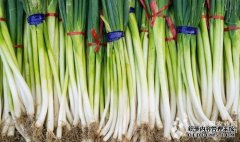
Scallion Prices Buck the Trend, Nicknamed "Forward Scallion"
Right now, prices of various winter vegetables are fairly stable, but scallions have stood out from the crowd, carving out a soaring path as the "forward scallion." As the weather gradually turns colder, scallions are one of the indispensable side vegetables on the winter dining table. In most parts of northern China, people still keep
-
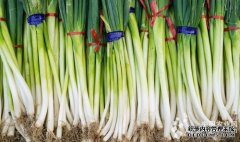
Scallion Prices Buck the Trend, Nicknamed "Forward Scallion"
Right now, prices for all kinds of winter vegetables are fairly stable, and only the scallion has bucked the trend, carving out a "Forward Scallion" path of soaring prices. As the weather gradually turns cold, the scallion is one of the indispensable side vegetables on the winter dining table, and in most parts of the north, people still keep
-
Why do vegetable prices in Shaoguan's urban area keep rising?
[ Lead China Vegetable Network ] On the 24th, it was learned from the Municipal Agriculture Bureau that, according to recent price monitoring data, affected by the earlier low-temperature and rainy weather, vegetable prices in the urban area have continued to rise and remain high. It is reported that because the recent weather has continued to bring rain and lower temperatures, affecting vegetable growth
-
Corn prices continue to rise, rain and snow weather affects buying and selling
In mid-November, supported by the national temporary reserve purchase policy and affected by widespread rain and snow weather in production areas, domestic corn prices continued to maintain an upward trend, especially in North China where the rate of increase in corn prices remained at a relatively high level. Monitoring by the China Grain Network Data Center shows
条件筛选