-

Introduction to the Appearance, Price, Marine Fish Attributes and Nutritional Value of Cichlid Bream
Bream, red seabream, Sparidae, genus Pagrus, also called jiaji fish, banjiaji, jiazhen seabream, copper basin fish. Its distribution is mainly the Bohai Sea/Yellow Sea. So what does the bream look like? What is the general market price per jin? Is it a marine fish? What is its nutritional value? From the Guangzhou aquatic
-
How Is Natural Cow Bezoar Formed? Price per Gram, Benefits, Effects and Contraindications
There is a very precious thing in cattle, and that is cow bezoar. Along with dog bezoar and horse bezoar, it is known as one of the three treasures of traditional Chinese medicine, and it is a very rare and valuable Chinese medicinal material. However, there is not much natural cow bezoar in our country, and the price of natural cow bezoar is also very high. So how is natural cow bezoar formed?
-
Calories in High-Protein Sole Fish, Its Price per Jin, and How It Differs from Basa Fish
Sole fish, also known as ox tongue or tongue fish, is a marine fish distributed in offshore sea areas. It is deeply loved by people for its tender flesh and high nutritional value. It is fairly common on the market today and not expensive. So how many calories does sole fish have? What is the market price per jin?
-
How much is cicada slough per jin? Learn about its benefits and effects when boiled in water
Cicada slough, also known as cicada shell or cicada casing, is the molted shell of the black cicada (Cryptotympana atrata) of the Cicadidae family after eclosion. It is a medicinal herb with the effects of dispersing wind-heat and improving eyesight, and is generally sold in pharmacies. So how much is cicada slough per jin? What are the benefits of boiling it in water and drinking it? 1. Introduction to cicada slough
-
When Are Matsutake Mushrooms in Season? A Full Breakdown of Price per Jin and Varieties
Matsutake mushroom, scientific name Tricholoma matsutake, also known as songxun, hejun, and taijun, has a unique and intense fragrance and is a rare and precious natural medicinal mushroom in the world. So which month is it on the market? How much is it per jin? How is it cultivated? It is reported that the harvest and market season for matsutake mushroom is generally
-
Artemisia selengensis vs. Garland Chrysanthemum: Differences, Benefits, and Prices Fully Explained
Artemisia selengensis and garland chrysanthemum are both plants of the Asteraceae family, both have edible tender stems and can also be used as medicine, their names are similar, and their appearance is also very similar, so many people easily confuse them. So what is the difference between Artemisia selengensis and garland chrysanthemum? What benefits and effects do they have? How much do they cost per jin?
-
How much is eggplant per jin now? Grow it this way to increase the fruit-setting rate
Eggplant, also known as dwarf melon and purple eggplant, is a common vegetable in China. Because it can be eaten in many ways and has high nutritional value, it is widely planted. It is sold in markets now, and the price is affordable. So how much is eggplant per jin now? How can you grow it to increase the fruit-setting rate? 1
-
How much is a jin of hazelnuts now, and how much is each sapling?
Hazelnut, also known as mountain chestnut, pointed chestnut, and chui zi, is a precious dried fruit and one of the world's four major dried fruits. So how much is a jin of hazelnuts now? How much is one sapling? Let's find out below. How much is a jin of hazelnuts now?
-
How much does authentic Yangshan honey peach cost per jin, and which month does it ripen and hit the market?
When it comes to honey peaches, one cannot help but mention Yangshan honey peaches. They are a local specialty of Wuxi City, Jiangsu Province, and a China National Geographical Indication product. So how much does authentic Yangshan honey peach cost per jin? Which month does it ripen and hit the market? 1. How much does authentic Yangshan honey peach cost per
-
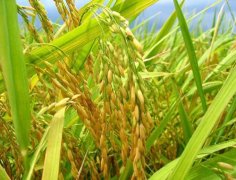
Four Key Points of Rice Seedling Cultivation Technology and Materials Needed for the Seedling Soil Formula
Rice is now our most important food, it is our staple food, so how much do you know about rice cultivation methods? Let's first take a look at the rice seedling cultivation methods below! Seedling cultivation methods 1. Seedbed soil Use one part wood shaving compost (each box weighs about 520 grams, 125 kg per hectare), add one part crushed rice husk (each box weighs about 150 grams, 36 kg per hectare), add one part soil (each box weighs about 800 grams, 192 kg per hectare), that is, a 1:1:1 volume ratio as the seedling cultivation material. The mixing method is carried out with a mixing mixer, or one part wood shaving compost and one part crushed rice husk are evenly spread on the upper layer of the soil pile, then mixed into the soil with a tractor, and finally screened with an electric soil crushing and soil sieving dual-purpose machine to obtain uniform seedbed soil. For covering soil, mix one part crushed rice husk with one part soil (that is, 1:1) for covering. The total soil amount including covering soil, calculated at 300 grams per box, is 264 kg per hectare. Compared with the current 432 kg of seedling soil mixed with rice husk and soil, this saves 168 kg per hectare (38.9%).
条件筛选