-

Introduction and Characteristics of the Kendao No. 9 Rice Variety
Yield performance: In the 1998-1999 regional trials, the average yield was 7415.3 kg per hectare, an average increase of 18.0% over the control variety Heijing No. 5; in the 2000 production trial, the average yield was 6869.0 kg per hectare, an average increase of 14.2% over the control variety Heijing No. 5. Characteristics: japonica rice, with a growth period of about 126 days and requiring an active accumulated temperature of 2393°C. Plant height 86.5 cm, panicle length 16.1 cm, about 95 grains per panicle, 1000-grain weight 28.1 g,
-
Introduction to the high-quality conventional rice variety Yexianzhan No. 8
Yexianzhan No. 8 was bred by the Huizhou Municipal Institute of Agricultural Sciences of Guangdong through the cross Guiyazhan No. 2 / Texianzhan 13 / IR24. In the 2002 and 2003 late seasons it took part in the Guangdong provincial high-quality group regional trial, with an average yield of 405.91 kg and 454.47 kg per mu, an increase of 9.25% and 10.64% respectively over the control variety Jingxian 89, and both increases were highly significant. In the 2003 late season it took part in the provincial production trial with an average yield of 446.7 kg per mu. The rice quality was tested and appraised by the Food Quality Supervision and Inspection Testing Center of the Ministry of Agriculture as
-
What variety is WAB181-18 upland rice?
WAB181-18 upland rice is a new upland rice line developed by the West Africa Rice Development Association and stabilized in 1997. In the spring of 1998, it was distributed to relevant countries by the Upland Rice Group of the International Rice Research Institute, and the International Upland Rice Trial and Observation Nursery established at Xinghua Company undertook the trial and observation task. The characteristics and main advantages of this variety are: 1. Extremely early maturing. Sown on May 9, harvested on August 14, with a growth period of 97 days. Trial and observation continued in 1999, sown on May 2, harvested on August 6, with a total growth period still of 97 days, making it the earliest-maturing variety among more than 280 upland rice varieties provided by 15 countries.
-
What technical points must be mastered for polyculture of fish, shrimp, ricefield eel, loach, crab, and crayfish?
1. Pond selection. The pond is nearly square, with surrounding ditches 8 m wide and 0.6 m-0.8 m deep, the beach surface can be raised with water to 1.2 m, the pond bottom is sandy soil, the water source and water quality are good, and water inlet and drainage facilities are complete. On the inner side of the pond, fine-mesh polyethylene netting is buried in the soil to prevent ricefield eels, loaches, red swamp crayfish, crabs, etc. from burrowing. Asbestos tiles are used as an escape-prevention wall. The pond must be strictly disinfected with quicklime and other drugs, sufficient base fertilizer applied, natural feed cultivated, and aquatic plants such as tarragon and tape grass planted. Around Qingming, a large amount of live river snails
-
How to scientifically control the first generation of the second-brood striped stem borer in single-season rice
Control recommendations 1. For early-sown and early-transplanted single-season rice fields, carry out a full control treatment once from June 20-25, targeting mainly stem borers and small brown planthoppers, and also controlling early-occurring leaf folders and rice thrips. Use 5% fipronil (Regent) suspension concentrate at 40-50 ml/mu, diluted in 30 kg of water for spraying. 2. For fields where rice stripe disease has occurred, on the basis of pulling out and removing diseased plants, promptly apply chemicals to control small brown planthoppers. Use 40% chlorpyrifos (Xinnongbao, Saiben) at 100 ml/mu, diluted in 30 kg of water for spraying, and repeat the treatment after an interval of 5-7 days.
-
Wandao 51 (87641) Rice Variety Introduction
Late-season glutinous variety, with a full growth period of 138 days. The usual yield is 500 kg per mu. Compact plant type, plant height 103 cm, strong tillering ability, tolerant of fertilizer and resistant to lodging, leaves medium-wide and erect, leaf color blue-green, with a smooth color transition at maturity. An average of 130 to 140 grains per panicle, seed-setting rate of about 80%, 1000-grain weight 26 g. Brown rice rate 81.4%, milled rice rate 72.6%, head rice rate 61.5%, gelatinization temperature 6.0, gel consistency 100 mm, amylose content 0.9%, fairly good glutinous quality. Moderately resistant to bacterial leaf blight, resistant to rice blast and white-backed planthopper,
-
How to make shredded fish with red yeast rice paste, learn it easily in a few simple steps
Ingredients/seasonings: 1 snakehead fish (about 1500 g). 100 g green vegetables. 15 g shredded scallion white, 10 g shredded ginger, 1 g pepper, 5 g Shaoxing wine, 4 g fine salt, 3 g MSG, 60 g white broth, 2 egg whites, 40 g wet starch, 50 g red wine lees, 750 g salad oil (about 75 g consumed). Preparation process: 1. Slaughter the snakehead, wash it, remove the two fillets from the left and right sides, skin them and cut into 9 cm long shreds, put them in a bowl, add 2 g fine salt, egg whites, 10 g Shaoxing wine
-

How do you grow Cymbidium orchids so they bloom? With pictures and the price per plant
After a Cymbidium orchid finishes blooming, first cut off the spent flowers promptly to prevent nutrient depletion. The key to making it bloom again is: give it a cool environment in summer, the temperature must not be higher than 28 degrees, with 15~25 degrees being most suitable, as this extends the vegetative growth period; let it see 1~2 hours of morning sunlight
-
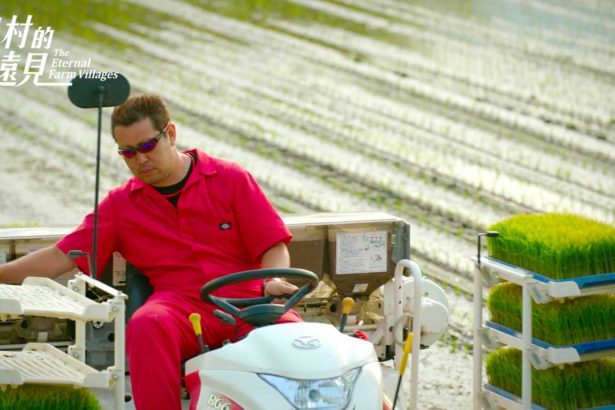
Japan's MOA Natural Farming improves the soil and grows cream-flavored championship rice
Rural Vision 06 | From the soft power of soil to cream-flavored championship rice - Japan's MOA Natural Farming
-
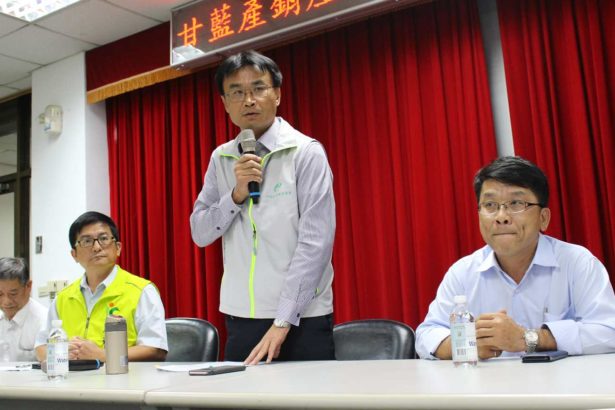
Cabbage prices crash, the Council of Agriculture pushes registration and controls, farmers hope the government will hold firm
Completely resolve the cabbage price crash crisis! The Council of Agriculture and farmers' groups reach consensus, push registration and controls, farmers: the government must keep at it
条件筛选