-
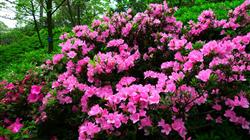
What are the characteristics and growing habits of rhododendrons?
What are the characteristics of rhododendrons? Please give an introduction. The genus Rhododendron has many species with widely differing habits, but most species originate from high-altitude areas and prefer cool, humid climates, disliking intense heat and dryness. They require acidic soil rich in humus, loose, moist, and with a pH between 5.5 and 6.5. Some species and horticultural cultivars are more adaptable...
-
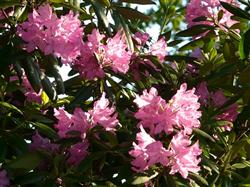
What Is Rhododendron Leaf Spot? Symptom Identification and Control Methods
What is rhododendron leaf spot? How to control it. Please introduce rhododendron leaf spot: Symptoms: It mainly infects the leaves. In the early stage of the disease, small reddish-brown spots appear on the leaves and gradually expand into round lesions, or irregular polygonal lesions, dark brown, 1mm-5mm in diameter. In the later stage, the tissue in the center of the lesion turns grayish white...
-
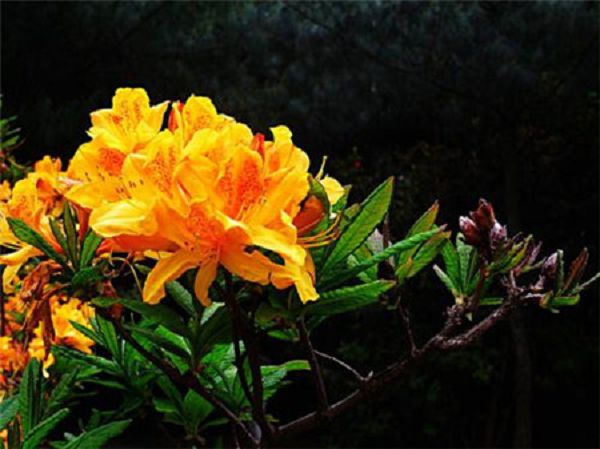
What are the pest and disease control methods for yellow azalea (Rhododendron molle)
Pest and disease control for yellow azalea (Rhododendron molle)
-

Is the horse cherry blossom a rhododendron? Introduction to Rhododendron delavayi
Evergreen shrub to tree, 2-15 m tall, up to 40 cm in diameter at breast height, bark grayish brown, thick, peeling in irregular flakes. Leaves leathery, oblong-lanceolate, densely covered on the underside with grayish white to light brown spongy thin tomentum. Flowering from February to May, terminal spherical umbels with 10-20 flowers, corolla bell-shaped, 3.5-5 cm long, fleshy, deep rose red, stamens 10, ovary 10-locular. Fruit ripens from October to November. Distributed in Yunnan, Guizhou, Guangxi and other provinces and regions, and also in Myanmar.
-
Detailed Explanation of Key Points of Rhododendron Tissue Culture Technology
Rhododendron is an evergreen or deciduous small shrub of the genus Rhododendron in the family Ericaceae, characterized by many varieties, early flowering, rich flower colors, and a long flowering period. In recent years, due to the development of cutting propagation technology, China's rhododendron production has increased. However, precious varieties still cannot meet social demand due to few mother plants and a low propagation coefficient. Tissue culture is precisely an effective measure for achieving factory-scale seedling production of rhododendrons. A brief introduction is given below: 1. Basic technical steps of rhododendron tissue culture. In rhododendron tissue culture, the explants usually used are stem tips, stem
-
Detailed Explanation of Rhododendron Cutting Propagation Methods and Techniques
Plant propagation methods have always been divided into two major categories: sexual and asexual. At present, most large-scale rhododendron production uses the cutting method, which belongs to vegetative propagation. This is one of the methods that ensures the offspring are completely identical to the parent, and is a commercial route for mass-propagating identical so-called clones. 1. Propagation subjects: Roughly speaking, the species with the largest leaves require bottom heat during cutting, and the air humidity must be high. From the end of June, closed cutting beds are used, and the branches must be fully mature; only about two-year-old branches are suitable. For the short, creeping alpine rhododendrons from high mountains, cuttings are taken in autumn during propagation, and no bottom heat is needed during insertion; rooting occurs only under conditions of appropriate ventilation.
-
Detailed Explanation of Rhododendron Cultivation Techniques and Landscape Application
China has a long history of rhododendron cultivation, with records of artificial cultivation dating back to the Han Dynasty. In the Tang Dynasty, rhododendrons began to be used in private gardens, and because of their graceful plant form and brilliant flower colors, they were deeply loved by people. Rhododendron generally refers to plants of the genus Rhododendron in the family Ericaceae, with about 960 species worldwide. China is the birthplace and distribution center of rhododendrons, with about 542 species, mainly distributed in the Hengduan Mountains area of the three provinces and regions of Southwest China, Yunnan, Tibet and Sichuan. Rhododendrons prefer cool conditions and fear scorching sun,
-
Management methods and technical key points after rhododendrons bloom
Pruning and shaping: after rhododendrons finish blooming, the spent flowers generally need to be removed by hand, followed by appropriate thinning of branches, cutting away overly dense branches, and letting them send out new growth. Fertilizer and water management: in northern regions, water is on the alkaline side and relatively hard, and watering plants with it over the long term can easily cause soil alkalization, affecting flower growth. Therefore, before watering, the water should be stored in a container for more than 24 hours and used after the chlorine has evaporated. Alternatively, water mixed with an appropriate amount of ferrous sulfate or edible white vinegar can be applied about once every 10 days. Rhododendrons do not need much fertilizer, and it is generally applied along with watering. You can
-
Rhododendron 'Shinan' is a new variety of rhododendron.
Rhododendron 'Shinan', also known as tree-type rhododendron, alpine rhododendron, or foreign rhododendron, is one of the high-end potted flowers that have become quite popular in recent years. This variety was introduced from the Netherlands, Belgium, and other countries. Compared with common rhododendron varieties such as spring rhododendrons, summer rhododendrons, and Western rhododendrons, its flowers are large and densely clustered, looking like a big ball of flowers when in full bloom and giving a feeling of abundant blossoms. It is suitable for large and medium-sized potted cultivation and for decorating halls, restaurants, hotels, and other places with a magnificent effect. Rhododendron 'Shinan' is a perennial evergreen shrub or small tree of the genus Rhododendron in the family Ericaceae. The plant is much branched, with a full crown
-
What plant is the Mao Azalea? Let us introduce you to Rhododendron pulchrum
Scientific name: Rhododendron pulchrum. Common name: Rhododendron pulchrum. Family and genus: Ericaceae, Rhododendron genus. Main characteristics: evergreen shrub, up to 2 m tall, sparsely branched, young branches densely covered with light brown flat appressed hairs. Leaves papery, dimorphic, elliptical to elliptically lanceolate or oblong-obovate-lanceolate, 2.5-5.6 cm long, 8-18 mm wide, apex acute, with a mucronate tip, base cuneate, initially with scattered yellow sparse appressed hairs, later nearly glabrous above; petiole 4-6 mm long, with the same
条件筛选