-
Food waste recycling: How to control food waste? The pay-what-you-feel rescued food Cafe "PayWhatYouFeel"
The pay-what-you-feel rescued food Cafe "PayWhatYouFeel"
-
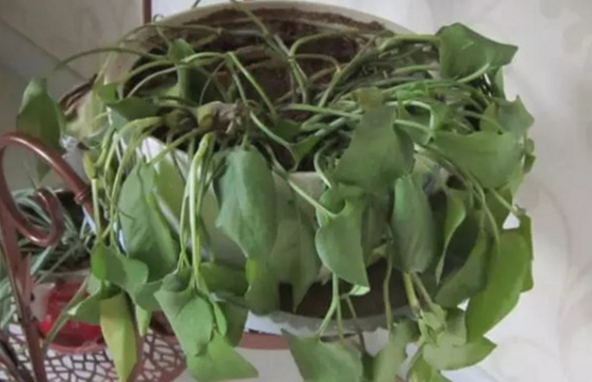
Rescue methods for copper coin grass and pothos that have died from drought, drowning, fertilizer burn, or pests
Many people grow plants, but due to neglect, plants always end up dying in all kinds of ways. So do you know that even when a plant has not completely died, there are still other ways to save it? What exactly are those methods? Let's take a look. Death from drought: if flowers and plants are not watered in time, the leaves will begin to wilt from the top downward
-

What rescue measures are there after rice is flooded
Rice fields flooded for 1-4 days below 25°C suffer little damage; flooding for 1-4 days above 30°C can cause abnormal grain filling in rice; flooding for 1-4 days above 40°C can cause rice to wither and die with total crop loss. When rice is flooded at the seedling stage, the seedlings become thin and elongated with yellowing leaves, and generally are difficult to recover; at the tillering stage, the lower leaves necrose and the heart leaves curl, and after the water recedes the leaves wither, but generally do not rot; at the jointing stage, the plants become thin and weak and are prone to lodging and breaking; at the booting stage, resistance is weakest, and rotten ears and deformities easily occur, reducing the seed-setting rate; at the grain-filling stage, the lower leaves wither and yellow, the top leaves yellow, and the ears
-
How to use folk remedies to rescue fish after poisoning
1. Derris poisoning. In real life, we often see the phenomenon of using derris to poison fish in small rivers and streams, and a slight carelessness often threatens the pond fish being raised. At this time, the best method is to first block the toxic water from entering the pond; at the same time, splash human urine diluted with water over the whole pond. The dosage is about 25 kg of human urine per 1 mu of water surface at an average depth of 1 m (that is, 667 cubic meters), diluted with water to 50 kg, then splashed evenly over the whole pond. This has an obvious effect on rescuing fish that have just been poisoned or have not yet been poisoned. 2. Tea seed cake poisoning. Tea seed cake is usually used to poison ponds or in small amounts to prevent and treat fish diseases,
-
How to Rescue a Falsely Dead Piglet? A Detailed Guide to Practical First Aid Methods
When a piglet just delivered by a sow has obstructed or stopped breathing but its heart is still beating, it is in a state of false death. If not rescued in time, true death may occur. Using the "umbilical cord pinching method" to rescue falsely dead piglets offers a relatively high chance of revival. Main method: first clear the mucus from the nasal cavity of the falsely dead piglet, place the piglet on a soft mat with its head slightly elevated, cut the umbilical cord 3-5 cm from the body, then pinch the end of the umbilical cord tightly with one hand and squeeze it toward the base of the cord. Do this 10 times per minute, repeating without interruption. Under normal circumstances,
-
How to rescue pond fish after ammonia-nitrogen poisoning?
When carp, grass carp, bream, white pomfret, crucian carp, etc. are fed with pelleted feed, because the feeding amount is large, excrement and leftover feed increase, and the nitrogenous substances produced by protein decomposition increase accordingly. If even slightly careless, these fish will suffer ammonia-nitrogen poisoning, which at best affects normal growth and at worst causes the death of the fish. The identification and rescue methods for ammonia-nitrogen poisoning in pond fish are described below. I. Identification of poisoning 1. Occurrence characteristics. Ammonia-nitrogen poisoning has no distinction of season, morning or evening, or good or bad weather, and is mostly seen in adult fish
-
How to Rescue a Poisoned Pig? First Aid Methods Every Farmer Must Know
1. Rapeseed cake poisoning. Grind 300 grams of soybeans into soy milk, take the egg whites from 5 eggs, mix the soy milk and egg whites and administer in 1 dose, once a day, for 2 to 3 consecutive days. 2. Salt poisoning. 80 grams of vegetable leaves and 350 grams of chrysanthemum flowers, decoct in water and administer, twice a day, for 3 to 4 consecutive days. 3. Moldy corn poisoning. 150 grams of Fangfeng (Saposhnikovia divaricata), 25 grams of licorice, and 250 grams of mung beans, decoct into a soup, add 80 grams of white sugar, and administer in 1 dose. 4. Furazolidone poisoning. Decoct 400 grams of licorice into a juice, 1 piglet
-
What to Do When Silkworms Are Poisoned? Detailed Explanation of Six Rescue Methods
1. Bleaching powder detoxifying solution. For mulberry leaves contaminated by bacterial pesticides, use 0.15-0.25 kg of bleaching powder, add 50 kg of clean water to make a bleaching powder solution. Take the clarified liquid and spray it on the surface and underside of mulberry leaves, and feed the silkworms only after the leaves have no medicinal odor. 2. Atropine aqueous solution. When mulberry leaves contaminated by organophosphorus pesticides and arsenic-containing pesticides cause silkworm poisoning, use 0.3 g atropine tablets or 0.5 g atropine liquid in 1 vial, add 0.5 kg of cooled boiled water, rinse the poisoned silkworms or spray it on mulberry leaves as an additional feed, until the silkworms
-
Prediction Methods and Rescue Measures for Fish Pond Overturn
In summer and autumn, when temperatures are high and microbial activity is vigorous, if a fish pond receives large amounts of fertilizer and feed, the fish can easily come to the surface gasping for air due to oxygen deficiency. If rescue measures are not taken in time, the fish will suffocate and die. Therefore, fish pond management should be strengthened at ordinary times, prediction should be done well, and rescue measures should be taken promptly when fish come to the surface gasping for air, so as to prevent fish pond overturn. Signs before overturn: On the afternoon of a hot day, if organic matter in the pond is found fermenting and producing large amounts of bubbles that cover 1/2 of the pond water surface, and a fishy, foul odor can be smelled from far away from the pond, it indicates that pond overturn is about to occur. In weather that alternates between clear and rainy, in windless, muggy thundering weather, or after heavy thunderstorms, observe the fish pond carefully to prevent fish pond overturn. For fish ponds with severe surface gasping, be especially careful to prevent fish pond overturn. In fish ponds where severe surface gasping occurs, pond overturn mostly happens in the middle of the night and early morning.
-
What are the rescue methods for allergic reactions in cattle and pigs?
When mass vaccinating cattle against bovine pleuropneumonia and foot-and-mouth disease and using drugs such as antibiotics and sulfonamides, livestock such as cattle and pigs can develop allergic reactions. After an allergic reaction occurs in livestock, edema develops in multiple parts of the body, along with symptoms such as allergic bronchitis and asthmatic bronchopneumonia; in severe cases or if rescue is delayed, it can lead to death. Russian livestock workers have adopted a method for treating allergic reactions in livestock, which is to inject livestock subcutaneously with a 1% atropine sulfate solution as soon as the first clinical symptoms appear
条件筛选