-

A Detailed Guide to the Latest Growing Methods and Precautions for Persian Buttercup
Persian buttercup, also known as celery flower, Persian ranunculus, and buttercup, is a perennial herbaceous plant of the genus Ranunculus in the family Ranunculaceae. It is native to southeastern Europe and southwestern Asia. The plant is low-growing with vivid colors, upright flower stems, and a beautiful and unique flower shape. It is suitable for planting beneath trees
-
How to grow Ranunculus asiaticus (Persian buttercup)? The latest cultivation methods and precautions
After seeing the title, did fellow flower lovers immediately think of the celery we often eat? But it is not celery. Its leaves look very much like celery, and its flowers look like peonies, so people named it Ranunculus asiaticus (Persian buttercup). There are many varieties of this type of peony-like flower, and the leaf colors vary widely. Today, Shuaishuai will introduce the cultivation methods and precautions for Ranunculus asiaticus to fellow flower lovers. Let's take a look!
-
How to propagate Persian buttercup (Ranunculus asiaticus)? A detailed guide to the latest propagation methods
Persian buttercup (Ranunculus asiaticus) is a perennial herbaceous plant of the Ranunculaceae family. Its leaves are quite similar to celery leaves, so it is also called celery flower. Native to Asia and Europe, Persian buttercup has very high ornamental value. It can not only be used for potted viewing, but can also be used to arrange flower
-
What are the latest precautions for planting Persian buttercup (Ranunculus asiaticus)?
Persian buttercup (Ranunculus asiaticus) is a flower with very high ornamental value, widely used for ornamental purposes in major cities across our country, and it is a very common flower in many households. Also, many people in our country grow Persian buttercup on a large scale, but Persian buttercup is not that easy to grow.
-
How to Grow Ranunculus ternatus (Cat's Claw Buttercup) and How It Differs from Orthosiphon aristatus (Cat's Whiskers)
Ranunculus ternatus, also known as Sansan Cao, gets its name because its root tubers look like cat's claws. It has high medicinal value and can be used to treat diseases such as lymphatic tuberculosis and pulmonary tuberculosis. So how do you grow Ranunculus ternatus well? What is the difference between it and Orthosiphon aristatus? 1. Introduction to Ranunculus ternatus: 1. What does Ranunculus ternatus look like?
-
A Detailed Guide to Growing Ranunculus from Seed and Points to Note
Ranunculus is also known as celery flower; its flower colors are rich, but the flower shape closely resembles that of a peony, so much so that when friends see it, it is like looking at someone else's shadow. But this similarity not only fails to make people dislike it, it instead makes them love it even more, attracting a large group of true fans. Ranunculus is a
-
How to Plant Ranunculus Corms: Ranunculus Corm Planting Methods
Many people may never have heard of ranunculus. As its name suggests, ranunculus is a very beautiful and lovely flowering plant. Its flowers are large and brightly colored, and when in full bloom they are elegant and luxurious, with extremely high ornamental value. Many people want to grow ranunculus at home.
-
-
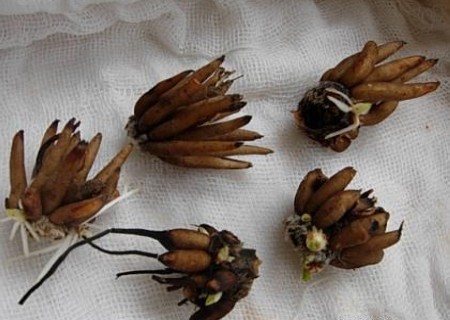
Which bonsai are suitable for placing in the bedroom? How long can Ranunculus asiaticus bulbs be stored? How to preserve them?
The flowers of Ranunculus asiaticus are smaller than those of the peony, but their colors are very rich and extremely beautiful. Even though they are not as large as peonies, they undoubtedly radiate a peony-like delicate and noble charm. Therefore, people often call them parsley-leaf peonies, and many gardening friends like to grow them in pots at home
-
Which bonsai plants are suitable for the bedroom? Storage time and preservation methods for Ranunculus asiaticus (Persian buttercup) tubers
The flowers of Ranunculus asiaticus (Persian buttercup) are smaller than those of the peony, but their colors are extremely rich and they are exceptionally beautiful. Even though they are not as large as peonies, they unquestionably radiate a peony-like air of delicate refinement. Therefore, people often call them "parsley-leaf peonies," and many gardening enthusiasts like to grow a few of them in pots at home
条件筛选