Which bonsai plants are suitable for the bedroom? Storage time and preservation methods for Ranunculus asiaticus (Persian buttercup) tubers
The flowers of Ranunculus asiaticus (Persian buttercup) are smaller than those of the peony, but their colors are extremely rich and they are exceptionally beautiful. Even though they are not as large as peonies, they unquestionably radiate a peony-like air of delicate refinement. Therefore, people often call them “parsley-leaf peonies,” and many gardening enthusiasts like to grow a few of them in pots at home for ornamental display.
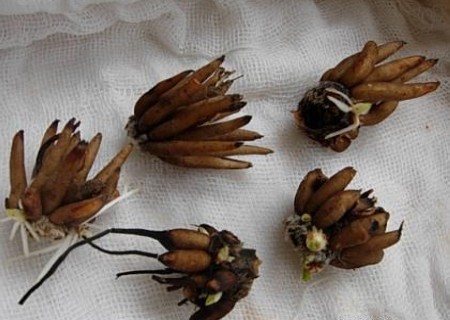
To obtain the tubers of Ranunculus asiaticus, we usually dig them out after the flowers fade and the stems dry up in spring, and store them in a ventilated, dry environment. This is because the tubers of Ranunculus asiaticus easily deteriorate in the hot summer temperatures, which can seriously affect later planting and growth, and even inhibit flowering. So, how long can Ranunculus asiaticus tubers be stored?
In fact, Ranunculus asiaticus often carries pathogens itself, and these will accumulate year after year, so before digging them out for storage, they should first be soaked in a disinfectant solution for about 10-20 minutes. As long as the storage method is scientific and reasonable, they can generally be stored for one year, and then planted the following year. However, for Ranunculus asiaticus tubers, they are generally treated as a one-time planting, and are typically stored in summer and planted in autumn.
Speaking of storage, here the editor will also briefly introduce the storage methods for Ranunculus asiaticus tubers.
Because summer temperatures are high and the weather is hot, Ranunculus asiaticus often enters a dormant state, and the tubers are also quite fragile. To prevent the tubers from becoming moldy or even rotting, we should adopt relatively scientific and reasonable storage methods to preserve the tubers. There are mainly two preservation methods: storing in the original soil and storing after removing the roots.
1. Storing in the original soil
Usually in May-June of summer, the flowers of Ranunculus asiaticus fade one after another, and the stems and branches slowly turn yellow and dry up. To obtain intact tubers, after the flowers fade and the stems and branches turn yellow and dry, we should stop watering, let the potting soil dry out, and then place the flowerpot in a rain-sheltered, ventilated, dry environment for storage. When September-October of autumn arrives, we can dig out the tubers, trim the roots briefly, and then plant them in pots.
2. Storing after removing the roots
The timing is the same as above, but the handling method is different. We first need to cut off the yellowed, dried stems and branches, then dig out the tubers, clean off the soil, cut away the pathogen-infected and rotted parts, and then soak them for disinfection. After about 10-20 minutes, take the tubers out of the disinfectant solution and let them dry, then similarly place them in a cool, ventilated, and dry environment for preservation and storage.
But no matter which method is used to preserve and store the tubers, each has its advantages and disadvantages. Although the first method is relatively simple, if not handled well, the tubers may become moldy or even rot; while the second method is more troublesome to carry out, but the tuber survival rate is higher and they are more likely to survive. As for how to store and use them, everyone can consider it according to their actual situation.