-

What is good to feed rabbits in spring and summer? Don't miss these three treasures
Garlic, dried tangerine peel and chili pepper are common seasonings in home cooking and are known as the "three treasures of the kitchen". Because they contain a variety of nutrients, are non-toxic and have no side effects, do not easily cause harmful residues in livestock products, and also have disease-prevention and therapeutic effects, they are also called the three treasures of pure natural agriculture and forestry breeding. In recent years, the author has used the three treasures in domestic rabbit production and achieved good results. 1. They can increase rabbits' appetite. Adding an appropriate amount of garlic powder, dried tangerine peel powder and chili powder to the feed can mask the unpleasant odor of certain feed ingredients, increase aroma, and improve the feed
-
What are the emergency rescue methods for frozen kits (baby rabbits)?
Causes of kits freezing: one is that the due date was not recorded properly or the doe kindled early for some reason, and the kindling box was not put in place in advance; another cause is that the doe's maternal instinct is weak, and she kindled outside the box; a further cause is that after nursing, when the doe jumps out of the kindling box, individual kits that are not getting enough milk clamp onto the teat and will not let go, so they are dragged out and become frostbitten because the weather is relatively cold. Regardless of the cause, a frostbitten kit must not be left too long; if its heart is still beating, emergency measures will generally succeed. The methods are as follows: 1. Immerse the kit
-
Correct Technical Methods for Feeding Rabbits Vegetables
Vegetables have a water content of about 85%, low crude fiber content, and good palatability, so rabbits tend to overeat them. Feeding vegetable leaves to young rabbits under 90 days of age will cause diarrhea in just a few days. If rabbits develop diarrhea after eating vegetables, stop feeding vegetables, increase the feeding of green hay and dry leaves, and mix 2% charcoal powder or 2% medicinal charcoal into the mixed feed or compound feed for treatment. When vegetables are grown in soil heavily fertilized with nitrogen, treated with herbicides, or affected by pests, drought, or insufficient sunlight and turn red, their nitrate content increases. Rabbits overeat vegetable leaves and take in more
-
Why Do Rabbits Eat Their Own Soft Droppings?
During the raising of domestic rabbits, we can see that the hard fecal pellets they pass are formed through a second round of digestion. Domestic rabbits eat grass and feed during the day, and at night or before dawn they pass soft droppings, and as soon as the soft droppings are passed, the rabbit immediately eats them. Through this second round of digestion and absorption, only the residue is formed into hard fecal pellets and passed out of the body. When domestic rabbits eat the soft droppings they have passed at night, it is not coprophagia caused by a lack of some nutrient in their bodies, but a normal physiological phenomenon. This instinct of domestic rabbits has two major benefits: first, it can keep the rabbit hutch,
-
Three things to avoid when feeding vegetables to rabbits; rabbit keepers need to know this in advance
First, avoid using vegetables that have been piled up and turned yellow. Feeding rabbits with vegetables that have been piled up and turned yellow will cause nitrite poisoning in rabbits, and in severe cases can lead to death. Therefore, when feeding rabbits with vegetables, always make sure they are fresh, and do not feed too much at a time; it is best to feed them together with other feed. Second, avoid cruciferous vegetables. Cruciferous vegetables contain sinigrin, which can produce some toxins that promote thyroid enlargement and severely damage the rabbit's liver and kidneys. Third, avoid vegetables damaged by pests. Feeding rabbits with vegetables infested by aphids, cabbage caterpillars, and the like
-
What are the treatment methods for heatstroke in rabbits?
① Plant vines around the rabbit hutch to provide shade, splash cool water on the ground at noon to lower the temperature, give the rabbits lightly salted water to drink over the long term, and let them rest fully. ② When summer arrives, shear wool rabbits once, and try to stop both male and female rabbits from breeding. ③ If a rabbit is found with heatstroke, immediately place it in a cool, well-ventilated spot, provide 1% saline, and at the same time apply a cold compress to its head or bleed it from the ear vein, then administer 3 drops of Shidishui. ④ Put garlic juice in its nose, or apply cooling oil to its temples, or soak a brick in cool water and let the rabbit lie on it to cool down.
-
Do Pet Rabbits Need to Drink Water? A Guide to the Correct Way to Provide Water
Many people who keep rabbits have a misconception: they believe rabbits cannot drink water. Many friends have had this question before: "Can I give a rabbit water to drink? Will drinking water kill the rabbit?" In fact, this worry is unnecessary. Rabbits, like many other pets, certainly need to drink water. Normally, we should likewise prepare some fresh, clean drinking water for rabbits. If a rabbit goes without water for a long time, it will affect its health and can even lead to death. As for how much drinking water to prepare for a rabbit, it depends on what each rabbit eats. When eating dry
-
Precautions for Feeding Rabbits: What Can and Cannot Be Fed
1. The following grasses and wild vegetables must never be fed to rabbits at any time: potato vines, tomato vines, larch, globeflower, castor bean, ragwort, monkshood, wild grape vines, langdu chenopodium (Stellera chamaejasme), etc. 2. Some grasses and wild vegetables cannot be fed to rabbits during certain stages of growth and development, otherwise they can easily cause poisoning in domestic rabbits: yellow and white sweet clover are toxic and cannot be fed to rabbits when in bud and bloom; buckwheat and wild rape cannot be fed to rabbits when flowering; flax cannot be fed to rabbits when the seeds and crown stems are mature; potatoes cannot be fed to rabbits when they have sprouted.
-
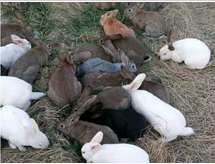
What are the specific signs of nutritional imbalance in female rabbits?
In what specific ways does nutritional imbalance in female rabbits manifest?
-
Detailed Explanation of Breeding and Development Technology for Dual-Purpose Medicinal and Meat Rabbits
1. Development prospects The dual-purpose medicinal and meat rabbit originated in Zhucheng, Shandong, and has a long history. It has strong bones and thick meat, and has the effects of tonifying the middle and replenishing qi, cooling the blood and detoxifying. It can nourish the complexion and soften the skin, strengthen the body, prolong life, lower cholesterol, prevent and treat cardiovascular and cerebrovascular diseases and obesity, and improve intelligence and nourish the brain. This rabbit is also a high-grade meat food. The rabbit meat is bright red and tender, without a gamey smell, rich in aroma, not greasy when eaten over a long period, and rich in nutrition, containing more than 21% protein. Since January 2002, when China's rabbit meat was banned by the EU due to drug residue issues, it has been the only green rabbit
条件筛选