-

What are the prospects for deep processing of edible fungi? My view
Views on the prospects for deep processing of edible fungi
-
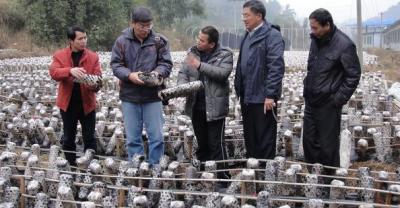
Growing edible mushrooms in tea plantations has great potential and broad prospects
At present, the development of China's tea industry overall reveals a contradiction of unbalanced resource supply. At the same time, in the field of edible mushroom cultivation, finding new substrate materials to ease the conflict between raw material demand and the ecological environment is urgent.
-
Off-season cultivation of edible fungi is highly profitable, with broad market prospects
So-called off-season cultivation refers to cultivation carried out in seasons when normal growth is not possible. In edible fungi production, this is essentially a matter of timing, that is, cultivation carried out in natural seasons when normal production is not possible through improved facilities and equipment, artificial regulation of conditions and other auxiliary means, and it can also achieve production results similar to those of normal-season production; for example, the relatively typical summer cultivation of enoki mushroom (Flammulina velutipes) and winter cultivation of straw mushroom, and so on. For example, the low-temperature variety enoki mushroom should fruit from November to February, but with facility-based automatic controlled cultivation
-
Shiitake mushrooms may be used to produce fuel, with promising prospects
People are all too familiar with the shiitake mushroom as a delicious food, but a latest study in the United States may give this edible fungus a new mission -- one day in the future, shiitake mushrooms may gradually leave people's dining tables and kitchens and find their way into people's car fuel tanks. According to reports, the shiitake mushroom, this delicious fungus, usually grows on felled trees in forests. It breaks down the complex organic matter in wood into sugars and uses them as nutrients to sustain its own growth. At present, the Agricultural Research Service of the United States Department of Agriculture
-
Prospects for using mulberry stalks to grow edible fungi look promising
The Microbiology Experimental Plant of the Guangxi Academy of Sciences Institute of Biology recently invented a technique for growing edible fungi using mulberry branches and stalks, and is carrying out an industrialization demonstration in the sericulture experts' compound in Luoxi Town, Yizhou City, Guangxi. According to professionals, the mulberry stalks left over each year after sericulturists plant mulberry and raise silkworms can, after being processed and crushed, serve as the main raw material for cultivating edible fungi (oyster mushrooms, enoki mushrooms, shiitake mushrooms, jade yellow mushrooms, wood ear mushrooms, etc.), and using the mulberry stalks from each mu to cultivate edible fungi can increase income by more than 2000 yuan. Based on the county (city) with the largest mulberry and silkworm production base in the country
-
Golden Blessing Mushroom has good market prospects and great development potential
On the morning of July 31, the Hangzhou Academy of Agricultural Sciences, the Municipal Agriculture Bureau and the Hangtou Town Government held an on-site exchange meeting on new varieties and new technologies of rare edible fungi at the Huangmugang vegetable base in Hangtou Town. Leaders and experts from the Hangzhou Academy of Agricultural Sciences, the Agriculture Bureau, the Science and Technology Bureau and the Association for Science and Technology, as well as agricultural science and technology personnel from the counties, cities and districts of the Hangzhou area, inspected the experimental greenhouse for the rare edible fungus Golden Blessing Mushroom at the vegetable base. According to Zhou Zufa, head of the Hangzhou Edible Fungus Spawn Station, the Golden Blessing Mushroom is a high-temperature mushroom that can fruit at temperatures of 28°C to 35°C
条件筛选