-

How to Tell Male and Female Pigeons Apart? A Few Practical Identification Tips
Pigeon meat is nutritious, with tender flesh and an especially fine flavor. Its nutritional value is higher than that of other poultry, and it has always been regarded as a top-grade meat, with the saying "one pigeon beats nine chickens." It is both a precious delicacy and a premium tonic, with medicinal effects such as replenishing qi and enriching the blood. It also has a certain auxiliary therapeutic effect on hair loss, eczema, and premature aging, and is especially suitable for postpartum women, children, the elderly, surgical patients, and those weakened by long illness. The market potential for squab consumption is enormous. The appearance and form of male and female meat pigeons differ only very slightly. Identifying males from females is an important part of introducing and breeding meat pigeons and pairing them up.
-
What are the methods for preserving garlic bulbs? Practical storage tips to teach you a few tricks
Garlic bulbs do not store well. Even in a dry, ventilated environment, after 100 days of storage they will sprout, shrivel and become moldy, affecting the planting quality for the following year. Therefore, mastering the storage techniques for garlic after harvest is extremely important. Here four garlic bulb storage and preservation techniques are specially introduced: 1. Hanging storage method. After harvest, the fresh garlic bulbs are first sun-dried for 2-3 days; when the leaves become soft, tie the garlic into bunches of 8-10 bulbs each, then hang them neatly under a shade shed or eaves to air-dry naturally. During the hanging storage period, exposure to the sun should be avoided in summer and autumn, and in winter the garlic bulbs should be moved into a ventilated room for storage to avoid moisture and freezing.
-
Practical Tips for Saving Feed in Yellow Catfish Farming
Currently, yellow catfish (Pelteobagrus fulvidraco) farming is quite widespread and is a major species for increasing income among fish farmers in many places. However, during the farming process, many farmers, in their one-sided pursuit of output, do not know how to save feed and continuously put excessive feed and fertilizer into the aquaculture water. This not only causes farming costs to rise day by day, but also continuously deteriorates water quality, affecting the growth of yellow catfish and resulting in low farming benefits. How can feed costs be saved in production practice? Strictly remove trash fish and disinfect the pond. Pond disinfection can kill wild trash fish, reduce competitors for food
-
How to Grow Orchids? Sharing Two Practical Care Tips
I. Notes on Overwintering Management of Orchids Orchids generally need to be moved indoors or into a greenhouse for cultivation by mid-November; if moved too late, they are prone to frost damage or even freezing injury. In daily management, besides strengthening general overwintering measures, attention should also be paid to treating different varieties according to their specific characteristics. 1. The ancients had the experience of "exposing orchids in cold weather"; orchids are best placed on a south-facing sunny windowsill or table. The suitable growing temperature for orchids is 15-25°C, and overwintering in a low-temperature room at around 10°C is generally ideal. If
-
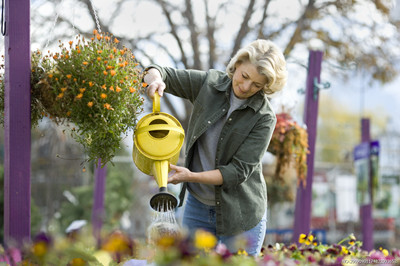
How to water houseplants? Sharing a few practical tips
1. Watering flowers with leftover tea: Using leftover tea to water flowers not only keeps the soil moist but also adds nutrients such as nitrogen to the plants. However, you should water regularly and in moderation according to the moisture level of the pot, rather than pouring leftover tea on whenever you have it. 2. Watering flowers with spoiled milk: After milk spoils, dilute it with water to water flowers, which benefits the growth of the plants
-
How to Grow Fittonia in Water? A Detailed Guide to Practical Care Tips
1. Water quality: Fittonia (nerve plant) is not demanding about water quality for hydroponic growing. As long as the water does not stink or breed insects, ordinary tap water can be used directly for hydroponics. In summer, change the water about every 3-4 days, replacing half the water in the container each time; in winter, change it once a week, replacing one third each time.
-

How to Safely Overwinter Hydroponic Plants? Practical Tips Shared
Hydroponic Plant Overwintering Tips
-

-
How to grow spider plant in water? Sharing practical cultivation tips
A single hydroponic spider plant, when managed properly, can maintain its ornamental value for two to three years. So you need to be extra careful when growing it in water. Here are a few tips for hydroponic spider plants that you can keep in mind: a glass container is suitable for growing a single variegated spider plant, and in the transparent container you can see thin white roots
-
How to grow hydroponic pothos so it grows fast? Practical care tips to share
Compared with soil culture, hydroponic pothos grows relatively slowly, and no matter how well you care for it, it is not as good as soil culture, but hydroponic pothos is simple to care for, and for lazy people it is the simplest method
条件筛选