-

How to Plant Pine Seeds So They Sprout? A Detailed Guide to the Planting Method
Most species in the genus Pinus are tall, upright trees, and their wood is good, with no shortage of timber fit for pillars. The ornamental value of pine trees is also there for all to see, so how do you plant pine seeds so they sprout? Let's take a look! 1. How to plant pine seeds so they sprout
-
What soil is best for growing five-needle pine? Soil selection and soil mixing methods
The five-needle pine is a tree of the genus Pinus in the family Pinaceae. It has been widely introduced and cultivated in major cities along the Yangtze River basin in China and in places such as Qingdao, Shandong. The five-needle pine has gnarled trunks and vigorous branches, with a very elegant charm and character, embodying the essence of the qi, bone, color and spirit of pines, and is a precious tree species for landscaping.
-
When Does Lupine Bloom? An Introduction to Its Blooming Period
Lupine generally refers to Lupinus, an annual herbaceous plant that originated in North America and has numerous horticultural cultivars. So when is its blooming period? How do you care for it? When is the lupine blooming period? The lupine blooming period is March to May, but different regions
-
How much does a Pinus sylvestris var. mongolica sapling cost in Ant Forest, and how tall can it grow in a year?
In the past two years, the function of Ant Forest that lets people plant real trees has gotten many consumers excited, and among them, Pinus sylvestris var. mongolica (Mongolian Scots pine) is especially popular. But do you know how much its saplings cost each, and how tall they can grow in a year? Below, the editor of Tuliu.com will introduce it to you one by one.
-
Are Pinus sylvestris var. mongolica seedlings expensive? Detailed explanation of overwintering management key points
Pinus sylvestris var. mongolica is a tree originating from the Greater Khingan Mountains region. Because it is highly adaptable and has excellent wood quality, it is very suitable for planting in courtyards or as a landscaping tree species. The seedlings of Pinus sylvestris var. mongolica are very drought-tolerant and tolerant of poor soil, and compared with other tree species they have very few pests and diseases,
-
Lupine (Lupinus) Annual Herb: Suitable Planting Regions and Blooming Period
Lupine, also called lupin, is a plant in the order Rosales, family Fabaceae, genus Lupinus. The flower spikes are upright and abundant, with bright and colorful flowers in variations of white, red, blue, and purple, and the blooming period is long. It can be used for mass planting or grouped plantings in ribbon flower beds, and it is also a good material for cut flower production.
-
Do pine trees actually bloom? Here is the answer
Pine trees belong to the genus Pinus in the family Pinaceae. There are nearly eighty species of pine trees in the world. They are not only numerous in species but also widely distributed, with extremely strong adaptability to terrestrial environments, making them famous pioneer tree species. In fact, every pine tree blooms, it is just that pine trees bloom very little, have no petals,
-
What are the morphological characteristics of pine trees? The latest detailed explanation is here
Pine trees are the collective term for plants in the genus Pinus of the family Pinaceae. There are nearly over eighty species in the world. They are extremely adaptable to terrestrial environments, able to tolerate low temperatures of -60°C or high temperatures of 50°C, and can grow in bare mineral soils, sandy soils, volcanic ash, calcareous soils, limestone soils, and various soils ranging from podzolic
-
How to grow Pinus bungeana from seed? Latest technical method tutorial
Pinus bungeana is a tree species endemic to China, with a graceful form and unusual bark, suitable for ornamental use; its wood can be used for house building, furniture, stationery and so on. In cultivation it is generally propagated by sowing. The nursery site should be chosen with good drainage, flat terrain and deep sandy
-
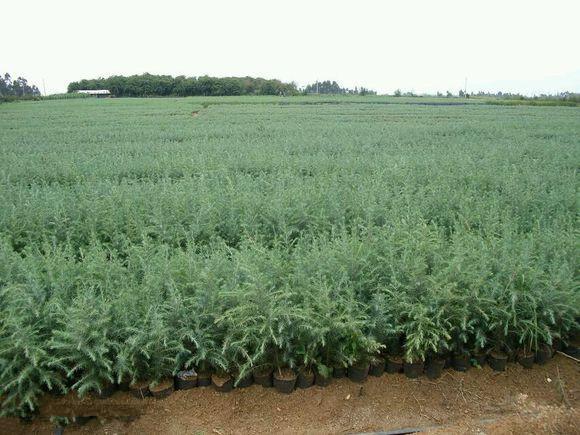
Key Technical Points for Raising Pinus tabuliformis Seedlings in Northern Regions
Pinus tabuliformis Seedling Raising Techniques in Northern Regions 1 Site Selection and Land Preparation: Pinus tabuliformis prefers fertile, loose soil with a relatively deep soil layer, and also requires good drainage and convenient irrigation. When sowing and raising seedlings, choose sandy loam or loam, and require a pH value of neutral or slightly...
条件筛选