Key Technical Points for Raising Pinus tabuliformis Seedlings in Northern Regions
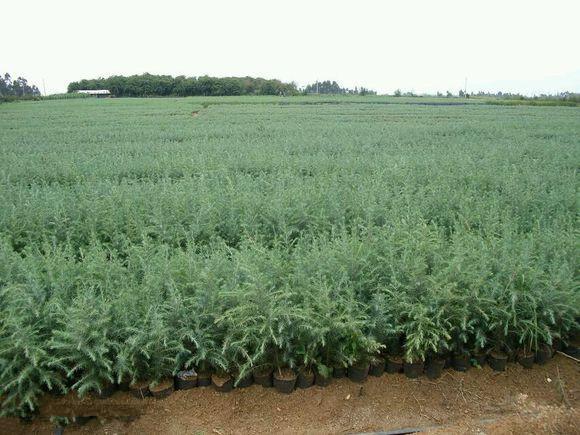
Pinus tabuliformis Seedling Raising Techniques in Northern Regions
1 Site Selection and Land Preparation
Pinus tabuliformis prefers fertile, loose plots with a relatively deep soil layer, and also requires good drainage and convenient irrigation. When sowing and raising seedlings, choose sandy loam or loam, and require a pH value of neutral or slightly acidic [Jishan Huayao]. In northern regions, for mountain seedling raising, one can generally choose a shady slope or semi-sunny slope with flat terrain and a relatively small gradient, and it must have a relatively high humus content. Because Pinus tabuliformis seedling roots have root fungi, continuous cropping can be used when raising seedlings, and the continuous cropping effect is very good. In addition, seedlings can also be raised on plots previously planted with conifers, redbud, etc.; however, the effect is poor when raising seedlings on land previously planted with elm, black locust, or with corn, potatoes, melons, fruits, and vegetables as the previous crop. After selecting the land, plow the plot in the autumn of the year before sowing, requiring deep plowing, with the best plowing depth being 30-50cm.
2 Seed Treatment
In order to increase the seed germination rate and at the same time reduce the occurrence of pests and diseases, before sowing Pinus tabuliformis seeds, disinfection, seed soaking, and germination promotion treatments are needed. During disinfection, generally choose a 0.5% formalin solution or a 0.1% potassium permanganate solution for soaking the seeds, with a soaking time of 30-60 min. After disinfecting the seeds, rinse them clean with water [2,3]. Seed soaking is mainly to eliminate the effect of the waxy layer on the surface of Pinus tabuliformis seeds on seedling emergence. Generally, soaking in warm water at about 35°C for 24 h is sufficient. After soaking, take out the seeds and place them in an environment of 25-30°C for germination promotion treatment. When 4/5 of the seeds have cracked, sowing can be carried out.
3 Sowing and Seedling Raising
In northern regions, sowing is generally carried out in April. Before sowing, it is necessary to clear debris from the seedling-raising site, then prepare the land and make beds. Generally, seedbeds about 1m wide are made, while the length can be determined according to the terrain. A 30cm walkway must be left between seedbed strips to facilitate weeding, loosening the soil, and other operations. In addition, in order to reduce the occurrence of soil pests and diseases, chemicals (using ferrous sulfate at about 375 kg/hm 2, 3% trichlorfon powder at about 45 kg/hm 2) can be mixed with soil and evenly spread into the plot, then plowed, or the chemicals can be mixed evenly with base fertilizer and applied into the seedling-raising land. When sowing, the base fertilizer applied is best decomposed farm organic fertilizer, with an application rate of 30 000 kg/hm 2. In addition, an appropriate amount of urea 225 kg/hm 2, phosphate fertilizer 375 kg/hm 2, and potassium fertilizer 225 kg/hm 2 can also be applied.
4 Seedling Stage Management
After Pinus tabuliformis seeds are sown and emerge, their seedlings grow for a relatively long time, generally requiring about 3 years of growth. During the seedling growth stage, if management is improper, their growth rate will slow down. Therefore, during the growth stage of Pinus tabuliformis seedlings, management must be done well.
4.1 Protection Before Emergence
Because Pinus tabuliformis seeds have a fragrant aroma, they easily attract some insects, birds, or mice to feed on them. After the seeds germinate and before the seedlings are fully established, protective measures must be taken, especially the prevention and control of birds and mice. Protection can be carried out through manual guarding, placing rat poison, and other methods until the seedlings are fully established.
4.2 Water and Fertilizer Management
Pinus tabuliformis seeds are different from other forest tree seeds that germinate easily. After sowing, sufficient water must be guaranteed. Therefore, after sowing, the seedling-raising field plot needs to be sprinkled with water once each morning and evening, but care must be taken not to sprinkle too much water, and waterlogging must not occur. After each sprinkling, it is sufficient for the soil to be moist. After the seedlings are fully established, irrigation can be carried out according to soil moisture conditions. Regarding fertilization, in general, because sufficient base fertilizer has already been applied before sowing, no fertilization is carried out that year; in the second year, topdressing can be carried out according to seedling growth. If the seedlings show obvious signs of malnutrition such as thin stems and yellowing needles, or if the seedlings are in a fast-growing period, timely topdressing is needed. During topdressing, nitrogen fertilizer is the main component, appropriately combined with phosphate fertilizer and potassium fertilizer.
4.3 Weeding and Soil Loosening
After the seedlings are fully established, if too much water is sprinkled on the surface or there is a lot of rainfall, the soil will become compacted. Because the root system of Pinus tabuliformis seedlings is not well developed and their growth is relatively weak, after the soil becomes compacted it is difficult for them to absorb enough nutrients. Once soil compaction occurs, timely soil loosening is needed to promote the growth of Pinus tabuliformis seedlings. At the same time, when there is a lot of rainfall or watering in the plot, it will also accelerate the growth rate of weeds. The growth of weeds will not only compete for soil nutrients, but also occupy growth space, affecting the growth of Pinus tabuliformis seedlings. Therefore, when weeds are found, they must also be removed in a timely manner.
4.4 Overwintering Protection for Seedling Raising
Winters in northern regions are cold, and because Pinus tabuliformis seedlings have underdeveloped root systems and weak growth, their cold resistance is relatively weak. In order to ensure the overwintering survival rate of the seedlings, scientific and reasonable cold protection measures need to be taken. Before overwintering, when the surface soil of the plot freezes at night and thaws during the day, carry out one winter irrigation, which can reduce the impact of freezing damage. In addition, in very cold regions, the seedlings can be buried in soil, or wheat straw, stalks, and other materials can be used to cover the seedbeds, or plastic film can be used to cover above the seedbeds.
5 Pest and Disease Control
The main diseases that Pinus tabuliformis seedlings are prone to include damping-off disease, rot disease, powdery mildew, etc.; the main insect pests that are prone to occur include pine caterpillar, pine shoot borer, etc.
5.1 Diseases
5.1.1 Damping-off Disease
5.1.1.1 Damage characteristics: Shortly after Pinus tabuliformis emerges, brown elongated spots can be seen. As time goes on, the elongated spots gradually expand, the seedling roots turn reddish-brown, the root cortex begins to rot, and then the plants dry up and die. In severely affected plots, Pinus tabuliformis seedlings die in large patches.
5.1.1.2 Control methods: First, select the nursery site well and avoid raising seedlings in places where plants susceptible to this disease grow. At the same time, when fertilizing and plowing, 70% dexon 4-6 g/m 3 can be spread in, or a 2%-3% ferrous sulfate aqueous solution can be used to irrigate the seedling-raising land, with an amount of 9 L/m 3. Second, when sowing, fertilize reasonably, and farm organic fertilizer must be fully decomposed when applied. After emergence, for plants in the early stage of disease, spray 72.2% Previcur aqueous solution at 400 times dilution, or 20% tolclofos-methyl emulsifiable concentrate at 1 200 times dilution, or 75% chlorothalonil wettable powder at 600 times dilution, or 50% wettable Tuzet at 800-1 000 times dilution, or spray seedlings with 1:1:100 Bordeaux mixture.
5.1.2 Rot Disease
5.1.2.1 Damage characteristics: It mainly damages the central trunk and the cortex at the lower part of the main branches. The diseased part initially appears reddish-brown, slightly raised, water-soaked, and afterward the cortex rots, often exuding yellow-brown sap, wet-rot-like, with a distiller's grains smell. The lesions are round or oval, with unclear edges, sometimes showing alternating light and dark concentric rings.
5.1.2.2 Control methods: Strengthen cultivation management, prune and thin in a timely manner, cut out diseased plants and burn them, and choose local tree species with strong stress resistance. In addition, the diseased bark can also be scraped clean and 1-2 applications of fungicide can be applied. The agents can include 40% asomate, Tuzet, lime sulfur mixture, 843 rehabilitation agent, rot-ling, etc.
5.1.3 Powdery Mildew
5.1.3.1 Damage characteristics: It mainly damages new shoots and tender leaves. After new shoots are damaged, the internodes shorten, the leaves become slender, the leaf margins curl upward, and the texture becomes hard and brittle. The damaged part is covered with a layer of white powder, which later turns yellow-brown. In severe cases, the entire shoot dies.
5.1.3.2 Control methods: Remove the pathogen; strengthen cultivation management; chemical control mainly includes thiophanate-methyl, carbendazim, benomyl, asomate, etc.
5.2 Insect Pests
5.2.1 Pine Caterpillar Pine caterpillar generally occurs mostly around the Spring Festival, with the initial occurrence period in late March. Overwintering larvae begin to climb up the crown to cause damage. The requirements for the living environment are also becoming higher and higher, and a beautiful landscape environment has become a major factor people consider. The growing material and cultural needs have stimulated the development of the leisure tourism and health preservation industries, and the development of the leisure tourism and health preservation industries cannot be separated from the support of the landscape industry. The development of the landscape industry in turn has driven the recovery of the nursery stock market.
3 Advantages of Pinus bungeana in Landscape Greening, Afforestation, and Windbreak and Sand Fixation
3.1 Landscape Greening and Afforestation
Facing a good forestry development situation, with the support of the national forest promotion policy, and as the status of native tree species in landscape greening continues to rise, Pinus bungeana, as a native tree species unique to China, will have huge potential in the future nursery stock market. Also, because of its beautiful tree form and peculiar bark, it has high ornamental value, so it is very favored in landscape greening. The characteristics of Pinus bungeana being tolerant of barrenness and drought allow it to be planted in many places.
3.2 Windbreak and Sand Fixation, and Accelerating Dust Deposition
Pinus bungeana has many branches, dense needles, and a well-developed root system, giving it a relatively good effect in windbreak and sand fixation and accelerating dust deposition. When establishing shelterbelt strips in wind-damage areas, the wind speed within the protection range can be reduced by about 30%, and the total forest leaf area can reach 75 times its land area. A fully formed Pinus bungeana has about 6.6 million needles, and in addition there are some hair-like structures on the leaves, which greatly enhance its ability to adsorb dust.