-

How should sows be raised to produce more piglets?
1. Select good gilts to keep. Gilts should be selected from the offspring of high-yielding boars and sows, and attention should also be paid to selecting those sows with many teats. 2. Appropriate age for first mating is very important. Generally, under normal feeding and management conditions, it is suitable for local-breed sows to begin mating at 6 to 7 months of age and a body weight of more than 50 kg, while for exotic breeds it is suitable to begin mating at 9 to 10 months of age and a body weight of more than 75 kg. Sows generally have the strongest reproductive capacity and produce the most piglets from the third to the seventh litter, and the piglets have a large birth weight, strong constitution and strong vitality
-
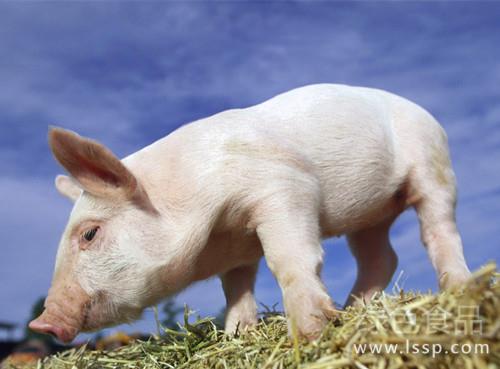
Improper management of piglets born in winter can easily lead to death; how to keep them alive
Cold winter, improper management makes piglets prone to death, how to keep winter-born piglets alive
-
Prevention and Treatment of Sudden Stress Reactions in Piglets After Castration
I. Symptoms. Piglets experiencing a stress reaction suddenly have their body temperature rise to around 40°C, with rapid breathing; vomiting and diarrhea; lying down and trembling, with purplish skin color, lying on their side, paddling movements of the legs, and neurological symptoms; severely affected cases die. II. Treatment. We use the following treatment methods: (1) Subcutaneous injection of epinephrine hydrochloride injection, 0.05 mg per kg of body weight; (2) Intramuscular injection of Kangfuxin injection, 0.2 mg per kg of body weight; (3) Intramuscular injection of compound sulfamethoxazole injection, 0.2 g per kg of body weight.
-
What are the common reasons why piglets grow slowly?
Some farmers report that the piglets they raise at home grow especially slowly. What exactly are the reasons? On analysis, there are mainly the following reasons. 1. Improper weaning. Farmers raising pigs mostly adopt the one-time weaning method, and the piglets are put on the market immediately after weaning, so the piglets' original living conditions, centered on the mother and living together with littermates in a stable and comfortable environment, suddenly change, making it hard for them to adapt for a time, which affects weight gain. In the 5-6 days before weaning, the number of suckling times should be gradually reduced until weaning is complete. 2. Delayed supplementary feeding. During the suckling
-
What nutritional points should be noted when raising piglets in spring and summer?
From March to June, temperatures gradually rise, which is exactly a favorable period for developing pig production. Four issues should be noted in feeding. First, pay attention to temperature changes. In spring and summer, temperatures vary greatly, there is more rain, and humidity is relatively high. Pigs prefer a dry environment, have little fat tissue, and piglets are prone to feeling cold. Therefore, the temperature inside the shed and the dry environment of the pen should be maintained. Second, pay attention to increasing protein feed. Especially for piglets that have undergone long-distance transport, because they are stimulated by wind, cold, and the bumps of vehicles and boats, some piglets
-
6 reasons piglets grow slowly, pig farmers should learn about them early
1. Improper weaning: Farmers often use the one-time weaning method, and the piglets are sold immediately after weaning, causing the piglets' original living conditions - centered on the mother and living together with littermates in a stable and comfortable environment - to suddenly change, making it difficult for them to adapt for a time and affecting weight gain. The number of sucklings given to piglets should be gradually reduced 5 to 6 days before weaning until weaning is complete. 2. Delayed supplementary feeding: If piglets are not given supplementary feed in time during the suckling stage, they cannot eat well after weaning, resulting in slow growth and stunted development. Generally, supplementary feeding should start when piglets are 10 days old
-
How to improve the quality of piglets? Practical breeding methods to share
Piglets have an imperfect digestive function, an underdeveloped enzyme system, and a lack of innate immunity, with poor digestion and disease resistance, making them susceptible to infections that affect their growth and development. Choosing good breeding sows: generally speaking, piglets with a high birth weight have strong resistance and grow quickly, and this trait is highly heritable. Therefore, when selecting sows to retain, litter selection must be carried out, choosing piglets from the litter that are well developed, have many and neatly arranged teats, and a good body type for breeding use. In addition, within the same breed, large individuals among sows can better
-
Causes and Treatment of Trembling in Newborn Piglets
Trembling in newborn piglets is mostly caused by infection with porcine circovirus type 1 during pregnancy. Sometimes porcine circovirus type 2 can also cause this phenomenon. The infection causes impaired myelin development of the nerve fibers in piglets and impaired nerve conduction, resulting in "jumpy pig disease." It can be treated by assisted nursing. Keepers help the piglets find the teats; as long as they get milk, these piglets can recover over time.
-
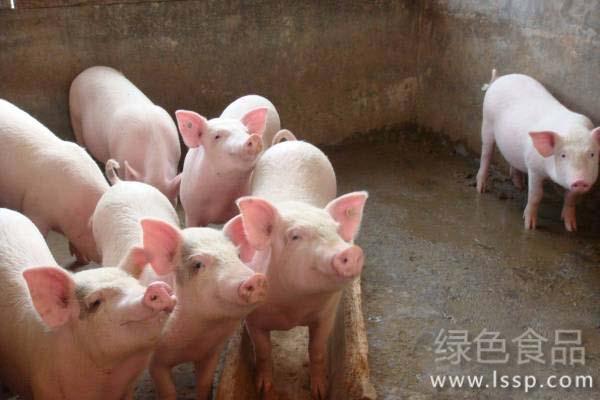
How to treat nutritional anemia in piglets? Detailed explanation of causes and treatment methods
Causes and treatment methods of nutritional anemia in piglets
-
Method for Treating Curled-Ear Disease in Piglets with Arisaema
After piglets contract curled-ear disease, their body temperature rises, their food intake decreases, and they gradually become emaciated and are prone to becoming stunted pigs. The author used Arisaema (wild taro) to treat this disease, with very good results. The method is: take 100 grams of dried Arisaema (enough for 10 piglets), add 4 kg of water, boil for 20 minutes, remove the residue, divide into 3 meals and mix with feed to feed the piglets; after 3 days the curled-ear phenomenon is eliminated and appetite increases.
条件筛选