-
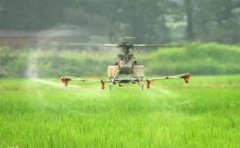
Drone crop-dusting of herbicides offers many advantages, but operators must obtain a training pass certificate before they can work
Faced with problems such as rural depopulation and an increasingly aging population, how to use mechanical equipment to reduce manpower has become an important issue, and using drones to spray pesticides has become one of the options. The Council of Agriculture recently gave notice of the "Regulations Governing the Use of Pesticides and the Random Inspection of Pesticide Residues in Agricultural Products"
-
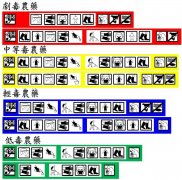
Strengthening Pesticide Labeling Management, Mandating Operators to Disclose Characteristics to Enhance Safety of Use
The Council of Agriculture (COA) announced at the end of last year the draft amendment to the Pesticide Labeling Management Regulations, introducing the Globally Harmonized System of Classification and Labelling of Chemicals (GHS harmonized system). The WTO notification process was recently completed, and only the completion of modifications to the label sample output system remains. Once manufacturer testing proceeds smoothly, the regulations can
-

A Detailed Explanation of the Benefits and Key Operational Techniques of Bagging Pear Fruit
There are many varieties of pears, which are grown relatively widely in the northern regions of our country and have relatively high requirements for the growing environment. During the cultivation of pear trees, bagging is often used during the fruiting period to increase the economic benefits and marketability of the pears. Let's take a look below.
-
How to manage water and fertilizer for crops in winter? Careful operation brings a bigger harvest
In the cold winter season, many plants enter a dormant state, and at this time the water and fertilizer management of crops needs to be very careful. Without careful management in winter, the growth of crops the following year may be affected. So how should water and fertilizer management for crops be done in winter?
-
Detailed Explanation of the Key Technical Points and Operation Methods of the Second Film-Covering Technique for Garlic
Adopting a double-layer plastic film mulching cultivation technique for garlic can increase yield, bring it to market earlier, and boost profits. Below, the editor will introduce the second film-covering technique for garlic. 1. Second film-covering technique for garlic: When covering with film, the plastic film is required to lie flat on the bed surface without wrinkles, with no gaps beneath the film, so that the film fits tightly against the bed surface and weeds are prevented from growing. When more than 50% of the garlic has emerged, break the film by piercing holes in it with a sharp iron wire, keeping the hole diameter at about 1 cm.
-
Key Technical Points and Operation Methods of Vegetable Grafting Explained
Abstract Top-insertion grafting method: Pull the bamboo skewer inserted in the rootstock out, then insert the trimmed scion into the hole, with the scion cotyledons and rootstock cotyledons forming a "cross" shape. Approach grafting method: Insert the scion cut into the rootstock stem cut, the two cuts need to fit tightly together, then use a grafting clip ⟦4 <p class="cintro"><span>Abstract</span>Top-insertion grafting method: Pull the bamboo skewer inserted in the rootstock out, then insert the trimmed scion into the hole, with the scion cotyledons and rootstock cotyledons forming a "cross" shape. Approach grafting method: Insert the scion cut into the rootstock stem cut, the two cuts need to fit tightly together, then use a grafting clip to secure the joint. Cleft grafting method: Insert the trimmed scion into the cleft, keeping the rootstock and scion surfaces level, then use a grafting clip for securing.</p> <p></p> <p><strong>I. Vegetable Grafting Techniques</strong></p><p>1. Top-insertion grafting method</p><p>(1) Removing the rootstock growing point: A blade or bamboo skewer can be used to cut off the true leaves and growing point of the rootstock.</p><p>(2) Cutting the rootstock: A bamboo skewer with the same thickness as the scion hypocotyl and a wedge-shaped tip can be used, then insert it at a downward slant from the main vein of one cotyledon of the rootstock toward the other cotyledon to a depth of 1cm; generally, it is best if the outer epidermis is not pierced and the bamboo skewer is faintly visible.</p><p>(3) Cutting the scion: At 1-1.5cm below the cotyledon node, use a blade to cut it into a wedge-shaped face with a bevel length of 1cm.</p><p>(4) Grafting: Pull the bamboo skewer inserted in the rootstock out, then insert the trimmed scion into the hole, with the scion cotyledons and rootstock cotyledons forming a “cross” shape.</p><p></p><p>2. Approach grafting method</p><p>(1) Removing the rootstock growing point: A blade or bamboo skewer can be used to cut off the true leaves and growing point of the rootstock.</p><p>(2) Cutting the rootstock: At 0.5-1cm below the cotyledons, use a blade to make a downward slanting cut, with the depth needing to reach 1/2 of the stem thickness.</p><p>(3) Cutting the scion: Make an upward slanting cut at the corresponding part of the scion, generally with the depth reaching 1/2 of the stem thickness, and the cut length the same as the rootstock cut.</p><p>(4) Grafting: Insert the scion cut into the rootstock stem cut, the two cuts need to fit tightly together, then use a grafting clip to secure the joint.</p><p>(5) Root cutting: After grafting, plant the rootstock and scion together into a nutrient pot, about 1cm apart, with the joint about 3cm from the soil surface; wait 7 days for the joint to heal, then cut off the scion root; generally after 10-15 days, the grafting clip can be removed.</p><p></p><p>3. Cleft grafting method</p><p>(1) Removing the rootstock growing point: A blade or bamboo skewer can be used to cut off the true leaves and growing point of the rootstock.</p><p>(2) Cutting the rootstock: From between the 2 cotyledons, split the young stem downward, with a length of 1-1.5cm.</p><p>(3) Cutting the scion: Cut the scion young stem into a wedge shape, with a cut surface length of 1-1.5cm.</p><p>(4) Grafting: Insert the trimmed scion into the cleft, keeping the rootstock and scion surfaces level, then use a grafting clip for securing.</p><p></p><p><strong>II. Suitable Grafting Time for Vegetables</strong></p><p>1. Cucurbits: When the cotyledons are fully expanded and when the true leaves appear, this is the suitable grafting period.</p><p>2. Eggplant: When the rootstock has grown 3-4 true leaves and the scion has grown 2-3 true leaves, grafting requires retaining 1 true leaf.</p><p>3. Tomato: When the rootstock has grown 4-5 true leaves and the scion has grown 2-3 true leaves, grafting requires retaining 1 true leaf.</p>
-
Detailed Explanation of Eggplant Grafting Techniques, with Operation Process
Abstract Rootstock introduction: Ping eggplant rootstock, prickly eggplant rootstock, and Torubamu rootstock have relatively high disease resistance and grafting survival rates. Scion selection: Nongyou long eggplant, Hangzhou red eggplant, Xi'an green eggplant, etc. Grafting seedling cultivation: sow the rootstock first, then the scion. Cleft grafting: when the rootstock grows to
-
Key Points and Operation Methods of Jujube Tree Grafting Techniques Explained
The jujube tree is a fruit tree with a long history of cultivation in China, and it is grown in many regions. Every year when the jujube trees ripen, knocking down jujubes is also a childhood pleasure. Nowadays many people use grafting techniques when growing jujube trees, and grafted jujube trees
-
Key Points and Detailed Operation Methods of Citrus Grafting Techniques
Citrus is a very common fruit in our daily life, and regular consumption also has dietary therapeutic effects in preventing cancer. It is rich in nutrients, so it is deeply sought after by people. As we all know, citrus is a fruit that can be grafted, and after grafting, some of its undesirable
-
Key Points and Detailed Operation Methods of Chestnut Tree Grafting Techniques
"Transplanting flowers onto a different tree" was originally a derogatory term, a metaphor for secretly using means to swap people or things in order to deceive others. But in the world of plants, "transplanting flowers onto a different tree" can only be described as a good path for development and innovation. There are two ways to propagate chestnuts: one is to cultivate saplings
条件筛选