Strengthening Pesticide Labeling Management, Mandating Operators to Disclose Characteristics to Enhance Safety of Use
The Council of Agriculture (COA) announced at the end of last year the draft amendment to the Pesticide Labeling Management Regulations, introducing the Globally Harmonized System of Classification and Labelling of Chemicals (GHS harmonized system). The WTO notification process was recently completed, and only the completion of modifications to the label sample output system remains. Once manufacturer testing proceeds smoothly, the regulations can be officially announced and implemented. The Bureau of Animal and Plant Health Inspection and Quarantine (BAPHIQ) of the COA stated that the new pesticide labeling regulations recognize that pesticide operators have an obligation to disclose the characteristics of pesticide products, which will provide better protection for the safety of pesticide users.
BAPHIQ Deputy Director-General Tsou Hui-chuan pointed out that pesticide products are becoming increasingly diverse, and pesticide management must keep pace with the times. Moreover, with frequent global trade in chemicals, all countries have established relevant regulations to ensure the safety of chemical use, transportation and disposal. Taiwan, China currently bases its labeling and management of chemical hazard information on national standard CNS15030. Although CNS15030 was already established in accordance with the GHS harmonized system, BAPHIQ believes there is a need to further strengthen pesticide labeling management, align with international standards, and enhance the differentiation of individual product characteristics. Therefore, it decided to amend the Pesticide Labeling Management Regulations.
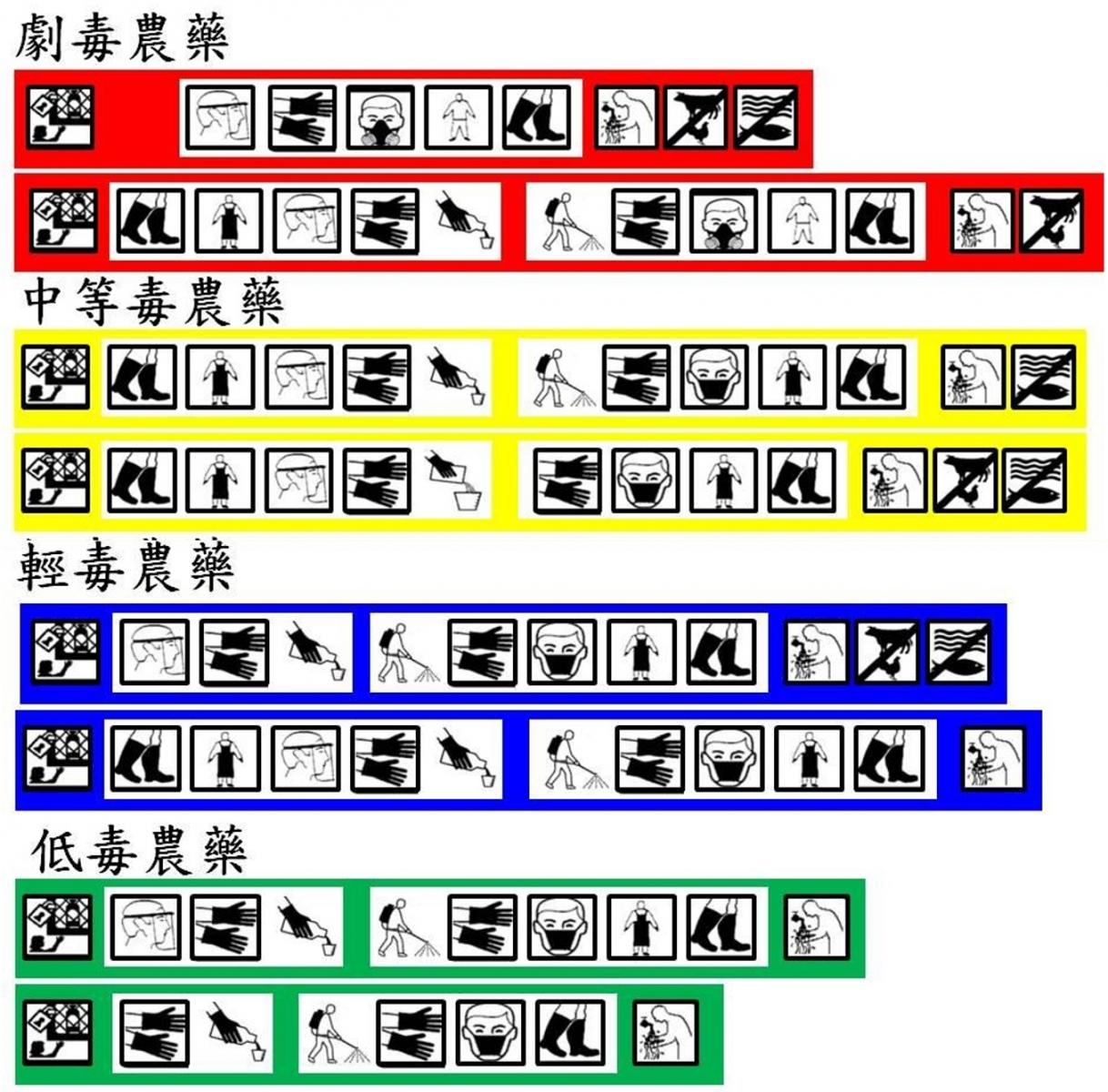
BAPHIQ explained the key points of the amendment to the Pesticide Labeling Management Regulations, including: establishing a label sample output operating system to assist operators in marking hazard pictograms and hazard information according to product characteristics; after labeling changes, operators may not replace labels by alteration, sticker correction or repeated pasting; incorporating pesticide mode-of-action codes and pesticide product barcodes into the required items on pesticide labels, and marking hazard pictograms and hazard prevention pictograms that comply with the GHS harmonized system; instructions must be delivered when selling pesticides, and the instructions must not be separated from each retail unit of pesticide; images and text must not overlap with the required items on pesticide labels, so that users can clearly read pesticide labels; adding classification and pictograms for acute toxicity of pesticides to bees, to strengthen the management of pesticide hazards to non-target organisms.
Tsou Hui-chuan said that regarding the various tasks in response to the regulatory amendment, apart from the label sample output operating system, which has not yet been completed, all other preparatory work is already in place. As for whether the label sample output operating system is suitable, manufacturers were asked to test it in March of this year, but operators raised some opinions, and the system needs further adjustment. It is estimated that manufacturers will be invited to try it again in June, and if there are no problems, BAPHIQ will make an official announcement.
BAPHIQ pointed out that this regulatory amendment requires pesticide operators to shoulder the obligation of disclosing the characteristics of pesticide products, and they must provide users with detailed operating instructions to enhance the safety of pesticide use. However, after the announcement of the partial articles of the amendment to the Pesticide Labeling Management Regulations, operators are given a buffer period of up to 3 years. Tsou Hui-chuan explained that after the announcement, there will still be pesticides already manufactured and on sale in the market, and it is impossible to recall them for relabeling. Therefore, a 3-year buffer period is granted. Nevertheless, pesticides manufactured after the announcement must be labeled in accordance with the new regulations.