-
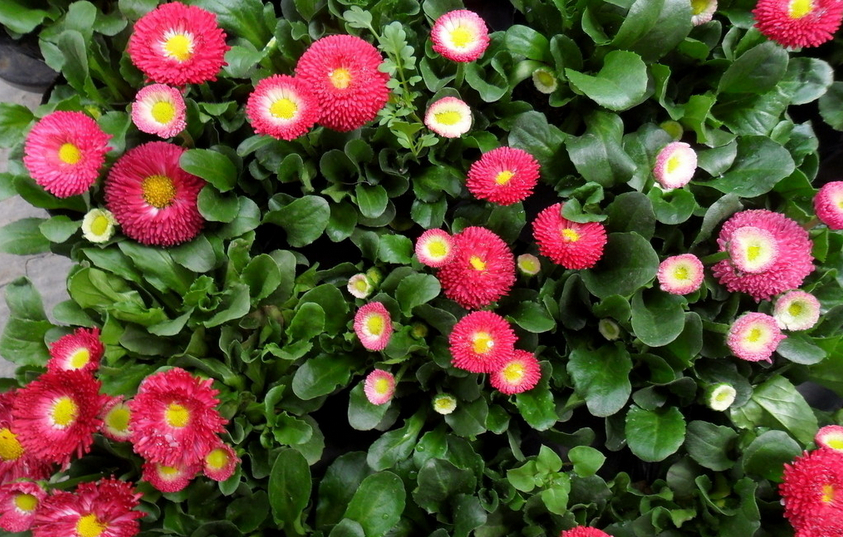
Detailed Guide to Planting Daisy Seeds and Points to Note
The daisy is a perennial herbaceous plant of the genus Bellis in the Asteraceae family. It is relatively cold-tolerant and is often grown as a biennial. Some flower lovers want to grow it, but are troubled by not knowing how to plant daisy seeds. In fact, planting daisy seeds is not that difficult. Daisy seeds are mainly sown between August and September each year (this is the relatively best time
-
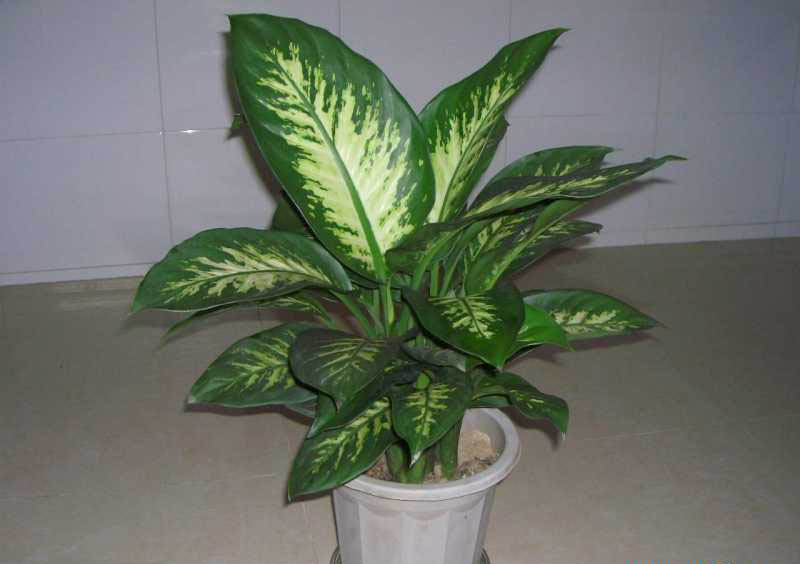
How to Care for Aglaonema 'Silver Queen' and Key Points to Note
Aglaonema 'Silver Queen' is also known as Silver Queen Chinese Evergreen. Its leaves are pale silver-gray, dotted with dark green markings. It likes a warm, humid environment and bright, indirect light, and it also tolerates shade. The optimum growing temperature is 20-30°C, and the wintering temperature should not fall below 12°C. A fertile soil rich in humus is ideal.
-

Several key points to note when grazing sheep in early spring
1. Choice of grazing land. It should be chosen in sunny slope areas close to the winter grazing land, where grass sprouts earlier, so that when the weather changes suddenly the sheep can be driven back to the pen in time to take shelter. When the amount of green grass is not yet enough for the sheep to eat half their fill, each day the sheep should first be driven to shady slopes with more dry grass, and after the sheep have eaten some dry grass, they should then be driven to the green grass on the sunny slopes. 2. Prevent "running after green". When green grass has just begun to sprout, it looks present from afar but absent up close, and the sheep tend to run around everywhere, commonly known as "running after green". Not only do they fail to eat their fill, but they also use up their strength. They should be grazed on shady slopes with plenty of dry grass, and
-

Notes for Beginners on Raising Chickens and Key Points of Daily Feeding Management
Notes for Beginners on Raising Chickens
-

-
What are the methods for collecting goose down and feathers, and what points should be noted?
1. Plucking from the carcass means collecting all the goose down and feathers at once after slaughter, and it is further divided into three collection methods: hot-water scalding, steam plucking and dry plucking. The hot-water scalding method is also called the soaking-and-scalding method or the scalding-and-defeathering method. After the goose is slaughtered, collect the goose blood and drain it as completely as possible to ensure the quality of the goose carcass and internal organs, so that the carcass has no residual blood, the body surface is clean and attractive, and the meat quality is good. It is best to pull out the large quills on both wings (tip quills, blade quills, nest quills) before scalding and store and sell them separately. Otherwise, once mixed into the feathers, they not only affect down quality but are also treated as waste and wasted. After slaughter, use
-
Points to note when raising pigs in summer: do not throw cold water on the pigs
In summer, when the temperature is high, pigs often pant loudly from the heat. Some farmers, worried that the pigs will fall ill from the heat, throw cold water on the pigs, hoping to cool them down and make them feel more comfortable, not realizing that this is harmful and does no good. Pigs pant from the heat because their sweating is poor, so the heat in their bodies cannot be released for the time being. If cold water is thrown on a pig at this time, the strong cold stimulation makes the sweat pores all over the pig's body contract sharply, the release of body heat is blocked, and the body temperature instead rises abruptly; in mild cases the pig develops a high fever and inflammation of the lungs, and in severe cases it
-
Key points to note during jujube storage
1. Thoroughly disinfect the storage room with CT storage-room disinfectant. 2. Lower the storage temperature to 0°C within 2 days before loading. 3. Jujubes should be harvested at the white-ripe stage, that is, when the fruit turns from green to white and the surface is slightly tinged with red. 4. Harvest with the fruit stalk attached; jujubes that have been knocked down with sticks must never be put into storage. 5. Jujubes sprayed with hormones such as ripening accelerators before harvest are not suitable for storage. 6. After harvesting, sort the jujube fruit, dip it in CT liquid preservative specially for jujubes, and pre-cool at 0°C while draining until the fruit temperature is 0
-
What issues should be noted when harvesting edible mushrooms
1. Harvest at the right time. When edible mushrooms are 70-80% mature, they look beautiful and taste good. Take shiitake mushrooms (Lentinula edodes) as an example: the sign of 70-80% maturity is that the partial veil has broken, the cap has not yet fully opened and still curls inward slightly, forming a "gong rim"; the gills have fully extended and turned from white to yellowish-brown or dark brown. This is the suitable harvest period for shiitake mushrooms. 2. Pay attention to picking technique. When picking edible mushrooms, all stemmed mushrooms, such as shiitake, straw mushrooms, oyster mushrooms, and bamboo fungus (Phallus indusiatus), must be picked according to the principle of picking the large and leaving the small. When picking, pinch the base of the mushroom stem tightly with your thumb and index finger,
-
Six points to note when injecting a sick turtle
In recent years, artificial turtle farming has gradually gained popularity, but diseases have also shown a trend of local spread. There are many ways to administer medication to prevent and treat turtle diseases, such as oral medication, applying medication, injections, and medicated baths. Once a turtle becomes ill, the treatment work is very different from that for other animals, mainly because turtles have a very hard shell. According to the author's more than ten years of breeding and production practice, the injection method is the most effective, because the medicinal liquid is injected directly into the turtle's body and absorbed quickly. However, the author reminds the majority of turtle farmers that when injecting turtles, the following points should be noted: 1. Never use
条件筛选