-
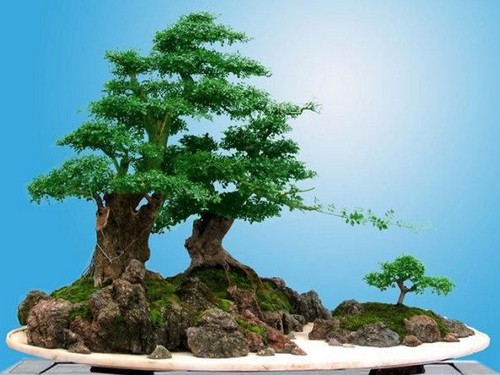
A Detailed Guide to Scientific Fertilization Methods for Chinese Ash (Fraxinus chinensis) Bonsai
During the growing season, apply light fertilizer frequently. To facilitate absorption by the tree and avoid wasting fertilizer solution, it is best to apply once every 5-7 days. Fertilization is generally carried out on a sunny afternoon when the potting soil is on the dry side, and after application, water to rinse the leaves. On rainy days when the potting soil is wet, the tree roots cannot breathe well, and after fertilization the roots do not absorb it easily; in strong sun: even in the hottest days of the dog days of summer
-
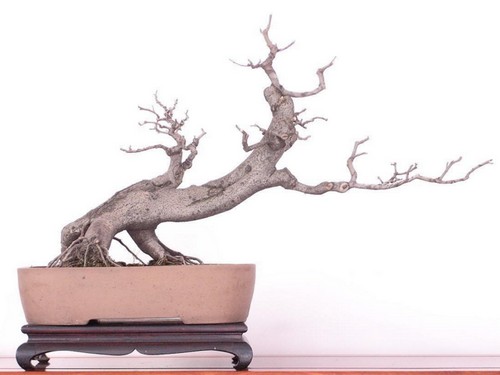
Detailed explanation of branch-pad styling methods for Chinese ash bonsai
Chinese ash (Fraxinus hupehensis) is a fast-growing species with vigorous growth. After one year of training and pruning of the trunk and primary branches, apart from a few terminal transition branches, cascading branches and drooping branches deliberately left long to thicken, most branches can be pruned and built into pads in the second year. In the early stage, primary and secondary branches are mainly wired (or guyed), with pruning as a supplement; in the later stage, once the branch pads have basically taken shape, pruning becomes the main method.
-

How to Propagate Dahlias? A Detailed Guide to Common Propagation Methods
Dahlia is a perennial herbaceous flower in the genus Dahlia of the family Asteraceae (Compositae), native to Mexico and the national flower of Mexico. It has a great many varieties, rich colors, and varied flower forms, symbolizing elegance and splendor. It is a world-famous flower, with about 30,000 cultivated varieties, available in almost any color, and found in gardens all over the world.
-
How to Propagate Amaryllis Using the Twin-Scaling Method? Illustrated Technique Tutorial
Amaryllis potted plants: most modern cultivars are hybrids, with large blooms and brilliant colors, including bright red, rose red, orange-red, light red, white, blue-purple, green, pink with white, and red with yellow; aside from pure blue, pure black, and pure green, their flower colors can now cover all the other colors in the spectrum.
-
How to Propagate Amaryllis? Introduction to Common Propagation Methods
Amaryllis is commonly propagated by methods such as offset division, sowing, bulb cutting and tissue culture. In recent years, scale cutting, wounding and tissue culture methods have been widely adopted abroad for propagating amaryllis. Offset division propagation: peel off the small bulbs growing around the large bulb and plant them separately. When in bloom, hand pollination can be carried out to make it set seeds.
-
Bonsai pruning methods vary according to the characteristics of the plant
Although bonsai trees have undergone intentional shaping by people, they have still not lost their life and will continue to grow. If not pruned, they will inevitably affect the tree's form and lose their artistic value. Therefore, timely pruning is necessary: long branches should be cut short, and dense branches should be thinned out, so as to maintain a graceful tree form and appropriate proportions.
-
What are the propagation methods for Brugmansia?
Brugmansia, also known as angel's trumpet, is one of the world's ten most dangerous plants and is the terrifying character in the plant kingdom most likely to turn people into zombies. Native to South America, it has thick stems and large, heart-shaped leaves with tapering tips, and white, trumpet-shaped drooping flowers that bloom from June to October. Brugmansia contains deadly scopolamine
-
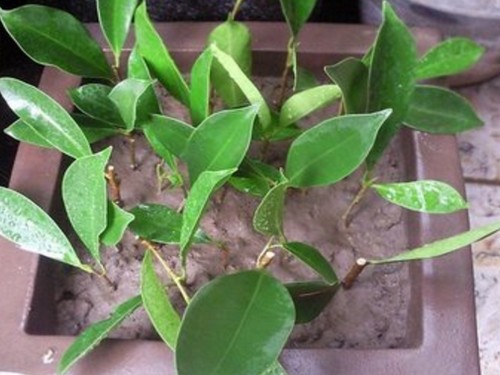
How to Propagate a Potted Ficus? A Detailed Guide to Common Propagation Methods
Ficus is an evergreen plant in the Moraceae family, with an elegant, expansive canopy and aerial roots that can form a forest from a single tree. It tolerates shade as well as sun, and moisture as well as drought. It has many varieties and is easy to shape, making it an excellent tree species for soil and water conservation, urban greening, and bonsai creation. Common propagation methods for Ficus include cuttings, layering, and buried layering. In northern greenhouses,
-
What are the pruning methods for juniper bonsai?
Juniper, as the name suggests, is a cypress with truly excellent qualities and the most beautiful variety, regarded as the king of cypresses in the Japanese bonsai world and deeply revered. According to reference materials, the juniper commonly seen in bonsai circles is actually a variety of alpine juniper, and most are deep-mountain junipers. Juniper is one of the excellent materials for making bonsai, with dense branches and fine leaves
-
How to Water a Dawn Redwood Bonsai? A Complete Guide to Methods and Precautions
Dawn redwood (Metasequoia glyptostroboides) is a "living fossil" tree species and a tree grown for its autumn foliage. It can be made into a dawn redwood bonsai for ornamental display, and can also be used for greening along embankments, lakesides, pond edges, courtyards and other areas. During its care, watering technique is crucial. Below is an introduction to the watering methods and precautions for dawn redwood bonsai: 1. Newly planted dawn redwood bonsai
条件筛选