-
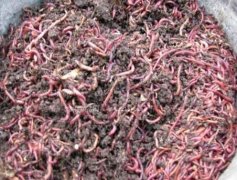
Key Management Techniques for Raising Earthworms in Open Fields in Winter
Earthworm farming now brings high economic returns, which has led many people to raise earthworms, so what are the key management points for earthworms, do you know? 1. Daily management should be done carefully, including checking temperature and humidity, egg laying and hatching, feeding conditions, pest intrusion and abnormal phenomena
-

Detailed Explanation of Field Management Techniques for Corydalis yanhusuo
Field Management Techniques for Corydalis yanhusuo
-

Key Technical Points and Management Methods for Northern Pike Farming
Farming Techniques for Northern Pike
-

Cultivation Techniques and Key Field Management Points for Bistort
Cultivation Techniques for Bistort
-

Planting Techniques and Management Methods for Sarcandra glabra
Planting Techniques for Sarcandra glabra
-

How to carry out field management of Polygonatum? Detailed explanation of the technical key points
(1) Intertillage and weeding: After emergence, weeding should be carried out frequently, especially during the seedling stage of sown fields, where timely weeding is even more necessary to prevent large weeds from overwhelming the seedlings and affecting growth. (2) Thinning and final thinning: When the seedlings are 5-8 cm tall, remove the overly dense small seedlings; before withering in autumn or after emergence the following year, carry out final thinning at a plant spacing of 8-10 cm. Take the thinned seedlings to a different location for transplanting. (3) Drought prevention and drainage: Polygonatum prefers moist soil. In dry weather, water promptly to keep the soil moist; in the rainy season, ensure good drainage to avoid water accumulation in the field and prevent root
-
Detailed Explanation of Key Management Techniques for Forcing Cultivation of Tulips
Tulip (Tulipa gesneriana), of the Liliaceae family and the genus Tulipa, is a perennial bulbous herbaceous flower, and is a world-famous material for cut flowers as well as flower beds and flower borders. Its elegant and graceful flower form and pure, simple fragrance make it deeply loved by people. Due to the tulip's own biological characteristics and ecological habits, under natural cultivation conditions in northwest China, people can only catch a glimpse of its elegance and splendor from May to June each year. In recent years, in order to enable tulips to appear on the flower market stage from New Year's Day to the Spring Festival, we have used solar energy-saving
-
Detailed Explanation of the Key Management Techniques for Snake Self-Breeding and Self-Rearing
The following points should be noted in the self-breeding and self-rearing of snakes: 1. Seed selection: Every spring, robust and plump female snakes should be selected as breeding snakes. Regardless of whether they are venomous or non-venomous snakes, they generally lay eggs from late June to July. Before and after laying eggs, the female snakes should be fed nutrient-rich food containing plenty of calcium, and they should be allowed to eat and drink their fill as much as possible. Whether the female snake has mated need not be considered; once a female snake mates, she can produce fertilized eggs for five years. 2. Incubation: To prevent the snake eggs from drying out and becoming sunken, the eggs laid should be promptly placed in an incubation vat for artificial incubation,
-
Three key techniques for field management of autumn potatoes
Doing a good job in autumn and winter field management is the key technique for obtaining a high yield of autumn potatoes, and the specific measures are as follows: 1. Timely intertillage and weeding, and topdressing according to the seedlings: because autumn has short sunshine, which is suitable for tuber growth, the plants set tubers early and are not prone to excessive vegetative growth, so management should focus on promoting growth. When 60-70% of the potatoes have emerged, apply 2.5-3 kg of urea per mu, mixed with 1600-2000 kg of water and fertilizer, by hole application; when they grow to 30-40 cm, apply 500 kg of plant ash per mu, mixed with 40-50
-
Detailed Explanation of the Three-Drainage and Three-Irrigation Water Management Measures for Rice
1. Three Drainages. First drainage: From the critical tillering stage to the stage when the penultimate leaf tip emerges (20 days before heading), the field should be drained and sun-dried to control the growth of ineffective tillers. For fields with vigorous seedling growth and dark green leaf color, as well as fertile fields and cold-waterlogged fields, heavy sun-drying should be carried out to promote fading of leaf color; for fields with poor seedling growth, as well as lean fields and fields with a low groundwater table, multiple light sun-dryings should be carried out, combining sun-drying with exposure, with the degree judged by the field not sinking underfoot. Second drainage: From 5-7 days before heading to the heading stage, a second drainage should be carried out to improve rice root vigor and enhance the roots' ability to absorb nutrients
条件筛选