-
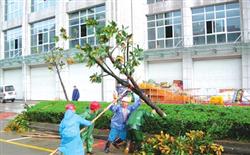
What are the methods to prevent Southern magnolia (Magnolia grandiflora) from falling over?
What methods can prevent Southern magnolia from falling over? Please give an introduction. The Southern magnolia tree is an excellent urban street tree, with pure white and large flowers, a tall and straight trunk, a beautiful crown, dark green leaves, and strong resistance to pollution and dust absorption. Measures to prevent Southern magnolia from falling over include: 1. In terms of purchasing Southern magnolia trees, choose...
-
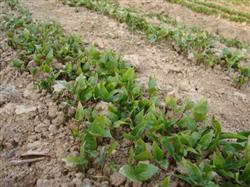
Detailed Explanation of Magnolia grandiflora Propagation Methods and Techniques
How to propagate Magnolia grandiflora? Here is an introduction. Magnolia grandiflora propagation can be done by referring to the following methods: Magnolia grandiflora propagation mainly relies on grafting, using Magnolia liliiflora and Magnolia aromatica as rootstock, performing cleft grafting, side grafting or bud grafting, etc. Cuttings can be taken in early June when the lateral buds on new shoots are plump. Layering is suitable for preserving and developing famous and superior varieties...
-

How to grow Chloranthus spicatus? Detailed guide to cultivation methods and precautions
Cultivation methods and precautions for Chloranthus spicatus
-

-

An Analysis of the Floral Language, Symbolism and Cultural Connotations of Gladiolus
The Floral Language and Culture of Gladiolus
-

A Complete Analysis of the Floral Language, Symbolism and Legendary Stories of the Pansy
The Floral Language and Legends of the Pansy
-

Unique and Colorful: A Brief Discussion of Butterfly-Type Floral Art in Chinese Cymbidiums
The "butterflies" among Chinese orchids, in all their myriad forms, have formed one of the most captivating groups in Chinese cymbidiums, collectively known as "Chinese Cymbidium Butterfly-Type Floral Art." Concept: In the flowers of Chinese cymbidiums, if 2 sepals (lateral sepals) or 2 petals (petals) undergo partial or complete mutation into a lip, then the flower colors of this type of orchid become richer and more varied. Usually the lip-transformed perianth segments bear colors such as green, white, red, and pale yellow. These mutated perianth segments curl backward or outward at the tip just like a lip (labellum), and their shape and color resemble butterfly
-
Portulaca grandiflora
Portulaca grandiflora, also known as purslane, dragon whiskers, peony, grass rhododendron, golden-thread rhododendron, etc., is also often called "can't die," because when people pick its fresh, juicy, fleshy stems and leaves and expose them to the sun, even though they lose water and wilt, they still do not die, and cuttings can still take root. The flowers grow at the tips of the branches and can reach 5 cm across, with single, double, and semi-double forms. The flower colors are rich, including white, white with red dots, pale yellow, deep yellow, bright red, deep red, and purple-red, and some are inlaid with patterns of several colors. Except for the first two, whose stems are green, the rest are light
-
Medicinal Value and Floral Characteristics of Oleander
I. Origin: Apocynaceae (Nerium indicum Mill.). Also known as willow-leaf peach, half-year red, peach bamboo, pen peach. It was introduced to China for cultivation a very long time ago; as early as the Ming Dynasty's "Pingfang Pu" there are records of oleander. Although China is not the homeland of oleander, it has a cultivation history of more than 500 years to date. Growing oleander is not troublesome, so pot cultivation is very common in both the south and the north. In all areas south of the Yangtze River basin in China, it can be cultivated in the open field; in Chongqing it is close to a wild state, and can be seen everywhere.
-
Why do the leaves of the purple magnolia (Magnolia liliiflora) wither and drop?
A reader from Tianjin wrote in to ask: 4 years ago I bought 2 grafted purple magnolias (Magnolia liliiflora). They used to grow fairly well, but starting last year, yellow leaves appeared while they were overwintering in the flower cellar, and later this gradually developed into half of each leaf scorching and dropping off. After they came out of the cellar this May, the newly sprouted leaves soon turned half-withered and dry, and it was even worse from July to August. I originally thought it was caused by fungi, but applying fungicide had no effect. May I ask what is causing this? What rescue measures should be taken? Answer: The withering and dropping of your purple magnolia leaves may be caused by the following aspects: First,
条件筛选