-
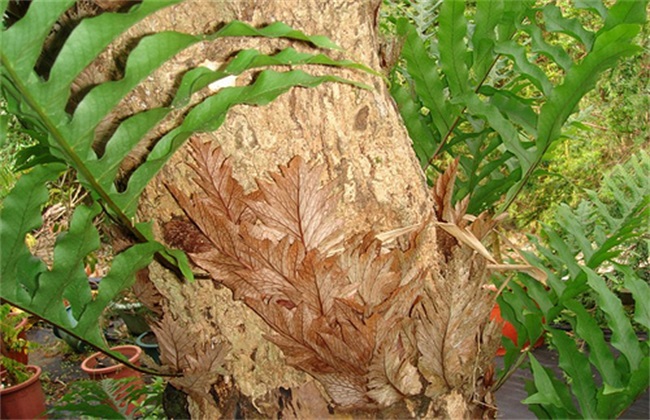
How long after planting Davallia can you harvest it?
How long does Davallia take to be ready for harvest after planting?
-

How long is the lifespan of Asarum seeds, and how many years can they be stored?
The lifespan of Asarum seeds is very short. Naturally matured seeds have a very high germination rate, reaching 99%. However, when stored under dry conditions at room temperature for 20 days, the germination rate drops to 81%; at 40 days it drops to 29%; and at 60 days it is only 2%. This shows that when Asarum seeds are stored dry indoors after harvest, the germination rate gradually decreases as the storage period lengthens, and the dry storage period is only 60 days. Because Asarum seeds cannot be stored dry indoors, they should be sown immediately after harvest or treated by sand stratification.
-
How long is the growth cycle of Gastrodia elata (tianma)?
Under artificial cultivation conditions, Gastrodia elata takes about 3 years to complete one growth cycle. Its growth process is basically as follows: from November to February of the following year, the arrow tubers are planted; in late June the Gastrodia elata seeds mature, and they should be sown within one week. Please note that in production, Gastrodia elata seeds and tuber seed stock are two different concepts. The former refers to the extremely tiny seeds in the capsule formed after pollination, produced on the spike inflorescence that grows on the aboveground stem of the arrow tuber; the latter refers to small tubers or tuberlets, that is, small Gastrodia elata. After sowing, Gastrodia elata seeds germinate
-
Licorice should not be stored for too long; the storage time of medicinal materials must be reasonably controlled
Licorice is generally stored as compressed bales wrapped in burlap, each weighing 50 kg, kept in a dry, ventilated place, with a safe moisture content of 12%-14% for the commodity. There are more than ten kinds of warehouse pests of licorice, including the coffee bean weevil, the brown mulberry borer, and the four-spotted chestnut borer. Fumigation with nitrogen or carbon dioxide for 514 hours can kill all adults and larvae, with no obvious change in the inner quality of licorice. Licorice is prone to mildew. If the air humidity is too high, mold spots or white and green mycelium easily appear on the surface of licorice. The following measures can be taken for prevention and control
-
Planting Techniques and Management Methods for Kadsura longipedunculata
Schisandraceae Kadsura longipedunculata Finet et Gagnep. Evergreen vine, branchlets grayish brown or brown, with lenticels. Leaves thinly leathery or softly leathery, oblong-elliptic or oblong-lanceolate, sometimes narrowly obovate or elliptic, 5-10 cm long, 2-5 cm wide, apex acuminate, base cuneate. Margin often remotely serrate, lateral veins 5-7 pairs; petiole l-2.5 cm long. Flowers unisexual, dioecious, solitary in leaf axils, yellow, fragrant: pedicel
-

How to grow Glechoma longituba? A detailed guide to planting techniques and management key points
Planting techniques for Glechoma longituba
条件筛选