-

How to Judge the Quality of a Lipstick Showa Sanshoku Koi
Introduction to Lipstick Showa Sanshoku The Lipstick Showa koi has a small, round red patch on the snout of the Showa Sanshoku koi, just like lipstick applied by hand, extremely handsome and cute, and loved by many people. Apart from...
-
How to Tell If a Tomato Plant Is Potassium Deficient? Teach You the Identification and Judgement Methods
Tomato is a common fruit-type vegetable, with a sweet-and-sour taste and rich in vitamins. However, some tomato plants develop potassium deficiency during growth,...
-
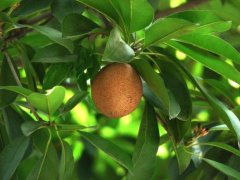
When do sapodilla fruits mature and can be picked? Judge by size and firmness
Do you like eating sapodilla? Sapodilla is a rather special fruit. It can flower many times a year and bear fruit several times, unlike ordinary fruits that only flower once and bear fruit once. So when does sapodilla bear fruit, and when is it picked?
-

Raise pigs or become a judge? Graduate Bao Fengxue becomes a pig herder
Graduate Bao Fengxue gives up judgeship to become a "pig herder"
-

How do you judge the rises and falls in wheat, corn and rice prices? Daily Grain and Oil interprets
Everyone says supply and demand determine prices, but in the hearts of farmers who sell grain there is this saying: once the grain is sold, the price shoots right up. Others say that only when the grain is in...
-
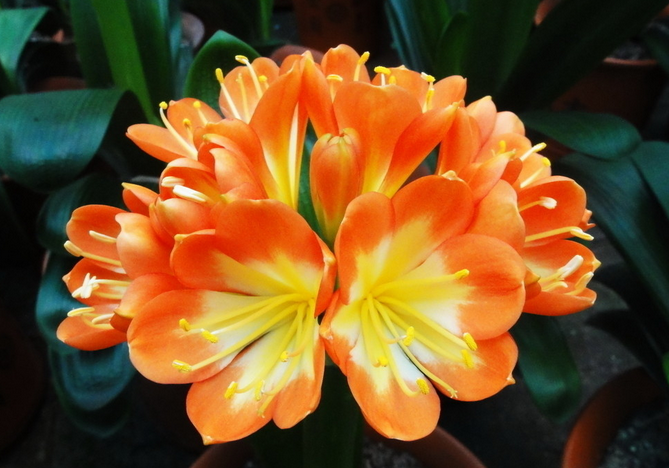
How do you judge when to water a Clivia? Master the method and it is easy to grow a healthy potted plant
Many households now grow Clivia (Clivia miniata), but conditions such as indoor temperature, humidity, pot size, soil permeability (air permeability) and season all differ, so the watering interval should not be fixed at just one value. The length of the interval should be considered according to changes in the environment
-
How to judge the severity of fish gasping at the surface
To judge the severity of fish gasping at the surface, the main criteria are the time when the fish begin to gasp, the location of the gasping, the size of the water surface area where they gasp, and the species of fish gasping. 1. Dark gasping. This generally occurs when it is already daylight but the sun has not yet risen; the fish move about on the water surface in the center of the pond and on the upwind side, and bursts of splashing water can be seen. At this time the dissolved oxygen content of the pond water is 2-3 mg/L, which is normal gasping. 2. Light gasping. This mostly occurs at dawn; the fish are on the water surface in the center of the pond and on the upwind side, while wild trash fish gasp at the pond edge.
-
How to tell a rabbit's age? Practical tips to help you judge
Check the incisors and claws. A rabbit's incisors and claws change with age. Young rabbits have white, short incisors that are neatly aligned; older rabbits have dull yellow, thick and long incisors that are unevenly aligned, sometimes with damage. White rabbits have small toes, with a red base and a white tip. In a 1-year-old rabbit, the red and white sections of the toes are equal in length; under 1 year old, the red is longer than the white; over 1 year old, the white is longer than the red. For colored rabbits, you can distinguish by the length and degree of curvature of the toenails. Young rabbits' nails are shorter, straight and flat, hidden in the foot fur. Check the eyes. Young rabbits have bright eyes
-
How Beekeepers Observe Bees Outside the Hive to Judge Conditions Inside
Honeybees are social insects that prefer a stable, quiet environment. In artificial beekeeping, opening the hive to inspect the bees is unavoidable due to production needs. But if the hive is opened too often and too frequently, it will inevitably disturb the colony's stability, and may even cause the colony to refuse the "climate" and abscond as a whole. Under normal temperature conditions, several bees stand at the hive entrance, not biting the entrance, not vibrating their wings, not crawling over one another, only paying a little "attention" to bees going in and out, or slightly following them; worker bees enter and exit one after another in succession; returning bees are either big-bellied, or have pollen pellets stuck to two legs.
-
How to Identify a Sick Rabbit? Learn the Nine Observations to Easily Judge Rabbit Illness
Discovering sick rabbits and diagnosing rabbit diseases is the foundation for controlling the spread of disease. Whether a rabbit is healthy should be observed from the following aspects: Appearance: A healthy rabbit is full of energy, has smooth fur, moves nimbly, holds a proper posture, and grows quickly. Sick rabbits, however, are mostly listless or extremely excitable (such as with rabbit plague), have rough, messy fur (such as with chronic wasting diseases, nutritional deficiency disorders, etc.), move slowly, and have abnormal postures. For example, when suffering from pododermatitis and foot ringworm, the hind limbs dare not touch the ground; with "splay legs" and "O-shaped legs," they cannot stand normally; with pneumonia, breathing is difficult; with wry neck, the head and eyes are tilted and the rabbit rolls over.
条件筛选