-
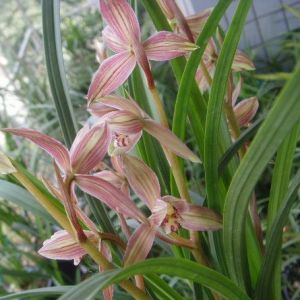
Introduction to the Rainbow Lotus Chun Jian Variety and Key Care Points
A new lotus-form bicolor variety of Sichuan Chun Jian (Cymbidium tortisepalum var. longibracteatum) - Rainbow Lotus: good color, lotus-type petals, strongly fragrant flowers, and scarce in quantity.
-
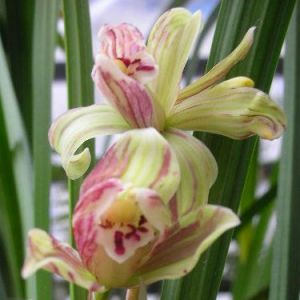
Caishen Spring Orchid Variety Introduction and Characteristics Analysis
Caishen, a newly released bicolor variety of Spring Orchid in recent years.
-
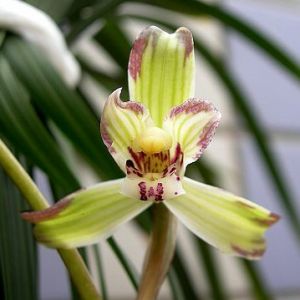
Introduction to the Characteristics of the Chun Jian Yan Yang Tian Orchid Variety
Named by Zhang Yan. This flower is a Chun Jian (Cymbidium tortisepalum) multi-colored floating-door narcissus type.
-
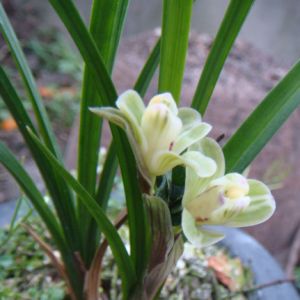
Introduction to the characteristics of the Chun Jian orchid cultivar Shuangxi Mei
In the spring of 1995, it was found in the mountain forests of the Micang remnant range in Tongjiang, Sichuan. When collected on the mountain, there were only 2 shoots together with 4 old pseudobulbs. Liao Jiafa, chairman of the Sichuan Shudu Orchid Industry Association, purchased and cultivated it alone, and it was officially named and registered in 2002. The new shoots of "Shuangxi Mei" are purplish red, with jade-white tips at the bud apex. The leaf sheaths are tall, opening opposite each other in a "eight" shape. The sheath tips are tightly pressed and the tip is strong and upright; when touched with a finger, it has a prickly feel, commonly called "iron armor." In the middle of the leaf sheath, there is often a pair rotating 30 degrees and forking upward. The plant form is spreading, and the leaves are arranged neatly like a fan. The leaf stalks are tightly contracted and long, closely resembling fan ribs. The cross-section of the leaf blade is a shallow "V" shape. On the leaf surface there are two shallow longitudinal ridges running parallel and merging into the nasal ridge area. The leaf tip margin is slightly tightened, forming a shallow spoon shape. The leaf veins are embedded and strong. The leaf texture has fine serrations. The leaf width is about 1.2 to 1.5 cm, and the leaf length is about 35 to 45 cm. The leaf posture is high and sloping, with the leaf tips semi-pendant, vigorous yet graceful.
-
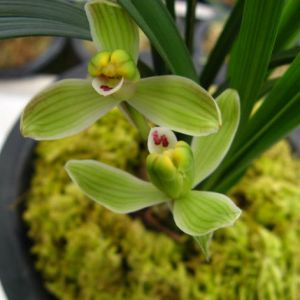
Introduction to the Characteristics of the Shengxianmei Chun Jian Orchid Variety
A new plum-petal variety from Sichuan; the date it was collected from the wild is not very clear, and the quantity is extremely small. This flower is of extremely high quality, with pure and plain petal colors. It is quite beautiful, and this flower is also called Shengxianmei. In 2006, Qiu Houyun and others exhibited it in Luzhou and won a gold award; it is an excellent variety for introduction and cultivation.
-
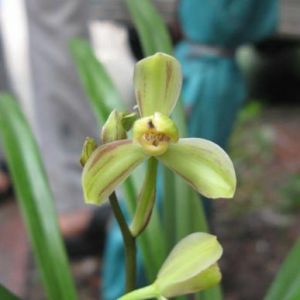
Detailed Introduction to the Huaxia Caimei Jianlan (Cymbidium ensifolium) Variety
A variety whose bloom presentation varies greatly; generally speaking, "colored flowers" grown under dry conditions have richer, more vivid colors, and vice versa.
-
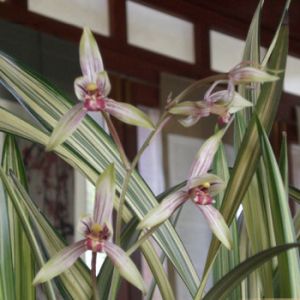
An Introduction to the Variety Characteristics and Care Methods of Fulong Jianlan (Cymbidium ensifolium)
Fulong is an old variety. In terms of variegation patterns, the ones currently sold on the market fall into two types: center-variegated and center-penetrating striped variegation. The green claw at the leaf tip of Fulong is relatively deep, and the variegation color is mostly white with a hint of yellow.
-
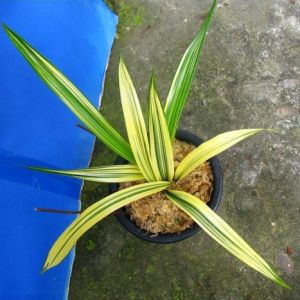
What kind of orchid is Canglong Molan? An introduction to its variety characteristics
Canglong, a leaf-variegated Molan orchid (Cymbidium sinense)
-
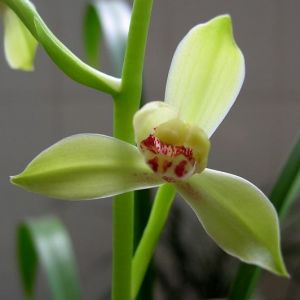
A Brief Introduction to the Characteristics of the Cymbidium ensifolium Variety Biyu Hexian
Biyu Hexian, which many experts consider a second-rate Hexian, is nonetheless one of my favorites; the spectacular quality of this flower can only be appreciated by seeing the entire plant in bloom. I once grew 1 pot of a strong seedling with 3 flower scapes and placed it next to Luxian, and even Luxian lost its luster. This is this year's first pot to bloom, a weak seedling grown with the heavy-wet method (it did not bloom well: petals thin and elongated, tongue drooping, color pale...)
-
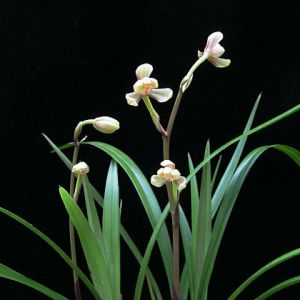
Jianlan Dasheng Mei, also known as Ruyi Mei, orchid variety introduction
Proper name in Sichuan: Ruyi Mei (the name used in Luzhou), also known as Xiaoling Mei (legend has it that it was first discovered by a girl named Xiaoling); renamed again in Chenghai: Dasheng Mei (meaning the flower is larger than Chenghai's Sheng Mei, with a similar flower form)
条件筛选