-

Growing flowers with soil that hasn't been disinfected, it's no wonder bugs show up in summer
Entering May, various places have successively entered summer, and people's clothing on the streets is also varied. But the flower roots have only one piece of clothing, and that is soil. If the quality is poor, do you think the flower's "skin" will be good...
-
First outbreak of lumpy skin disease in the country: infected cattle that survive are left skin and bones; virus suspected to have been carried by mosquitoes and flies from Fujian to Kinmen
First outbreak of lumpy skin disease in the country: infected cattle that survive are left skin and bones; virus suspected to have been carried by mosquitoes and flies from Fujian to Kinmen
-
Feed Formulation and Processing Techniques for Medicinal Silkworm Larvae Infected with Beauveria bassiana
Currently, medicinal silkworm larvae infected with Beauveria bassiana are in strong demand on the Chinese medicinal herb market, and raising and processing them is profitable. The methods for raising and processing them are: 1. Rearing the mature silkworms. Raising and processing medicinal silkworm larvae infected with Beauveria bassiana should be carried out as a specialized operation in non-cocoon-producing areas, so as to avoid a devastating impact on cocoon silkworms. The raising and processing can be carried out throughout the year. As for the feed, besides a small amount of mulberry leaves, more evening primrose, Jiancan grass, white clover, cup plant (Silphium perfoliatum) and the like can be added to replace mulberry leaves, so as to supplement the shortage of mulberry leaves and reduce feeding costs. For
-
Cherry Blossoms in Alishan, Taiwan, China Infected with Witches' Broom Disease
"If proper measures are not taken soon, the Alishan cherry blossoms may disappear within a few years." Liu Dongqi, assistant professor in the Department of Horticulture at Chung Hsing University, said that the Yoshino cherries in Alishan are infected with witches' broom disease. Although it cannot be cured completely, there is still hope. As long as efforts are made to strengthen the cherry trees' root systems, the Yoshino cherries can once again bloom into a beautiful sea of flowers. According to Taiwan media reports, Alishan cherry blossoms attract large crowds of cherry-viewing visitors every year, and the Somei Yoshino cherry has even been crowned the "King of Cherry Blossoms," with its gorgeous blossoms captivating many tourists. In the year, the Yoshino cherries contracted witches' broom disease and gradually
-
What to do when mushrooms are infected with cottony mold
Cottony mold is also known as powdery mildew and variable powdery mildew (Oospora variabilis). This fungus is mainly introduced into the mushroom house by manure clumps in the compost. In the early stage it mostly spreads between the soil particles and quickly grows to the surface of the soil layer; its hyphae are short and fine, growing in clusters, appearing like individual cotton balls or layers of rotten cotton wadding, a vast expanse of white, and later gradually turning orange-red. In the affected area, mushroom mycelium grows very poorly, and the young mushrooms and primordia produced wither and die in large numbers. Control measures: the compost must be fermented thoroughly. When this fungus grows to the surface of the soil layer, spray 1:500 carbendazim at
-
Potato tubers infected with Phytophthora cause cellar rot
Symptoms: Slightly sunken dark or purple lesions appear in patches on the surface of the tubers, extending less than 1cm into the tuber. White mold is generally not easy to see, but when humidity in the cellar is high, white mold grows on the diseased area, which is the pathogen's sporangiophores and sporangia. This causes cellar rot. For the pathogen, transmission routes and disease conditions, see Potato Diseases - Potato Late Blight. For control methods, see Potato Dry Rot.
-
How to prevent and treat shiitake mushrooms infected by Trametes versicolor
Trametes versicolor, also known as turkey tail, is classified under Basidiomycotina, Hymenomycetes, Aphyllophorales, Polyporaceae, and the genus Trametes. The cap is leathery, sessile, imbricate and stacked, semicircular or shell-shaped, 1-10 cm in long diameter, 1-6 cm in short diameter, 1-2 mm thick, with narrow concentric zones and fine elongated hairs on the cap surface, varied in color, often gray, brown, green to black, glossy, entire or wavy. In nature it often occurs on decaying wood of broadleaf trees in summer and autumn, with mycelial growth temperature of 3-32°C,
-

Taking the kids swimming infected a family of six - have you paid attention to pool hygiene details?
Summer is the season for playing in the water, but if you don't take care to protect yourself while playing in the water, you could get sick! A 5-year-old child in Wuhan came back from swimming and got infected with pink eye. And because of cross-infection, the whole family...
-
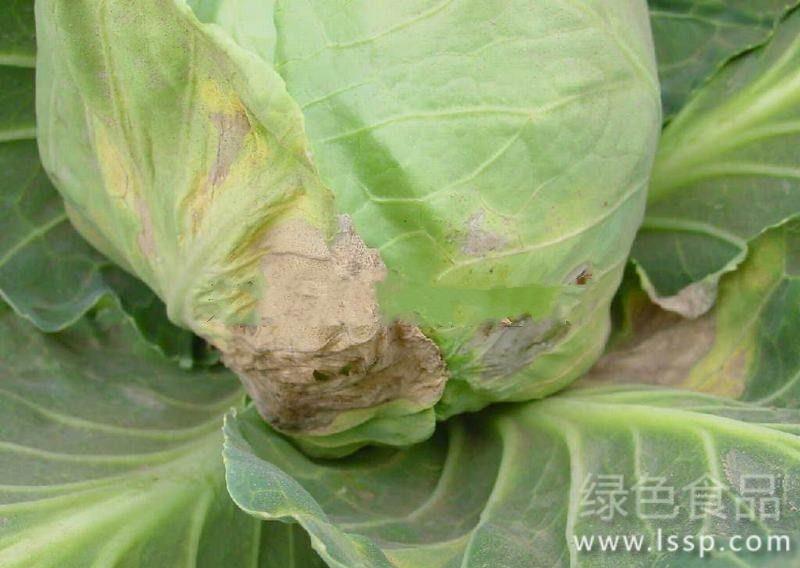
Black spots appear on cabbage after it is infected with black rot, how to prevent and control it
Black rot causes black spots on cabbage, how to prevent and control cabbage black rot
-
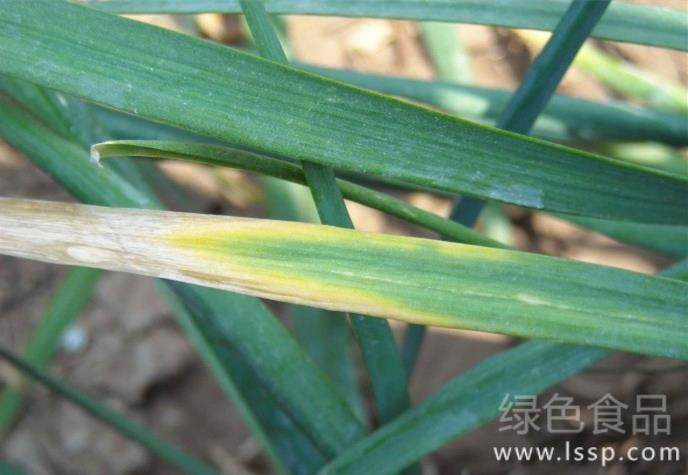
When chives are infected with rust disease, they lose their value. How can it be prevented and controlled?
Rust disease makes chives lose their value. Prevention and control methods for chive rust disease.
条件筛选