-

When to plant Taiwan Indian jujube? A detailed guide to cultivation methods
1 Timing It is usually planted from February to March (in frost-free areas of the south, planting can be advanced to December to February), with a high survival rate and good growth, and it can flower and bear fruit in the same year. After the fruit is harvested the following year, superior varieties are grafted again between February and March. 2 Density Moderate close planting can follow (1) 3m x 4m, 55 plants per 666.7 sq m; (2) 3m x 5m, 44 plants per 666.7 sq m; after 3 years it can be changed to the two methods of 6m x 4m and 6m x 5m. 3 Carry out mixed planting or interplanting Because
-
A Detailed Guide to Indian Jujube Processing Technology: Practical Methods You Understand at a Glance
On the premise of preserving the fruit's nutrients as much as possible, fully retain the inherent flavor of the Indian jujube, and according to the characteristics of this fruit, process it into a series of products such as canned goods, preserved fruit, jam, jelly, fruit leather, and juice beverages. Because Indian jujube fruit has a very high pectin content, no thickener needs to be added when making jelly, and the gelling effect is still quite good. 1. Processing of canned Indian jujube. 1. Processing technology: material selection -> peeling -> trimming -> pretreatment -> rinsing -> filling into cans -> exhausting -> sealing -> sterilization -> cool
-
How to grow Indian lettuce for high yields? Cultivation techniques for high-quality fish forage grass
Indian lettuce is an annual or perennial herbaceous plant in the Asteraceae family, genus Lactuca. It is rich in nutrients, and its crude protein content is 35%-40% higher than that of Sudan grass, which enjoys the title of "king of forage grasses." The tender leaves of Indian lettuce contain a lot of carbohydrates, have good palatability, and a utilization rate of nearly 100%, making it a superior green feed for fish. Indian lettuce is the best "green forage" for "filling the gap between seasons and bridging to the peak season" between the off-season of ryegrass and the coming peak season of Sudan grass. It can serve both as the "staple food" for herbivorous fish and as a "delicacy" for cultivating fish species such as black carp, grass carp, and bream. Cultivation characteristics
-
Processing Methods and Technical Key Points for Candied Indian Jujube (Ziziphus mauritiana)
(1) Processing flow of golden-thread jujube: material selection → washing → slitting → sulfur dipping → rinsing → draining → boiling → drying → shaping → bagging → finished product. Key operating points: select fresh, thick-fleshed, intact fruit. After washing, cut 30--40 slits in each fruit, penetrating 2/3 into the flesh without changing the fruit shape, then place in sulfite solution and soak for several hours. After thorough rinsing and draining, add 45% sugar solution and boil, then remove; next, treat in stages with hot and cold sugar solutions of different concentrations to bring the sugar solution concentration to
-

Detailed Explanation of the Cultivation Techniques and Management Methods of the Indian Trumpet Flower
Cultivation Techniques of the Indian Trumpet Flower
-
Common Problems in Indian Jujube Production and Their Solutions
Although Indian jujube (Ziziphus mauritiana) has been successfully introduced and trial-planted across various parts of southern China, it is still in its early stages, and the area under commercial production is currently small. However, Indian jujube cultivation in China currently suffers from problems such as mixed and confused varieties, extensive and careless cultivation management, and poor marketing channels, all of which need to be further improved and resolved. 1. Weak regional planning for development and mixed, confused varieties. Indian jujube has the characteristics of early fruiting and high yield (planted in the same year, it bears fruit in the same year) and excellent quality with high prices. Combined with heavy publicity in the media by some fruit seedling suppliers, this has set off a wave of Indian jujube planting in several southern provinces in recent years.
-
How effective is azadirachtin as an insecticide, really?
Neem - nature's insecticide. Neem has insecticidal and sterilizing properties and has long been used as a herbal medicine. But do you know its effects on insects, the residual activity of azadirachtin, the systemic action of azadirachtin, the efficacy of azadirachtin products, and so on? If not,
-
How to Grow and Care for Dracaena reflexa (Song of India)
1. Growing medium: Dracaena reflexa adapts well and can grow in clay or sandy soil, but it grows best in a loose, fertile, well-drained sandy soil rich in humus. For home cultivation, a mix of leaf mold with river sand or cinder ash can be used as the growing medium. 2. Humidity: The optimal growing temperature for Dracaena reflexa is between 20 and 30°C.
-

-
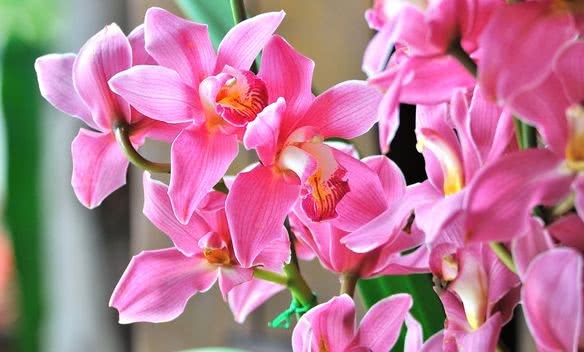
Cymbidium orchids originated in India, and world varieties were developed through hybridization in China
Cymbidium orchids are also called Himbi orchids and cicada orchids. They are plants of the Orchidaceae family, genus Cymbidium. They are some of the more strongly epiphytic large-flowered species in the genus Cymbidium native to India, Myanmar, Thailand, Vietnam, southern China and other regions, as well as artificial hybrids mainly obtained using these...
条件筛选