-
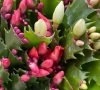
Don't panic if your Christmas cactus (Schlumbergera) has soft leaves! Identify the 5 main causes and treat them accordingly, and the leaves will soon be firm again!
When the leaves of a Christmas cactus are thick and green, it looks especially lively, but soft leaves are a common problem in care - some become wrinkled and dull, while others wilt so much they droop at the slightest touch. In fact, soft leaves are mostly caused by improper care, so find the cause and treat it accordingly, and it will soon regain its plumpness! 1. Lack of water and dry wilting: the potting soil is cracked and the leaves are shriveled
-
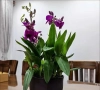
Is there any hope for a wilted Phalaenopsis? Let me help you find the cause and save your beloved orchid
You carefully nurtured your Phalaenopsis, and suddenly the leaves are soft and droopy, the buds and flowers are wilting and hanging down - it hurts just to look at it. What on earth is going on? Is there any hope? Actually, a drooping Phalaenopsis isn't that scary. The key is to first identify the cause and then treat it. Below, the common problems and solutions are explained clearly to help you save your beloved orchid. A drooping Phalaenopsis may look like it's "lacking energy
-
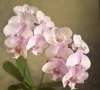
Sphagnum moss for Phalaenopsis needs replacing after long use: how beginners can clean out old moss, choose new moss, and solve yellowing leaves after repotting
Growers of Phalaenopsis know well that sphagnum moss becomes compacted and loses nutrients after long use, and only by promptly replacing it with fresh sphagnum moss can the roots breathe and the plant grow more vigorously. But changing the sphagnum moss is not as simple as just swapping the growing medium: you must first clean out the old sphagnum moss thoroughly, then give the roots a "trim + disinfect" treatment, and finally plant it properly with new sphagnum moss. Every step has its finer points.
-

Fruit-Bearing Houseplants Worth Growing: Easy on the Eyes and Warm to the Heart
Mint on the windowsill unfurls its serrated leaves, a lemon tree in the kitchen corner droops with fruit half green and half yellow, and a pot of strawberries in the entryway hides a few blushing berries - when a plant not only decorates a space but also hands you a dew-covered fruit one morning, this gift of nature takes on an extra layer of healing warmth. Choose
-

Toddler Rushed to ICU After Curiously Eating a Houseplant: Think Twice Before Keeping These Plants in Homes with Children
A couple of days ago I came across a news story: a three-year-old boy, while the adults weren't paying attention, grabbed a leaf off a houseplant and curiously chewed a couple of bites. Within half an hour he started vomiting and couldn't speak, and when he was taken to the hospital he went straight into the ICU. The doctor said that if he had arrived any later, he might not have been saved. The culprit turned out to be a houseplant the parents had casually placed in the living room.
-

Aerial Roots of Phalaenopsis: The Ins and Outs of Dry vs. Wet, and What Causes Them to Dry Out
Anyone who grows Phalaenopsis orchids is surely impressed by those few aerial roots sticking out of the potting medium -- either wrinkled like sun-dried preserved mustard greens, or plump like a sea cucumber full of water. So should these things be dry or wet? And if they dry out, how do you save them? Actually, the aerial roots of Phalaenopsis can't be too dry, nor should they be wet all the time; they need
-

Is a wrinkled aerial root on a Phalaenopsis orchid a sign it has gone bad? What causes aerial roots on Phalaenopsis orchids to wrinkle?
Aerial roots that were once plump and white suddenly turn wrinkled, as if they have shrunk. "Is this root bad? Is my Phalaenopsis orchid about to die?" A wrinkled aerial root on a Phalaenopsis orchid is not necessarily a bad thing; the key is to figure out "why it is wrinkled." This plant is quite peculiar: its aerial roots are not only used to absorb water and
-

What medicine should be used for stem rot in Phalaenopsis? Detailed explanation of causes and solutions
Growers of Phalaenopsis have probably all heard of "stem rot." Once a Phalaenopsis gets this disease, the leaves droop and the stem rots at the core, and if it is not treated in time, the whole plant may die. Today let's talk about how this disease comes about, what medicine to use, and how to save it. How does stem rot find its way in? The main cause is too much moisture,
-
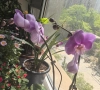
Is a Phalaenopsis orchid's root system turning white a sign of underwatering? An analysis of the causes
Healthy roots are the foundation of a Phalaenopsis orchid's growth. If the roots turn white, it is often related to improper water management. 1. Causes of white roots: Whitening caused by underwatering: the roots appear light grayish-white and feel somewhat hard, along with the potting medium (sphagnum moss or bark) being dry, pale, and compacted, no condensation on the inside of the pot wall, and the overall pot feeling
-
Will mold in Phalaenopsis growing medium cause disease?
Don’t delay dealing with mold in your Phalaenopsis growing medium! Those white mold spots are not only unsightly but will definitely侵蚀 (erode) the roots over
条件筛选