-

What are the taboos of growing bonsai in summer? Keep these five points firmly in mind
1. Avoid fertilizing. In the high temperatures of midsummer, the leaves lose water quickly. Fertilizing at this time will make the solute concentration of the trunk's cells lower than that of the surrounding environment, causing water in the plant cells to flow back into the soil, and the trunk will die of dehydration due to fertilizer damage. 2. Avoid drought. Watering when you remember and not watering when you forget, sometimes leaving it alone for several days in a row, and only quickly replenishing water once the leaves are found to be wilting, after which the leaves return to normal - this is a response of the trunk to adapt to the environment, but if this goes on for a long time, the excessively strong transpiration will eventually make the trunk difficult to recover from serious damage and die of dehydration. 3. Avoid water
-
How to care for lilies in summer? Master these care tips
Lilies come in a wide variety of colors and varieties, with large, trumpet-shaped flowers, and are widely loved because their name carries the meaning of "a harmonious union lasting a hundred years" and "a heart in harmony with all things." Summer is the main flowering and dormancy period for lilies, and care and management during this time is very important. Cooling and sun protection. The suitable growing temperature for lilies is 15°C to 25°C, within which they can maintain good growth and flowering. When flowering, the potted plants can be moved to a shaded spot, or a screen can be placed over the plants for shade, along with enhanced ventilation and cooling, which helps extend the flowering period. Lily bulbs cannot tolerate
-
Six key points to master for summer management of lilies
1. Fertilize according to seedling growth. After lilies are planted, they begin to emerge when the soil temperature reaches 14-16°C. Because lilies take a long time to emerge and consume a lot of nutrients, seedling fertilizer should be applied heavily. Apply 1000 kg of fully decomposed human and livestock manure or 20 kg of urea as a drench per 667 sq m. In early June, when lilies enter the early flowering stage, their underground bulbs grow faster. This period is critical for lily yield formation, and the fertilizer demand is large and concentrated, so a leaf-strengthening fertilizer should be applied as a top dressing. Apply 15 kg of urea per 667 sq m. Lilies have a preference for phosphorus
-
Key Technical Points for Summer and Autumn Field Management of Jasmine
Jasmine is a traditional aromatic flowering plant. In many places, jasmine is grown in open fields, with a flowering period lasting 5-7 months. The main field management techniques for jasmine are as follows: 1. Cultivation and weeding. Shallow hoeing should be done regularly to loosen the soil and remove weeds, creating a loose and well-aerated soil environment for the jasmine root system, avoiding nutrient dispersion, and promoting its growth and development. Generally, cultivation and weeding are done 6-8 times throughout the year. 2. Reasonable water management. Jasmine has lush branches and leaves, and water transpiration is high. The soil should be kept moist regularly, and the field moisture content should be maintained at
-
How to manage cherry blossoms in summer? A detailed guide to care methods
1. Mulching with straw to prevent drought. In summer, temperatures are high and evaporation is fast, so the amount of watering is greater than in other seasons, but the principle of "do not water if not dry, and water thoroughly when you do" should still be followed. Cherry blossoms are shallow-rooted plants, and their growing roots are close to the soil surface and dry out easily. Straw can be used to cover the base of the tree, which not only retains moisture and resists drought, but also prevents the cherry tree's fine roots from being washed out and exposed, while greatly reducing evaporation of soil moisture. 2. Wrapping the trunk to prevent drought. Within 2 to 3 years after planting, to prevent the trunk from drying out, it can be wrapped with straw. Because the bark of cherry trees is relatively thin, wrapping the bark can prevent
-
How to care for tulips in summer? Detailed explanation of care points
The flowering period of tulips is from March to May each year. After tulips bloom, the new bulbs in the underground part develop rapidly, and the mother bulb that served as the planting bulb disappears. Therefore, after tulips fade, the flower stems should be cut off immediately, and the leafy bulbs should be planted in pots (they can also be planted in the ground). When planting, base fertilizer should be added first, preferably soybean cake crumbs and bone meal, to promote the growth of the small bulbs that have split off. The new bulbs develop from the lateral buds in the leaf axils of the fleshy scale leaves of the mother bulb. After the terminal bud of the mother bulb forms a flower bud, the lateral buds sprout. During the period of promoting the sprouting of the lateral buds, thin fertilizer should also be applied two
-
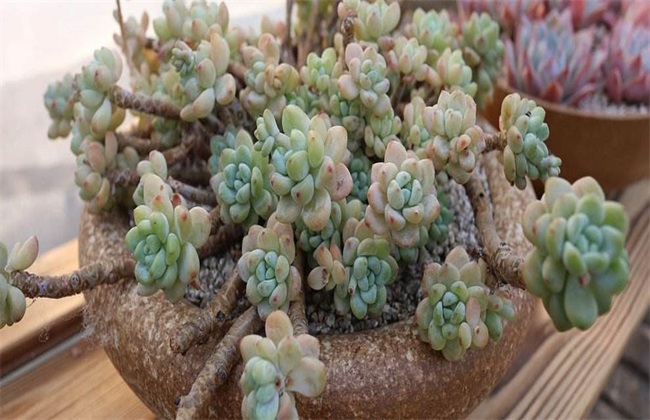
How to care for succulents in summer? These precautions you need to know
Precautions for growing succulents in summer
-
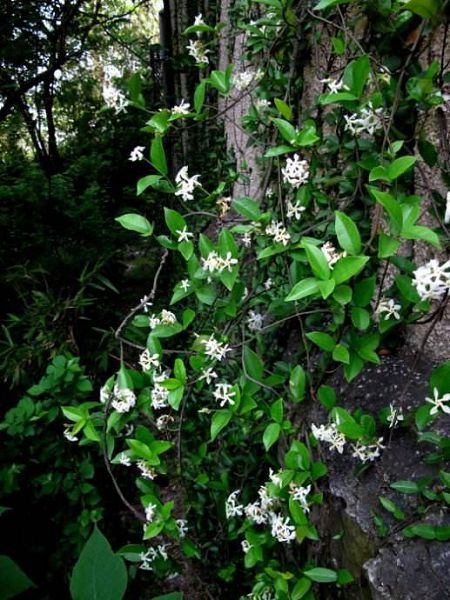
Flowers made into a flower wall are so beautiful, and in summer they can also provide insulation and shade
These flowers made into a flower wall are simply too beautiful, and in summer they can also provide insulation and shade
-
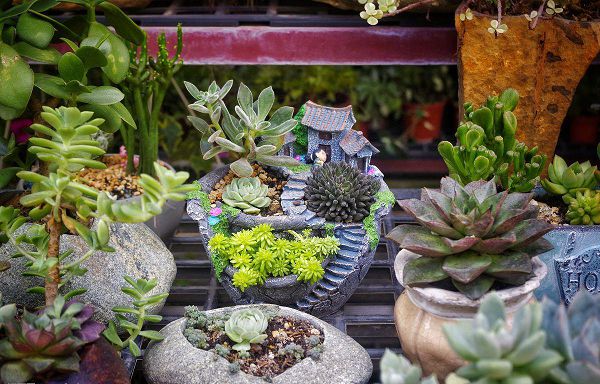
How do succulents protect themselves from the sun in summer? Learn these little tips to get through summer safely
Little tips for protecting succulents from the sun in summer: understand these few points and let your succulents get through summer safely
-
Spider Plant Indoor Care in Summer: Avoid Intense Light
Spider Plants Indoors in Summer: Avoid Intense Light
条件筛选