-

How to Grow a Boxwood (Huangyang) Downhill Stump? Latest Care Methods Explained in Detail
Boxwood likes light, because proper lighting can better promote photosynthesis; boxwood likes water, because its root system is not well developed and it is naturally relatively difficult for it to absorb water, so water supply needs to be ensured through external watering; boxwood is cold-resistant, because wild plants mostly grow at high altitudes
-
Where are Huangyan mandarin oranges grown? A detailed introduction to the main producing areas
Mandarin oranges are small, but they taste sweet, and many people like to eat them. Huangyan mandarin oranges are a relatively popular type. Where are they grown? 1. The producing area of Huangyan mandarin oranges. Huangyan mandarin oranges are produced in Huangyan District, Taizhou City, Zhejiang Province. They are a local specialty and a product of China's National Geographical Indication.
-

Auntie Huangyang pulled a boxwood from the woods while herding sheep, invented her own planting method, and now she's full of confidence: 480 yuan for one pot, and she won't sell.
While herding sheep, Auntie pulled a boxwood from the woods, invented her own planting method, and now she's full of confidence: 480 yuan for one pot, and she didn't sell. Auntie is very fond of potted plants, whether flowers and grasses or tree stumps. In her own small courtyard there are dozens of flower pots of all sizes, with all kinds of tree stumps. This...
-
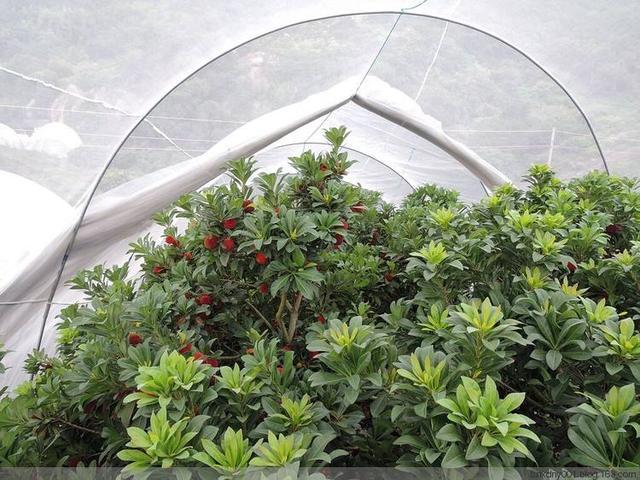
Insect-proof Net Room Cultivation Techniques for Dongkui Waxberry: Experience from Huangyan, Taizhou
Insect-proof net room cultivation techniques for Dongkui waxberry in Huangyan District, Taizhou City. The insect-proof net room (also called luozhang or luoman) cultivation technique for Dongkui waxberry is an emerging ecological and environmental...
-
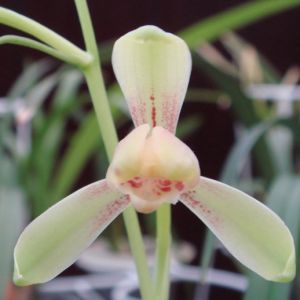
Introducing the Fumei, Erpin Mei, Xiaogai Mei, Huangyan Gaimei, and Changxiu Mei cultivars
Origin: Sichuan. Content: This wild-collected plum-type orchid is one I personally like quite a bit. It circulates among Sichuan orchid enthusiasts, and there should be a certain number of plants in existence; I don't think there are more than a few hundred seedlings, though Lao Wa, He Jiafu, Jia De and others have also sold it online. This plum-type is now called Fumei; it used to be called Xiaogai Mei and so on. Lao Wa said he doesn't much like this flower, saying his doesn't open well, but mine opens consistently. I introduced stock separately from He Jiafu and Jia De, and later confirmed they are the same cultivar; I also shared divisions with Zhuangshi. That's the whole story. Every one of these plum-types I've seen opens nicely, with the center held very well; it's just that the outer petals are a bit slender and long, and a little thin too, though the proportions are fairly natural and square, giving a slight impression of an Yipin Mei with elongated outer petals. It has a ru-yi (wishful) tongue, stands above the leaves, has large flowers, is fragrant, and is easy to grow. When it first appeared last year it was priced as a mid-grade plum-type; I personally think it is worth introducing and has promise.
条件筛选