-

Key technical points for winter management of tea plants to help tea gardens overwinter safely
1. Carry out the garden-closing work by spraying the whole tea plant with 0.4-0.5 degrees Baumé lime-sulfur mixture. 2. Apply 150 kg of decomposed cake fertilizer in holes or furrows, or 100 kg of special compound fertilizer for tea, and finish applying the base fertilizer by November. 3. In conjunction with fertilization, clear weeds inside and around the garden to reduce overwintering habitats for pests. 4. For expanding tea gardens, select good varieties, deeply plow furrows in the tea garden, apply base fertilizer deeply, adopt double-row single-plant planting, low-hole cultivation, and low-position pruning, and strive to complete planting in this winter and next spring.
-
Detailed Explanation of Garlic's Fertilizer Requirements to Help You Fertilize Scientifically
Garlic roots are string-like fleshy fibrous roots, mainly distributed within the 20-25 cm plough layer, making it a shallow-rooted vegetable. It responds sensitively to fertilizer and water, and has the distinct characteristics of relishing fertilizer and tolerating fertilizer. Garlic has very few root hairs, and they are fine and weak, so the roots' ability to absorb fertilizer is poor. The nutrients needed for garlic sprouting are all provided by the seed clove. As the seedlings grow, the nutrients stored in the seed clove are gradually exhausted, commonly known as "mother clove retreat." At this time, quick-acting fertilizer should be applied to ensure seedling growth and cultivate strong seedlings. After mother clove retreat, growth depends entirely on soil nutrient supply. Garlic's bulbils and flower buds differentiate
-
4 Efficient New Fish Medications to Help Prevent and Treat Fish Diseases
1. High Chlorine Powder. This product is a bactericide; used at the right time, it has excellent preventive and curative effects on hemorrhage disease and red-skin disease, print disease, gill rot, black gill, enteritis, shell rot and red-leg disease in fish, shrimp, crabs, soft-shelled turtles, eels and frogs. It has a notable disinfecting, sterilizing and improving effect on pond bottom sediment and pond water. 2. Fish Parasite Nemesis. This product is a new type of highly efficient parasiticide (anthelmintic), capable of powerfully killing fish parasites such as Lernaea, Sinergasilus, Trichodina, Dactylogyrus, Gyrodactylus, sporozoans, Diplozoon and monogenean trematodes, and for
-
The broken-planting technique for oyster mushroom logs helps increase yield
For oyster mushrooms cultivated in mushroom bags, the yield drops greatly after 2-3 flushes of mushrooms. If the temperature rises, the quality will also be reduced. How can later flushes be cultivated to equal or even exceed the yield of the previous flushes? Below is a simple and practical method - the broken-planting method. Remove the plastic bags from mushroom bags that have produced 2-3 flushes, then scrape the old surface layer once, and soak in 5% lime water. If the mushroom logs are relatively dry, also soak in 1% salt water for half a minute. Before soaking, poke a hole through the mushroom log from top to bottom so
-
How Do You Assess the Quality of Edible Mushroom Spawn? Practical Methods to Help You Tell Good from Poor
The quality of edible mushroom spawn directly affects the success or failure of production and the level of yield. Therefore, assessing the quality of edible mushroom spawn is crucial for growers. 1. Direct visual observation and assessment. In appearance, if the mycelium is dense white, thick and strong, and elastic, it has strong vitality; if the spawn mycelium has shrunk, is dry and lacking in color, or the mycelium has autolyzed and produced a large amount of reddish-brown liquid, then its vitality has already weakened and it should no longer be used; if wood-block spawn remains hard and solid, it is spawn with strong vitality, but if the wood blocks have become softened and loose, then it has aged and is not
-
Prevention and Treatment of Common Diseases in Foxes and Raccoon Dogs During the Whelping and Lactation Period
I. Miscarriage. There are many causes of miscarriage, such as infectious diseases, chronic diseases, parasites, trauma, poisoning and other factors, but the most important are still mistakes in feeding and management, such as long-term malnutrition, feeding moldy feed, lack of vitamins or trace elements, an unsettled animal farm, sudden fright, etc., all of which can cause miscarriage. Prevention and treatment methods: (1) Intramuscular injection of 2 ml of compound vitamin B, intramuscular injection of 1% progesterone, 0.3-0.5 ml each time, injected 2 times consecutively; (2) Intramuscular injection of penicillin, 400,000-800,000 units each time; or injection of
-
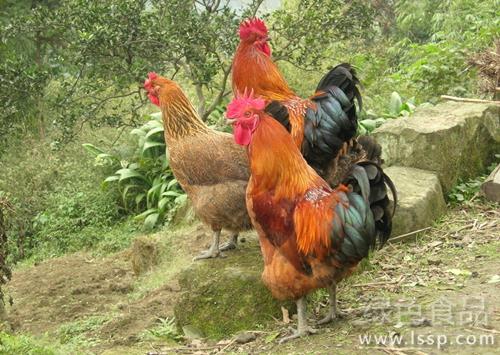
Chicken diseases affect weight gain and egg production, folk remedies to help you
Chicken diseases affect weight gain and egg production, chicken raising requires disease prevention, folk remedies to help you
-
Honeysuckle cultivation helps farmers increase income and achieve prosperity
Honeysuckle is also known as "double flower"; because it is a climbing woody plant, it is also called honeysuckle vine or mandarin duck vine. The flowers are snow-white when they first open and turn golden yellow after 2-3 days, hence the name honeysuckle. Because its leaves do not wither through winter, and in spring the old leaves slowly fall only as new leaves emerge, it is also called Japanese honeysuckle (Lonicera japonica), a semi-evergreen perennial climbing woody plant. Honeysuckle is one of the 70 precious and commonly used traditional Chinese medicinal materials designated by the State Council. It has wide uses, an extremely high prescription usage rate, a large clinical formula volume, and a very large demand as a raw material for Chinese patent medicines. In the Chinese patent medicines produced year-round by major pharmaceutical enterprises at home and abroad, honeysuckle
-
Fast bud-forcing method for shiitake mushrooms, helping shiitake mushrooms fruit early
For bag-cultivated shiitake mushrooms, using water injection or soaking bags to force buds will make the water content inside the mushroom logs too high, affecting yield, quality and benefits. A fast bud-forcing method is introduced here. 1. Piercing holes: use 4 iron nails 8 cm to 10 cm long, nail them onto a board 1.5 cm thick, 45 cm long and of a suitable width for gripping, and use the prepared "nail row" to pierce 8 holes in the mushroom log. 2. Soaking: place the pierced mushroom logs into a soaking pool or large barrel, preventing the logs from floating up. Afterward, soak the mushroom logs in a 0.3% urea solution. Mushroom logs that have
-
What to Do About Embryo Resorption in Sows? Five Prevention and Treatment Methods to Help You Solve It
In pig farming, a low farrowing rate in sows is a common problem. Besides a low fertilization rate, early embryonic death during development followed by resorption by the sow (commonly known as embryo resorption) is also an important cause. This difficult problem can be solved through the following methods. 1. Strengthen the feeding and management of open sows: 3 to 14 days before mating, increase protein feed and energy feed, and add minerals and vitamins at the same time, so that they enter the optimal mating state more quickly; for open sows in poorer body condition, a longer period before mating
条件筛选