-
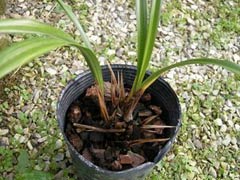
What to Do When an Orchid Gets Soft Rot? Detailed Guide to Prevention and Control
Orchid soft rot actually cannot be treated well. From item 6 of the characteristics of plant pathogenic bacteria, it can be known that by the time symptoms are visible to the naked eye, the invaded orchid plant is already in the late stage, and no medicine is of any use, so prevention is the key to orchid soft rot....
-
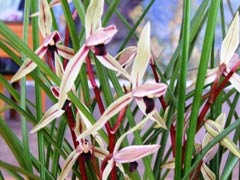
How to Grow Cymbidium tortisepalum? A Complete Guide to Cultivation Methods
Cymbidium tortisepalum is a group of orchid varieties with strong adaptability, and its cultivation methods are not particularly difficult. Like traditional Cymbidium goeringii, it stops growing in winter and enters a dormant period. In the western Yunnan area, generally from mid-November to the end of February of the following year, Cymbidium tortisepalum stops growing and is in a stage of accumulating strength...
-
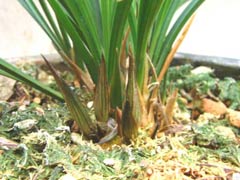
How to care for Cymbidium tortisepalum from August to November? A full guide to care methods
In October, with Cold Dew and Frost's Descent, the flower buds of Yunnan's Cymbidium goeringii and Cymbidium tortisepalum begin to grow and gradually shoot up. At this time, give the orchid plants moderate sunlight and pay attention to increasing the amount of light they receive. As the air gradually becomes dry, increase the frequency of watering according to the condition of the potting soil....
-
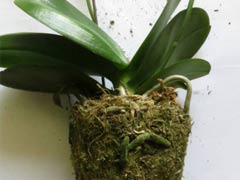
How to change the sphagnum moss for a Phalaenopsis? Step-by-step guide you'll get at a glance
Most Phalaenopsis growing media are sphagnum moss, and changing the sphagnum moss for a Phalaenopsis is something flower lovers often encounter. Whether it is a Phalaenopsis sold on the market outside or one grown at home, it needs to be repotted regularly. Especially for a Phalaenopsis just bought from outside...
-
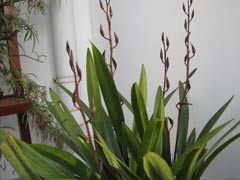
How to grow Cymbidium sinense in the north? Detailed guide to home cultivation methods
For many orchid enthusiasts, home cultivation of Cymbidium sinense is difficult, especially in the northern regions. Mr. Sun from Qingdao has grown Cymbidium sinense very successfully and has found regular, reliable experience for growing Cymbidium sinense at home in the north. He has simplified the complex and made it concise and to the point, which is very valuable for reference. It is shared here for northern Cymbidium sinense enthusiasts to consult and study....
-
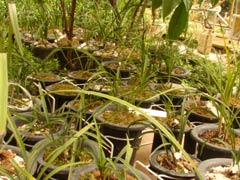
A Detailed Guide to the Key Period for Fertilizing and Watering Orchids
The key period for fertilizing and watering orchids refers to the stretch of time from the arrival of the plum rain and the summer solstice through the end of August, so growing orchids takes only three months of effort (June, July, and August). If your orchids can make it through this key period safely and healthily, it will bring you a whole year of good spirits, and getting through these three months also means this year's orchid growing has been a success...
-
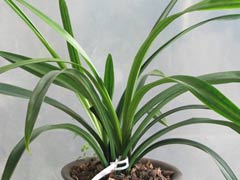
What is the difference between Cymbidium sinense and Cymbidium kanran? A quick guide to telling the two orchids apart
Many orchid growers cannot tell the difference between Cymbidium sinense and Cymbidium kanran, especially when they are not in flower. Generally speaking, Cymbidium sinense and Cymbidium kanran are very easy to tell apart by appearance, but once you come across a Cymbidium sinense with relatively narrow, long leaves and a Cymbidium kanran, it becomes harder to distinguish them...
-
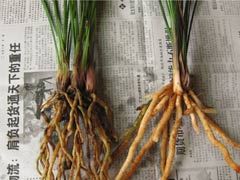
What Is the Difference Between Large-Leaf Cold Orchid and Fine-Leaf Cold Orchid? A Detailed Illustrated Guide
In the usual sense, cold orchid (Cymbidium kanran) refers to the winter-blooming winter cold orchid, whose flowering period is mostly concentrated from mid-to-late October to December. According to differences in various characteristics, it is further divided into large-leaf cold orchid and fine-leaf cold orchid. Below we discuss the differences between large-leaf cold orchid and fine-leaf cold orchid....
-
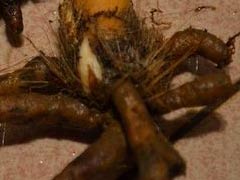
How to Sprout Old Pseudobulbs of Orchids? Step-by-Step Guide with Pictures
Sprouting old orchid pseudobulbs is a shortcut for ordinary orchid growers to "save money" while cultivating fine varieties, and it is worth trying and studying. The old orchid pseudobulb demonstrated in this article is an old orchid corm with roots but no leaves. Although different situations call for different ways of handling old pseudobulbs, the general approach is the same. This article introduces the process of sprouting old pseudobulbs...
-
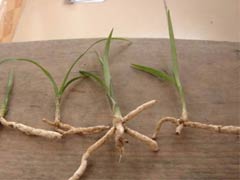
Illustrated Guide to Caring for Orchid Seedlings
Many flower enthusiasts have trouble getting the care of orchid seedlings right, which makes orchid seedlings, small seedlings, and weak seedlings very easy to lose. Through repeated practical experience, one enthusiast found that using sphagnum moss to cover the pseudobulb area is a fairly ideal method. No matter how small or weak the seedling is, as long as the moisture is controlled properly, there is almost no seedling collapse. The method is illustrated below...
条件筛选