-

A Detailed Guide to Making Maple Bonsai and Care Precautions
The maple is a famous landscape tree, with a graceful and enchanting form, and is an excellent material for making bonsai. In making a maple bonsai, besides the processing methods, what matters more is the choice of tree shape and the original natural form, and it takes a certain amount of time to shape it. Every maple bonsai should have its own characteristics.
-
How to grow Venus flytraps best? Detailed guide to care methods and precautions
The Venus flytrap is a perennial herbaceous plant native to North America, a very interesting carnivorous plant with a very short stem, and at the tip of each leaf grows a trap that closely resembles a shell, which can secrete nectar; when a small insect intrudes, it can clamp it shut at extremely fast speed and digest and absorb it
-
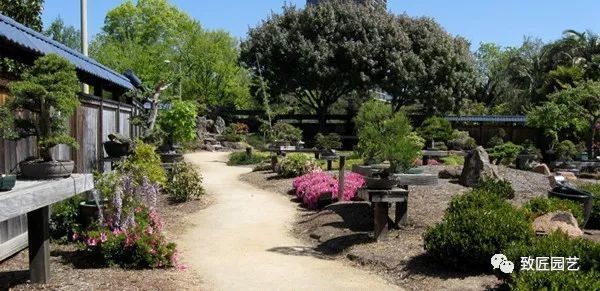
A Detailed Guide to the Clever Use of Bonsai Design Renderings
A landscape design rendering is a predicted picture of how a tree blank will look when it is fully formed. The author has seen that bonsai enthusiasts abroad often carry out a rational analysis of their own raw material, then draw by hand or composite on a computer, and according to the characteristics of the tree shape and the tree's...
-
A Detailed Guide to Rose Propagation Methods and Cultivation Precautions
The rose is one of the world's famous ornamental plants and has a long history of cultivation in China. As far back as 1630, when Wang Xiangjin wrote the Qunfangpu, in 1688 when Chen Haozi wrote the Michuan Huajing, and in 1708 when Wang Hao wrote the Guang Qunfangpu, records of the rose, the Chinese rose, the rugosa rose, and the Banks rose already existed.
-
How to Grow and Cultivate Rain Lilies: A Detailed Guide
Rain lily, also known as autumn zephyrlily, Chinese rain lily, and hepatic wind grass, is a perennial herbaceous plant in the genus Zephyranthes of the amaryllis family (Amaryllidaceae). Native to South America, it is now grown throughout China and is commonly used as a border material for flower beds. It is also suitable for clump planting in green spaces, and is best used as ground cover in semi-shaded spots beneath trees or planted beside garden paths.
-
A Detailed Guide to Growing Agapanthus from Seed and Key Care Tips
Agapanthus, also known as purple clivia, blue-flowered clivia, and African lily, is a perennial herbaceous plant of the genus Agapanthus in the amaryllis family. Its leaves are deep green and glossy, and its flowers are blue-purple with an elegant shape. It is suitable for growing in pots as an indoor ornamental, and in the south it can be grown in semi-shade, where it serves as an accent for rock gardens and flower borders.
-
How to care for lucky bamboo in winter? Detailed guide to cultivation methods and precautions
Lucky bamboo (Dracaena sanderiana) is a perennial evergreen herbaceous plant of the genus Dracaena in the family Asparagaceae (formerly Agavaceae), native to the Canary Islands and the tropical regions of Africa and Asia. It prefers shady, humid and warm conditions, tolerates waterlogging, has a strong tolerance for fertilizer, is highly cold-resistant, and likes semi-shaded environments. It is often grown as a potted ornamental plant with high ornamental value, and symbolizes great fortune and prosperity
-
A Detailed Guide to Potted Rose (Rosa multiflora) Care Methods and Management Key Points
Most roses are world-famous ornamental plants. They prefer growing in thickets along roadsides, field edges, or hilly land, and are widely distributed across the cold-temperate to subtropical regions of Asia, Europe, North Africa, and North America. They have extremely high ornamental value and a very long cultivation history in our country, making them very suitable for bonsai cultivation.
-
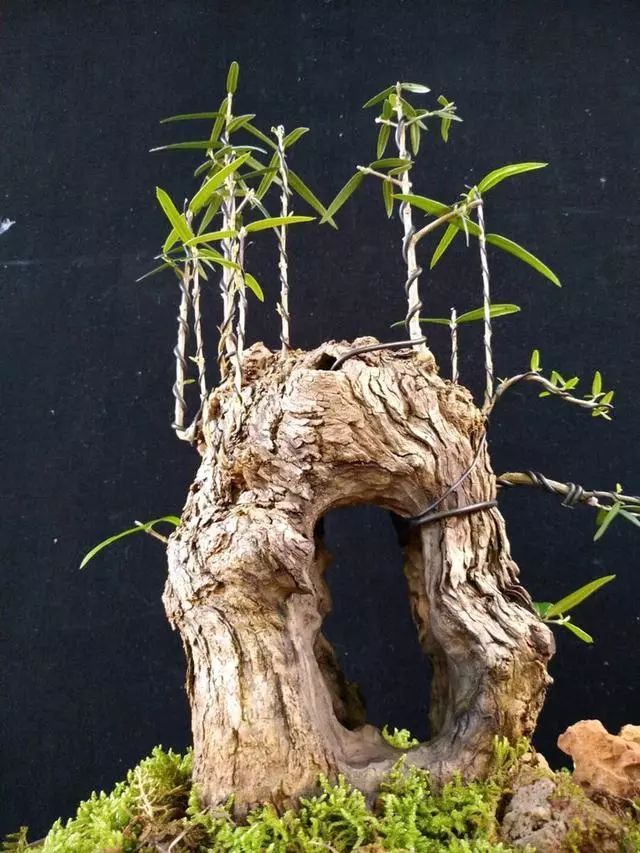
A detailed guide to bonsai bending techniques, easily master the shaping methods
Bending includes bending straight trunks and adding curves to curved trunks, as well as straightening curved trunks. For bending, you can use soft palm fiber and cloth strips, hard copper wire and aluminum wire, and you can also rely on pruning. Of course, nowadays it is basically a combination of several methods. First, and easiest...
-
Can Rubber Plants Be Grown in Water? Detailed Guide to Hydroponic Methods and Care Points
The rubber plant is a well-known potted foliage plant, also called rubber tree, Brazilian rubber, etc. It is a large tree of the genus Ficus in the mulberry family. Many people do not know whether rubber plants can actually be grown hydroponically. In fact, the hydroponic method for rubber plants is very simple, requiring no complicated steps, and can be done in just a few easy steps.
条件筛选