-

Phalaenopsis Rescue Methods and Daily Care and Maintenance Guide
Many people see the Phalaenopsis orchids in flower shops blooming vibrantly and can't help wanting to grow one themselves. But when it actually comes time to care for one, the flowers just won't open no matter how long they wait, and what's worse, the leaves turn yellow. No matter how much care is given, it always feels like the plant is about to die at any moment. If you've encountered similar problems as described above
-

Is a Phalaenopsis bonsai just one plant? A step-by-step guide to growing one into a bonsai
In the world of floral decoration, the Phalaenopsis (moth orchid) is highly favored for its elegant bearing and is often crafted into exquisite bonsai. Many people wonder: is a Phalaenopsis bonsai just one plant? And how do you cultivate a Phalaenopsis into a uniquely charming bonsai? A Phalaenopsis bonsai can be a single plant styled on its own, or it can be composed of multiple plants
-
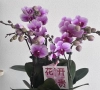
Detailed Guide to Dividing and Transplanting Phalaenopsis Orchids and Cultivation Methods
Division propagation, as a commonly used method of propagating Phalaenopsis orchids, can continue the life of the plant. Below, we introduce the methods and precautions for dividing Phalaenopsis orchids. Early-stage preparation for division 1. Soak the roots in advance: Be sure to water the Phalaenopsis thoroughly before dividing. Considering that the cut surfaces need to remain dry after division, water the plant one day in advance
-

How to Care for Phalaenopsis Orchids on Rainy Days? A Detailed Guide to Light Management
The Phalaenopsis orchid, an elegant flower, is quite sensitive to environmental changes, especially on rainy days, when care requires extra attention, as the slightest mistake may affect its growth and blooming. So, how exactly should Phalaenopsis orchids be cared for on rainy days? On rainy days, humidity is higher, and the orchid's demand for water decreases accordingly.
-

Should You Cut the Stem of a Phalaenopsis After the Flowers Fall? A Detailed Guide to Care
Phalaenopsis, after you have finished admiring its dreamlike flowers, when faced with the plant that has dropped its blooms, many people will wonder: should you cut the stem of a Phalaenopsis after the flowers fall? And how should it be cared for? After a Phalaenopsis drops its flowers, cutting the stem is an important care step. The main purpose of cutting the stem is to reduce nutrient consumption and promote the plant's recovery
-
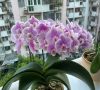
Can Phalaenopsis (moth orchid) be propagated by cuttings? A detailed guide to the fastest rooting methods
On a vibrant spring day, a deep breath always brings a scent of moss and grass, which is exactly the breath of growing flowers, grass and trees. When it comes to growing flowers, many households have surely kept "Phalaenopsis" (moth orchid), because their flower shape is distinct, like dancing butterflies, and placing one in the living room is unforgettable. However, flowers always bloom and fade
-

What Does Repotting a Phalaenopsis Orchid Mean? A Detailed Guide to Repotting Methods
In the journey of caring for a Phalaenopsis orchid, "repotting" is a key step, carrying the mission of sustaining the orchid's vigorous vitality. So what exactly does repotting a Phalaenopsis orchid mean? Simply put, repotting a Phalaenopsis orchid is the process of taking it out of its original growing medium, replacing it with fresh medium, and replanting it into a suitable
-
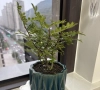
What Is the Best Time to Water Plants in Spring? A Detailed Guide to the Right Method
Do you always worry about when to water your plants? Don't worry, below we'll share super practical watering tips. Best watering time in spring: 9-10 a.m. In early spring, temperatures begin to rise, but the nights are still chilly. Choosing this time slot for watering means the water temperature is closer to the soil temperature, which lets plants
-

Is Phalaenopsis 'Japanese Girl' a large-flowered variety? Detailed guide to growing methods and precautions
The beauty icon of the Phalaenopsis family - Phalaenopsis 'Japanese Girl'. It belongs to the medium-to-large flower type, with vivid and eye-catching rose-red sepals, clear patterns on the pink petals, a rich red center in the middle of the petals, and edges that gradually transition to white. It is stunning at first glance and instantly elevates the style of a home. Moreover, it is super easy to care for, making it great for beginners
-

What kind of environment suits Phalaenopsis orchids? A guide to choosing the right spot
Phalaenopsis orchids hold a special place in the hearts of many flower lovers. If you want your Phalaenopsis to bloom in its most beautiful form, choosing the right growing environment for it is the key first step. Phalaenopsis is native to tropical and subtropical regions and naturally loves warm conditions. The most suitable temperature for its growth is between 15 - 28
条件筛选