-
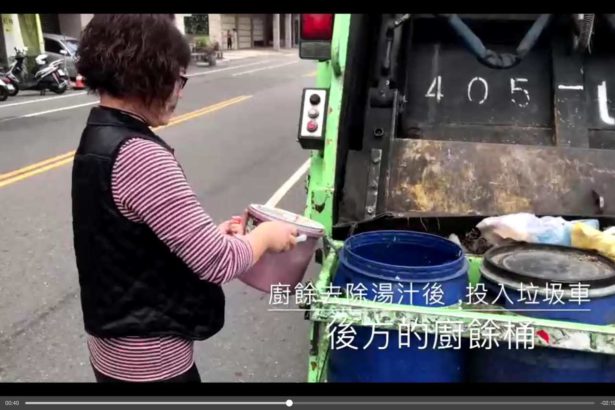
Comprehensive Review of Food Waste Generation and Disposal Capacity Across Taiwan: The Six Special Municipalities
The Battle Against Epidemic and Food Waste 06"Comprehensive Review of Food Waste Generation and Disposal Capacity Across Taiwan (Six Special Municipalities)
-

Forecast for the occurrence trend of the first generation of the striped stem borer in rice is released
1. Occurrence level: The first generation of the striped stem borer, the main rice pest in our city, is expected to occur at a moderate-to-severe level, with the affected area in the city reaching more than 250,000 mu, of which more than 50,000 mu are early-planted idle fields. 2. Occurrence period: Moths seen under light on April 11, the beginning of the peak moth emergence period 5/9-12, the peak moth emergence period 5/20-24; the peak egg hatching period 5/27-5/30, the peak period of first and second instar larvae 6/4-6/10, the occurrence period is 3 days later than the average of the past three years. 3. Forecast basis 1. Development progress: This year 4/2
-
What to Do About Tulip Variety Degeneration? Detailed Solutions
Imported tulips often perform well in the first year of bulb growth, with large flowers and vivid colors. Starting from the second year, the flowers become smaller, the colors turn dull, the leaves and petals show color-breaking patterns, and the plants grow poorly. This is mainly due to virus damage, commonly mosaic virus and color-breaking virus, which cause yellow and white stripes and irregular spots on the leaves. In severe cases, the leaves rot and the flower colors become mottled. Control methods: 1. Use virus-free plants obtained through shoot-tip culture when planting, or choose varieties with strong virus resistance; 2. Promptly
-
Causes of Potato Degeneration and How to Prevent It
(1) Causes of Potato Degeneration When potatoes are planted in spring in the hot summer regions of the south, after one or several years the yield gradually declines, and there may even be no harvest at all; this phenomenon is called potato degeneration. The direct external cause of potato degeneration is damage by viruses. Common ones in the south include mosaic virus, leafroll virus, common mosaic virus and spindle tuber viroid. These viruses are transmitted through mechanical friction, aphids, leafhoppers or soil nematodes and other vectors, infecting the plants and causing degeneration. High temperature is the indirect external cause of potato degeneration.
-
Scientific control methods for the first-generation Asiatic rice borer (Chilo suppressalis) in rice
According to surveys conducted across Hubei Province, the overwintering mortality rate of the Asiatic rice borer this year was higher than last year, and the post-winter population base was lower than last year but still relatively high. In addition, suitable climate conditions and the expansion of high-quality rice varieties are both favorable to the occurrence and damage of rice stem borers, and the first-generation Asiatic rice borer will show a major outbreak trend in the rice-growing areas of our province, making the control situation still severe. In response to this severe situation, all localities should strengthen leadership, raise awareness, actively organize control efforts, and quickly launch a campaign to wrest grain from the pests to ensure the safety of grain production. 1. Recognize the situation clearly and strengthen organizational leadership. Last winter, our province suffered freezing ice and
-
Causes of Gastrodia elata trait degeneration and control methods
Degeneration of Gastrodia elata traits usually manifests as a decline in the yield of arrow gastrodia, with the individuals becoming smaller and slender; the yields of rice gastrodia and white gastrodia drop substantially, the tubers turn ginger-yellow or light brown, stress resistance is poor, and the original yield and traits cannot be fully expressed. The causes are generally as follows: 1. Multiple generations of asexual propagation. Degeneration generally begins to appear after 5 to 6 generations of asexual propagation, but the speed of degeneration differs when cultivated on different soils; degeneration is slower when cultivated on granite soil, followed by yellow-brown earth sandy soil parent material, and the acidic soil formed by the weathering of shale or limestone.
-
How to prevent mushroom spawn degeneration? Practical control methods
Spawn degeneration can lead to slow mycelial growth, weakened resistance to the environment, contaminant microorganisms and so on, an earlier or delayed fruiting body formation period, and indistinct flushes of mushrooms. There are many causes of spawn degeneration, among which impure spawn and gene mutation are the main reasons; in addition, excessively high temperatures and mixed cultivation of different strains can all cause spawn degeneration. Measures to prevent spawn degeneration include: ensuring pure culture of the spawn, taking care not to use spawn contaminated by foreign microorganisms, and not cultivating in close proximity connected to each other; strictly controlling the number of subcultures, reducing mechanical damage,
-
How to prevent rabbit breed degeneration? Master these practical methods
Causes of degeneration: Extensive management and inbreeding. Only emphasizing the rabbit's trait of eating grass without supplementing with concentrated feed causes nutritional deficiency and breed degeneration. Ignoring the blood relationship of breeding rabbits and mating closely related animals causes poor disease resistance in offspring rabbits, slow growth, smaller body size, deformities, and breed degeneration. Lack of strict selection measures: not paying attention to selecting and retaining breeding rabbits according to breed characteristic requirements, often selling off the large, fast-growing, well-conditioned ones first and keeping the small, thin, weak ones to continue raising, causing gradual breed degeneration. Mating
-
Control Recommendations for the Overwintering Generation of the Box Tree Pyralid Moth
The box tree pyralid moth (Glyphodes perspectalis) is one of the important leaf-eating pests of forestry plants in this district, mainly damaging Chinese box (Buxus sinica var. parvifolia) and Japanese box (Buxus bodinieri). Since early spring this year, the whole district has carried out 2-3 rounds of comprehensive control against this pest, effectively bringing the damage under control; however, since the damage period of this pest is long and can last until the end of October, continued follow-up monitoring of this pest is still needed. According to monitoring at two sites, the Anting Ginkgo Garden and the Fangtai Flowers and Plants Horticultural Farm, a moth peak appeared under the forecasting lamp in early to mid-September, with the highest moth numbers on September 7-9, averaging 22.3 moths per lamp per day
-
A Detailed Guide to the Stubble-Cutting Regeneration Cultivation Technique for Eggplants
Many years of practice have proven that stubble-cutting regeneration cultivation of eggplant plants is an effective measure for increasing yields, lowering production costs, boosting economic returns, and regulating the peak and off seasons for eggplants. This technique is simple and easy to carry out, and its methods are as follows. 1. Timing of stubble cutting. In spring and autumn, eggplants fetch high prices but yields are low, while in midsummer they enter a period of high yields and low prices. Therefore, the height of summer when the dog days begin is the best time to cut back eggplant plants. In addition, eggplants have the characteristic that the fruits of the main-stem eggplant, the first eggplant, and the four-direction eggplant are large and plump, while the fruits on the upper part of the plant are small and thin and are not welcomed by the market. Through cutting back the plants for regeneration, the high-yield, low-price period is pushed back by exactly 30-40 days, and when the market is short of eggplants, the regenerated eggplants from cutting back are in exactly their high-yield, high-price period, so the high-yield, low-price period for eggplants is the best time for cutting back the plants.
条件筛选