-

What to Do About Mushroom Spawn Degeneration? Causes and Countermeasures Explained
Causes of and Countermeasures for Mushroom Spawn Degeneration
-
-
How to prevent mushroom spawn degeneration? Practical control methods
Spawn degeneration can lead to slow mycelial growth, weakened resistance to the environment, contaminant microorganisms and so on, an earlier or delayed fruiting body formation period, and indistinct flushes of mushrooms. There are many causes of spawn degeneration, among which impure spawn and gene mutation are the main reasons; in addition, excessively high temperatures and mixed cultivation of different strains can all cause spawn degeneration. Measures to prevent spawn degeneration include: ensuring pure culture of the spawn, taking care not to use spawn contaminated by foreign microorganisms, and not cultivating in close proximity connected to each other; strictly controlling the number of subcultures, reducing mechanical damage,
-
Key Production Technology Points for Flat-Bed Cultivation and Successive-Generation Cultivation of the Elm Oyster Mushroom (Pleurotus citrinopileatus)
The elm oyster mushroom (Pleurotus citrinopileatus), due to its strong growth vigor, good stress resistance, ease of cultivation and promotion, and high biological efficiency, has very broad development prospects in Shandong Province. Shandong Province is a major cotton-growing province, and in recent years the cotton planting area has risen sharply, with cottonseed hulls being of high quality and low price. The following is an introduction to the production technology for cultivating the elm oyster mushroom using cottonseed hulls as the main substrate, employing fermented substrate flat-bed cultivation and successive-generation cultivation. I. Spawn Production 1. Spawn Selection Select strains with strong growth vigor, good stress resistance, high and stable yields, and a broad temperature adaptation range, such as Yuhuang-1 and Yuhuang-2. The mycelial growth temperature is 5-35 degrees, with 20-30 degrees being suitable; the fruiting body differentiation and growth temperature is 10-30 degrees, with the optimum temperature being 8-25 degrees. It is tolerant to carbon dioxide. Under conventional cultivation, the biological yield can reach 150%, and under successive-generation cultivation, the conversion rate can reach 200%. It is an excellent strain suitable for cultivation in Shandong Province.
-
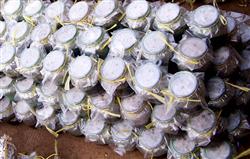
How to prevent spawn degeneration in button mushrooms? Practical prevention and control methods shared
How to prevent spawn degeneration in button mushrooms? Please provide methods to prevent spawn degeneration in button mushrooms. It can increase yield, reduce the occurrence and development of pests and diseases, and reduce pesticide use. It is the foundation of organic button mushroom production. The following methods can be used for prevention: 1. The ambient temperature for culturing spawn must not exceed 2...
-
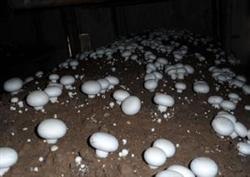
What are the methods for preventing and controlling the degeneration of Agaricus bisporus (button mushroom) spawn
Preventing spawn degeneration can increase yield, reduce the occurrence and development of pests and diseases, and cut down the amount of pesticides used, which is the foundation for producing organic button mushrooms. 1. The ambient temperature for culturing spawn must not exceed 28°C, and properly cultured spawn should not be stored at room temperature for more than half a month. 2. Properly master the time for mycelium to emerge from the substrate...
条件筛选