-

Detailed Explanation of the Comprehensive Ecological Fishery Technology Model in Northern China
Ecological fishery refers to a farming model based on the principle of symbiotic complementarity between fish and other organisms, utilizing the land-water material circulation system, and adopting corresponding technical and management measures to maintain ecological balance and improve farming efficiency. Developing ecological fishery can make full use of local resources, recycle waste, save energy, improve comprehensive ecological benefits, and achieve sustainable development of fisheries. 1. Fish-Grass Model The fish-grass combination type is a relatively common fish farming model, generally with 200-300
-
Detailed home-style recipe for Fish Head Clay Pot with Black Bean and Chili
Main ingredients: 1 large fish head weighing 1 jin (about 640 g), 1 green chili and 1 red chili sliced, 1 tsp minced garlic, 1 tbsp fermented black beans, 4 liang (about 160 g) Napa cabbage, 2 scallions, an appropriate amount of ginger slices. Seasonings: Marinade: 1/2 tsp each of salt and sugar, 3/2 tsp cornstarch, a pinch of pepper. Sauce: 1/4 tsp dark soy sauce, 1/2 tsp salt, 1 tsp each of sugar and cornstarch, 5 tbsp water. Method: 1. Remove the gills from the fish head, rinse clean, cut into pieces, pat dry, and use
-
How to Cleverly Identify Whether Fish Have Eaten Their Fill
1. Pay close attention to how long the fish take to eat at the feeding tray or feeding ground. If, after a certain amount of feed is put in (the normal feeding amount), the fish finish the feed in less than 2 hours, it means the feed is insufficient and some fish have not eaten or have not eaten their fill, so an appropriate amount should be added. If the feeding amount per ten-day period is fixed and the daily feeding amount within the period is the same, but by the end of the period the feed put in is finished by the fish in less than 2 hours, it means the fish have gained weight and the feed amount should be increased. When feeding compound pellet feed, if the feed has already been finished but the school of fish is still swimming rapidly on the surface layer searching for food and is unwilling to sink into the "second layer of water," it indicates the fish have not eaten their fill. If the school of fish has already dispersed from the feeding tray or feeding ground and there is still leftover bait, the fish have eaten more than their fill, and the feeding amount can be appropriately reduced next time.
-
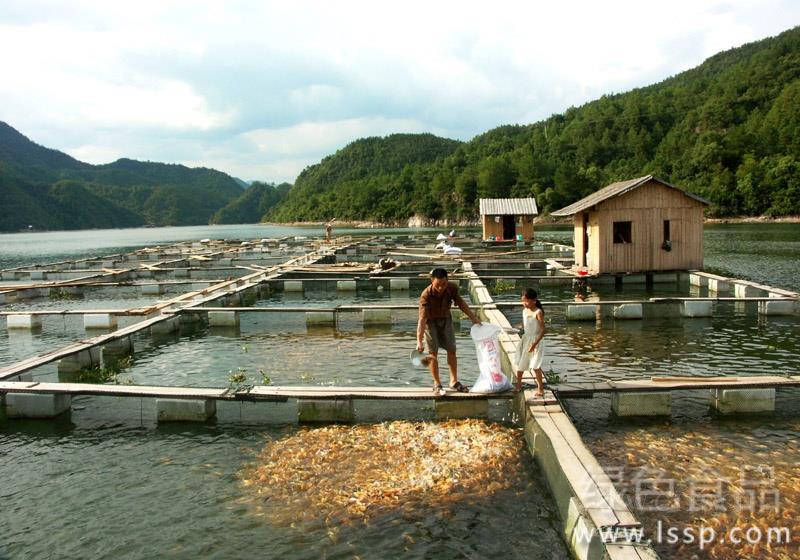
Cage fish farming in the dog days: humid and muggy conditions make skin rot likely, how to prevent it?
In the dog days, humid and muggy weather makes fish skin prone to rotting; how to prevent skin rot in cage fish farming
-
How to prepare fish? Learn easily with a seven-step method
Preparing fish before eating is crucial. If it is not done properly, it will cause a lot of inconvenience in cooking, and sometimes it will make the fish taste terrible, or even make it impossible to swallow. Now I will teach you the preparation method: Washing after slaughtering a live fish: generally people can smoothly remove the fish's gallbladder, so there is not much of a problem. Nowadays people mostly ask the fish seller to help slaughter the live fish, and they do not necessarily clean it very thoroughly. Thorough washing after bringing it home is very important, so as to avoid a strong fishy smell after the dish is made. Fish gills: be sure to thoroughly gouge out all the gill filaments, to avoid
-
Three key points for raising fish fry in autumn
Adjust the density and grade the rearing. After the beginning of autumn, choose suitable weather when the temperature is relatively cool, pull a net through the pond to sort the uneven-sized fry, and classify them as large (about 20 cm), medium (about 15 cm), and small (below 15 cm). Large-sized fry can be transferred to larger adult fish ponds with better conditions for mixed culture, while medium and small-sized fry are raised intensively in separate ponds. For stocking density, generally a pond with a water depth of about 15 m is stocked with 3000-5000 fish per mu. Fertilize according to the water condition and feed reasonably. For nursery ponds mainly raising silver carp and bighead carp fry, in addition to
-
Key points and precautions of live fish transport technology explained
This article mainly studies and summarizes the open live fish transport methods commonly used on the market today for freshwater adult fish and fingerlings, and develops a live fish transport method that is simple, convenient, has a large loading capacity, a high transport survival rate, and low transport cost. 1. Transport method 1. Add water to the tank. Before loading fish, first fill the transport truck tank with water. The water used is best underground hard water, and generally the tank is filled to a depth of 40-50 cm. When transporting in summer, when adding underground well water, it is best to also add about 1/5
-
To achieve high yield and high efficiency in fisheries, these three measures need to be implemented well
To achieve high yield and high efficiency in fisheries, efforts should be actively made to optimize the ecological conditions for aquaculture and strengthen the construction of supporting pond facilities. Specifically, this can be done from the following three aspects. 1. Implement the renovation of old ponds. The old pond renovation project should follow the requirements of "ecology, circulation, health, and intensification" and carry out major engineering construction such as "desilting and deepening, pond shape transformation, pond embankment slope protection, pond ridge widening and tidying, and improvement of supporting water, electricity, and road facilities," with particular emphasis on removing the thick layer of sludge at the bottom of the pond so that the bottom sediment is reduced to about 20 cm. Through desilting
-
Control methods for common fish diseases in early summer
In early summer, water temperatures are suitable, and various pathogens readily breed and multiply, making it a season when fish become ill. If prevention is neglected, fish diseases are easily triggered. Grass carp in particular have a high mortality rate when they fall ill, causing great losses. The symptoms and control methods of four major fish diseases are introduced below: 1. Saprolegniasis: Symptoms: local injury to the fish body, loss of scales, mold or fuzz on the body surface. Abnormal swimming, reduced feeding, leading to emaciation and death. Cause: mainly injury to the fish body after harvesting, after which the disease invades the weakened fish and causes illness. Pre
-
Causes of head perforation triggered by Spironucleus infections in fish
Signs of infection by Hexamita sp., Octomitus sp. - and Spironucleus sp.): affected fish first lose their appetite, then their colors darken, and they begin to swim unsteadily. Especially in discus, and sometimes in other fish, small holes appear on the head, parasites protrude from the holes like whitish material, and parasites can also be found in fresh excrement. As the disease progresses, the fish become emaciated, and the small holes enlarge as the flesh is eaten away
条件筛选