-

Comprehensive Utilization Methods of Fish Fingerling Ponds During the Winter Fallow Period
Raising market-size fish: Using winter-fallow fingerling ponds to raise one season of market-size fish can both increase production and help ease the "summer shortage" in the aquatic product market. Because the rearing period is relatively short and temperatures are relatively low, the following techniques should be adopted: 1. Stock early, that is, stock immediately after the fingerlings are combined into ponds, so as to make full use of the growing period. Stocking rate is calculated at a maximum water depth of 2 m, generally 125-150 kg per mu. The stocking ratio is generally about 40% silver carp, about 10% bighead carp, about 30% grass carp and bream, and about 20% black carp and common carp.
-
Identification and Control Methods for Fish Lice (Argulus sp.)
Signs of Infection Fish lice are disc-shaped parasites, 8 to 12 mm in diameter, and come in various colors, from light green to brown. They can be seen attached to the fish's body and fins. Fish Affected Fish lice can infest many species of coldwater fish. They are almost impossible to find on tropical species unless the parasites are brought into the aquarium on live food or plants. Even then, fish lice cannot survive for long in warm water. Details of Infection These parasitic crustaceans have eight feathery legs,
-
What is the effect of adding fish oil to feed?
Fish oil is a by-product of fishmeal processing, obtained from fish and fish waste through steaming, pressing and separation. The main components of fish oil are: triglycerides, phosphoglyceryl ethers, lipids, fat-soluble vitamins, and protein degradation products. No toxic substances such as mercury, arsenic or lead have been detected in the bodies of marine fish, while potassium, copper, aluminum, cadmium and others are all below the permitted health limits, and pesticide residues are almost zero, so the quality of the oil obtained by processing fish and fish waste is reliable. 1. Fish is one of the high-energy substances, with each gram of fat containing 94 calories,
-
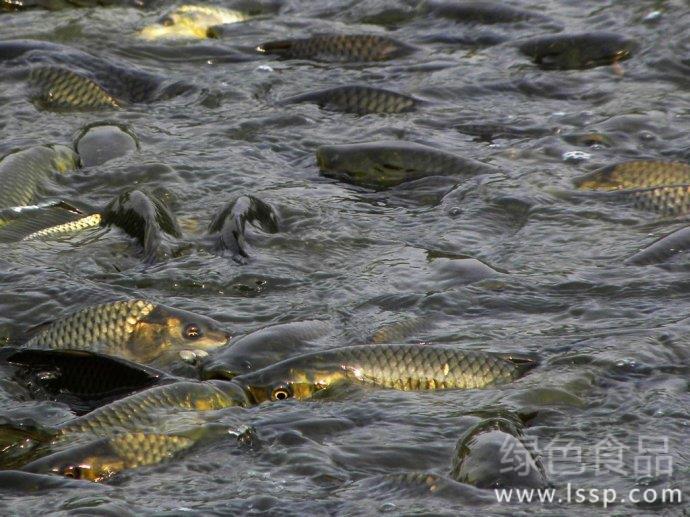
The plum rain season is a high-risk period for aquaculture. How should fish ponds be managed?
The plum rain season, a disaster season for aquaculture: how to manage fish ponds well during the plum rain season
-
Three Major Disease Prevention and Treatment Methods for Pond Fish in Spring and Summer
1 Carp Hemorrhagic Disease 1.1 Symptoms and Causes The scales on the abdomen of the diseased fish, the fin rays and the caudal peduncle become congested and red. The diseased fish float up close to the ice layer or float on the water surface, gather in groups and swim slowly near the pond edge, and gradually die. ① Hemorrhagic septicemia. The diseased fish appear normal on the outside, or the area under the abdominal scales is congested and red. When the diseased fish is dissected, blood-tinged fluid emerges from the body cavity, and the internal organs have petechial hemorrhages. The disease is caused by Aeromonas hydrophila. ② Brown blood disease (hemorrhagic gill disease). The gill filaments of the diseased fish swell and become dark in color, and some gill filaments
-
What are the feeding methods for the five types of fish feed?
1. Cake-type feed. Cake-type feed for feeding small fish should be crushed, soaked and ground into a slurry before feeding; for medium to large fish, simply soaking it soft is enough. 2. Grain feed. Large grains such as corn should be crushed and processed before feeding to fish; small grains such as paddy grains can be sprouted before feeding to fish. The young white sprouts of grains have high nutritional value, are easy for fish to digest, are absorbed quickly, and promote fast weight gain. 3. Green fodder. For feeding medium to large fish, green fodder can generally be fed directly after the soil is removed; for feeding small fish, it should be chopped or
-
How to Prevent and Treat Vitamin Deficiency in Fish? A Detailed Guide to Practical Methods
Vitamin A group: When fish lack vitamin A, it causes poor eyesight, dry eye disease, night blindness, bleeding of the skin and eyes, keratinization of epithelial tissue, bleeding at the base of the fins, deformed gill lamellae that often fuse together with enlarged tips, abnormal bone development, loss of appetite, and slow growth. To address these symptoms, increase the vitamin A content in fish feed and use vitamin blends in combination. For example, when raising herbivorous and omnivorous fish, green fodder, carrots, and yellow corn can be added to and combined with the feed.
-
Russian experts discover a new type of fish feed additive
Russian fish farming experts have recently found that chitosan, a biopolymer extracted from the shells of marine crustaceans, can be used as a fish feed additive, making fish feed easier to transport; fish that eat feed containing chitosan become plumper and finer. Ordinary fish feed is processed into loose pellets, but during transport it easily crumbles from friction or squeezing, and once put into water it quickly swells and breaks apart from soaking, causing waste. Therefore, when processing fish feed, adhesive ingredients need to be added to strengthen
-
A Detailed Guide to Rainbowfish Breeding Techniques and Daily Care Essentials
Rainbowfish belong to the family Melanotaeniidae, and there are actually several species in the domestic aquarium market. Among the most common are the Australian rainbowfish, the New Guinea rainbowfish, the Madagascar rainbowfish, and the Australian tonguescale fish. The most beautiful of all is the Australian rainbowfish, whose English name is RainbowFish and which originates from Australia; it is also known as the five-colored golden phoenix, blue beauty, electric light beauty, and stone beauty. Most rainbowfish are easy-to-keep tropical fish species and are fish of the fresh and brackish water transition zone. However, they prefer weakly alkaline
-
What are Pengcheng fish balls? An introduction to a traditional Xuzhou specialty food
[Features] The fish balls are light and white, smooth, tender and refreshing, especially suitable for elderly people to eat. [Ingredients] One live carp (about 1000 g). 50 g pork fat, 100 g soaked glass noodles, 25 g cooked choy sum, 15 g cooked ham slices, 25 g egg white, 10 g soaked shiitake mushrooms. 25 g Shaoxing wine, 15 g scallion, 10 g ginger, 3.5 g salt, 25 g starch, 2 g monosodium glutamate, 15 g sesame oil, 500 g clear chicken broth. [Preparation] Clean the carp. Cut off the head and tail, take the clean fish meat, and after washing
条件筛选