-

Bag-disinfection method for fish fry and fingerlings stocked in spring
"Bag disinfection" of fish fry and fingerlings is a new disinfection method summarized and used by fish farmers in recent years. Its advantages are that it is simple and convenient, costs little, can reduce fish diseases, and gives a high survival rate. The method is: 1. Operation (1) Place the nylon bag holding the fish fry and fingerlings at the pond edge (untie the bag opening), with the water level inside the bag level with that outside. (2) Pour the medicinal solution into the bag and shake well, and observe the activity of the fish fry and fingerlings; after the disinfection time is completed, put them into the pond. 2. Drug preparation and soaking time (1) 3%-5% salt solution, soak the fish fry and fingerlings for 20 minutes, can prevent and treat bacterial diseases
-
Prevention and Control Methods and Technical Key Points for Complications in Fingerling Fish
An unusual combination of complications - rotten gills, enteritis and hemorrhage - once occurred in fingerling fish in Sanhe Town, Hongze County, Huai'an City, Jiangsu Province, causing large-scale deaths of fingerlings. The specific details of the disease and its prevention and control measures are summarized below for everyone to discuss together. Onset time and symptoms: In early August, scattered dead fish appeared, and the diseased fish had Trichodina on their gill filaments, with no other symptoms. Around mid-August, mass mortality occurred, and all were grass carp fingerlings. The diseased fish turned dark in body color and showed a behavior of lying at the edge, floating weakly by the pond bank and stopping feeding. When the diseased fish were scooped up
-
What medication should be used to disinfect fish fingerlings? Polymeric iodine works well
Winter and spring are the seasons with a high incidence of fish saprolegniasis, so disinfection of fish fingerlings must focus on preventing and treating saprolegniasis. After the specific remedy malachite green was banned, polymeric iodine is a relatively ideal medication for preventing and treating saprolegniasis. The full name of polymeric iodine is compound S polymeric iodine. It has an extremely strong killing effect on bacteria, viruses and fungi, and its bactericidal capacity is more than 10 times higher than that of povidone iodine. In addition, polymeric iodine contains a relatively high amount of traditional Chinese medicine ingredients, and for fish fingerlings injured by net-pulling operations and long-distance transport, it has the function of healing wounds extremely quickly.
-
Stocking fish fingerlings in early spring requires care; mastering the method is key
Fingerling quality For fingerlings of the same species and age, the specifications should be uniform, with little difference in body length and body weight, thick back muscle, bright color, intact scales and fin rays, normal activity, and strong upstream-swimming ability. After being taken out of the water and placed in a basin, the gill cover should not open, the tail should not bend, and the fish should keep jumping, with no wounds or parasites on the body surface. Fingerling disinfection Some farmers do not disinfect fingerlings at all when stocking them, resulting in a high disease rate, and drug treatment is not ideal. In fact, as long as fingerling disinfection is done well, it often achieves twice the result with half the effort in preventing fish diseases. Fingerlings
-
Garden balsam is also called fingernail plant, tougu cao, golden phoenix flower, sajin hua, jimingzi, and xiaotao.
Scientific name: Impatiens balsamina. English name: Garden Balsam. Aliases: fingernail plant, tougu cao, golden phoenix flower, sajin hua, jimingzi, xiaotao. Family name: Balsaminaceae. Genus name: Impatiens. Adapted regions: native to China, India and the Malay Archipelago, widely cultivated in central and southern China. Ecological classification: herbaceous plant, annual and biennial flowers. Ornamental classification: flowering plants. Morphological characteristics: annual herb, plant height 30-60cm. Stem fleshy.
-
Comprehensive Utilization Methods of Fish Fingerling Ponds During the Winter Fallow Period
Raising market-size fish: Using winter-fallow fingerling ponds to raise one season of market-size fish can both increase production and help ease the "summer shortage" in the aquatic product market. Because the rearing period is relatively short and temperatures are relatively low, the following techniques should be adopted: 1. Stock early, that is, stock immediately after the fingerlings are combined into ponds, so as to make full use of the growing period. Stocking rate is calculated at a maximum water depth of 2 m, generally 125-150 kg per mu. The stocking ratio is generally about 40% silver carp, about 10% bighead carp, about 30% grass carp and bream, and about 20% black carp and common carp.
-
What is the one-year-old fish fingerling rearing model in the Guangdong-Guangxi region?
The method of rearing one-year-old fish fingerlings in the Guangdong-Guangxi region differs from that in Jiangsu and Zhejiang. Rather than starting with polyculture of multiple species, monoculture is carried out in the early stage, and after the fish grow to 5-6 cm, polyculture is then carried out according to a ratio. The advantages of this method of rearing one-year-old fish fingerlings in Guangdong and Guangxi are: (1) The survival rate of fish in early-stage monoculture is relatively high, generally 80%-90%. (2) When stocking in proportion in the later stage, "eliminating the inferior and selecting the superior" can be applied. Selecting fish with strong constitutions for polyculture can correspondingly increase the survival rate
-
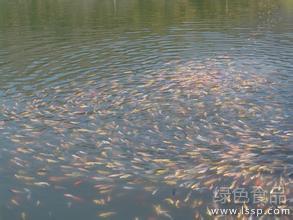
What should be noted when cultivating fish fingerlings in summer? Good-quality fingerlings are the foundation of successful fish farming
Good-quality fingerlings are the foundation of successful fish farming: precautions for cultivating fish fingerlings in summer
-
Management Methods and Technical Key Points for Introduced Snakehead Fry and Fingerlings
There are 3 sources of snakehead fry and fingerlings: first, artificial breeding; second, purchasing from other places or other units; third, catching wild fry and fingerlings in places with lush aquatic plants in reservoirs, lakes, and ditches. How to manage the latter two types of fry and fingerlings is described below: 1. Fry and fingerlings purchased from other places or other units. When purchasing fry and fingerlings, carefully select fish that are robust and of good quality. The specific standards are: from the external appearance of the fish, the scales and fin rays are required to be intact, the color bright and glossy, the body shape normal, and there is no external injury or disease. From the physique, a high degree of plumpness is required,
-
How to cultivate large-size fingerlings? Key measures to master
Fingerlings are the material basis for stable and high yield in adult fish production. Practice has proved that large-size fingerlings have stronger adaptability to the environment, ability to escape enemies, disease resistance and feeding ability, so the survival rate is high, the harvested size is large, and high yield can be achieved. To cultivate large-size fingerlings, in addition to carrying out feeding work such as "four fixed" feeding, "three looks" fertilizing, daily pond patrols and fish disease prevention and control, the following measures should also be taken: 1. Add fresh water to improve water quality. "When the water rises one cun, the fish grows three fen," "wide water raises big fish." During the rearing process
条件筛选