-

When Does Orychophragmus violaceus Bloom? A Detailed Guide to Its Flowering Period
Orychophragmus violaceus blooms from April to June. Orychophragmus violaceus is one of the most common wildflowers in early spring in northern China, and the flowering period (viewing period) of wild Orychophragmus violaceus is one month. Nowadays, many people also plant Orychophragmus violaceus for enjoyment. So when is the best time to sow Orychophragmus violaceus? Do you know the sowing methods?
-
What flowers bloom each month? A full-year guide to flower blooming times
Plum blossoms bloom in January, orchids in February, peach blossoms in March, roses in April, pomegranate flowers in May, lotus flowers in June, gardenias in July, osmanthus in August, chrysanthemums in September, hibiscus in October, narcissus in November, and plum blossoms again in December. But if
-
A Detailed Guide to When to Sow February Orchid and How to Grow It in Pots
February orchid is also called Zhuge Cai, and it is a flower with very strong vitality. The reason it is called February orchid is that it is a plant that blooms in February, but by the lunar calendar. February orchid often appears in parks, residential communities, scenic spots and other places, and is a widely used
-
Latest Prices for Orychophragmus violaceus Seeds and a Detailed Guide to Planting Methods
Orychophragmus violaceus, also known as Zhuge cai, February blue, and caizi hua, is an annual or biennial herbaceous plant of the genus Orychophragmus in the Brassicaceae family. It gets its name because it blooms with blue-purple flowers around the second lunar month. It often grows on plains, mountains, roadsides, and field edges, and can be cultivated as an ornamental flower, or
-
How do you care for the latest potted February orchid?
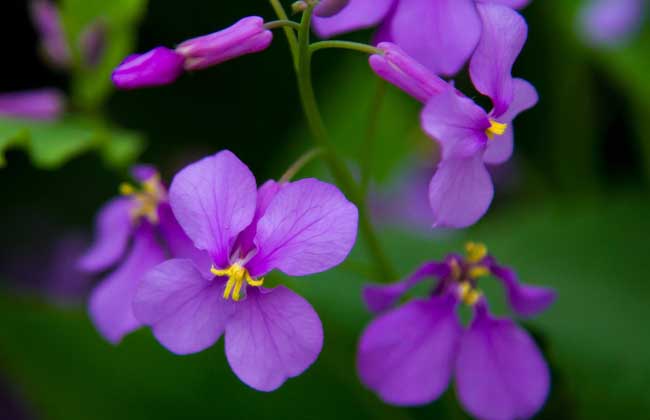
The February orchid is also known as Zhuge cai, February blue, purple gold grass, etc. It is an annual or biennial herbaceous plant in the genus Orychophragmus of the cruciferous family. Because it begins to bloom with blue-purple flowers around the second lunar month, it is called February blue. Its ornamental value is relatively high, and the flowering period of one population can last more than two months, with the best ornamental effect lasting as long as one month.
-
-
Sowing and Propagation Methods and Management Tips for February Orchid
February Orchid, also known as Zhuge Cai (legend has it that when Zhuge Liang led his troops on a campaign, he once gathered the tender shoots of this "turnip" as a vegetable, hence the name), is a biennial herb. Because it begins to bloom with blue-purple flowers around the second lunar month, it is called February Orchid. In fact, February Orchid is not difficult to cultivate, and gardening enthusiasts may be more concerned about its propagation.
-

Potted Care Tips and Landscape Applications for February Orchid
February orchid (Orychophragmus violaceus) is a flowering plant commonly seen in flower beds and similar places. Because it can create a natural, beautiful landscape effect and has characteristics such as low-maintenance management, abundant wild charm and a long ornamental period, it has become the most distinctive element in the field of landscape greening. At the same time, February orchid can also be grown in pots to decorate the home.
-
Detailed introduction to the sowing methods of February orchid (Orychophragmus violaceus)
Sowing time: February orchid is usually sown in autumn, and the best time is August. If sown too late, the seedlings will be too small to withstand severe cold and will die. Sowing rate: Each gram contains about 300-400 seeds, and the suitable sowing rate is 1 kg per mu
-
Cultivation Methods and Precautions for February Orchid
1. Soil: Potted February Orchid has high requirements for potting soil. You can consider using 6 parts garden soil, 2 parts perlite, and 1 part plant ash, mixed evenly, and sufficient base fertilizer should be placed in the pot. 2. Humidity: February Orchid has strong cold resistance and shade tolerance, and can grow, bloom, and set seed normally with a certain amount of scattered light
条件筛选