-

Planting dry Pinellia has high benefits and is a good project for farmers to increase income.
According to statistical analysis of market surveys of major medicinal herb markets and production areas across the country, there is currently a large gap between supply and demand for dry Pinellia, with a strong trend, and the price has risen to 45-52 yuan per kg, with a favorable outlook. According to Zhao Xijin, a traditional Chinese medicine pharmacist at the Anguo City Traditional Chinese Medicinal Materials Association in Hebei, wild resources of dry Pinellia are gradually decreasing, and the seed quantity per mu for planting dry Pinellia is relatively large, about 30-40 kg, with high planting costs (over 600 yuan). Herb farmers are generally unwilling to develop it on a large scale and only plant it on a small scale, cultivating their own seedlings before expanding. This situation has caused
-
Intercropping Cultivation Techniques for Licorice in Land Returned from Farmland to Forest
Intercropping licorice in land returned from farmland to forest can both conserve soil and water and increase economic returns, achieving the goal of using the land to support the forest and the forest to support the land, and realizing a "win-win" for both the economy and ecology. Since 2002, Regiment 137 has conducted cultivation trials of intercropping licorice in land returned from farmland. After several years of experimentation and exploration, breakthrough progress has been made. 1. Land selection: Select sandy loam plots of land returned from farmland to forest with relatively low salinity and alkalinity, relatively few field weeds, and good drainage for intercropping licorice. The main tree species planted in the sowing area is wolfberry seedlings; the planting pattern is furrow planting
-
Honeysuckle can prevent and treat poultry and livestock diseases, making it a valuable medicine for farming
Honeysuckle, also known as silver flower or Japanese honeysuckle flower, is the flower bud of Japanese honeysuckle (Lonicera japonica), a perennial semi-evergreen climbing vine of the Caprifoliaceae family. Honeysuckle is distributed throughout China, especially common in the south, and is now also cultivated artificially, with significant economic benefits, making it a path to wealth. It is mainly produced in Guangxi, Guangdong and Henan provinces and autonomous regions. From March to July each year, flower buds that are about to open are picked in the early morning and dried in the sun for later use. Every part of the honeysuckle is a treasure; it is a rare traditional Chinese medicine. At the same time, it is also a good medicine for preventing and treating poultry and livestock diseases. 1. Chicken diseases
-
Honeysuckle cultivation helps farmers increase income and achieve prosperity
Honeysuckle is also known as "double flower"; because it is a climbing woody plant, it is also called honeysuckle vine or mandarin duck vine. The flowers are snow-white when they first open and turn golden yellow after 2-3 days, hence the name honeysuckle. Because its leaves do not wither through winter, and in spring the old leaves slowly fall only as new leaves emerge, it is also called Japanese honeysuckle (Lonicera japonica), a semi-evergreen perennial climbing woody plant. Honeysuckle is one of the 70 precious and commonly used traditional Chinese medicinal materials designated by the State Council. It has wide uses, an extremely high prescription usage rate, a large clinical formula volume, and a very large demand as a raw material for Chinese patent medicines. In the Chinese patent medicines produced year-round by major pharmaceutical enterprises at home and abroad, honeysuckle
-
Winter pruning of goji berry is timely now; growers should not miss the farming season
After a year of growth, the goji berry tree has numerous branches and a messy canopy, and while new fruiting branches form, some fruiting branches have already begun to age. Therefore, goji berry must be pruned in winter, otherwise the yield and quality of the following year will be affected. Through pruning, out with the old and in with the new, selecting and retaining the old-eye branches and seven-inch branches with strong fruiting capacity, and cutting off non-productive branches, can lay a good foundation for the old-eye branches to bear fruit and grow new fruiting branches the following year. Top cutting: for ease of management, the tree height needs to be controlled by top cutting. Generally, tree height should
-
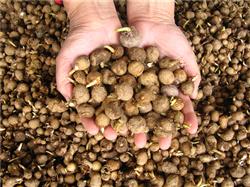
How is Pinellia ternata (dry-farmed Pinellia) cultivated artificially? A full analysis of the key cultivation techniques
How is Pinellia ternata cultivated artificially? Please give guidance. Pinellia ternata, also known as three-leaf Pinellia, Sanbutiao and Mayuguo, is a commonly used Chinese medicinal herb, and it grows wild in both northern and southern China. In recent years, because people have reclaimed and used barren hillsides and heavily used herbicides in farmland, its ecological environment has been damaged, resources have decreased year by year, and prices...
条件筛选