-

Dendrobium officinale: The Industrial Development Path of the "Immortal Herb" of the Mortal World
From folk legend and unattainable rarity to sweeping across coastal cities and developed regions, from scattered collection to attracting numerous listed companies such as CONBA, Bright Food, and Tianmushan to step in, industrialized cultivation has taken shape across various regions. Over the past 20-plus years, Dendrobium officinale has continued to rise in attention, and has been
-
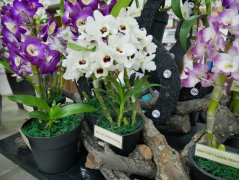
Spring Dendrobium forced flowering costs drop sharply: how many times a year does it bloom, and how much per plant
To force flowering, Spring Dendrobium growers have to use cold rooms or take the plants up to high mountains, but the cost of forcing flowering can reach 30 yuan per plant. The Taiwan Seed Improvement and Propagation Station under the Council of Agriculture has developed forced-flowering technology and agents costing as little as only 5.5 yuan per plant, and it can also adjust the flowering period according to market demand.
-
Is Dendrobium officinale cultivation a scam or can it really make money?
Dendrobium officinale is a valuable medicinal plant, ranked alongside reishi mushroom, ginseng and cordyceps as a top-grade Chinese herbal medicine. In recent years Dendrobium officinale has become the darling of the market, but some people also say that cultivating Dendrobium officinale is a scam. So is Dendrobium officinale cultivation a sc
-
What are the cultivation methods for Dendrobium huoshanense?
We all know Dendrobium officinale, and its effects and benefits can be learned through many channels. Today, the editor wants to introduce the cultivation methods of Dendrobium huoshanense to everyone. Let's take a look together! 1. Cultivation methods of Dendrobium huoshanense: Choose soil with good drainage and a soft texture.
-
What is the difference between Huangcao and Dendrobium officinale? Learn how to tell them apart
Huangcao Dendrobium is the stem of Dendrobium chrysanthum, an orchid family plant, with a flowering period from March to September. Today I will introduce to you the difference between Huangcao and Dendrobium officinale. 1. The difference between Huangcao and Dendrobium officinale 1. Different taste Huangcao Dendrobium has more residue when eaten, relatively less gelatinous substance, and its taste
-
What is the difference in benefits between Dendrobium and Dendrobium flowers?
Dendrobium flower is Dendrobium officinale, also known as Wanzhangxu. It is a perennial herbaceous plant. Today I will introduce the difference in benefits between Dendrobium and Dendrobium flowers. 1. The difference in benefits between Dendrobium and Dendrobium flowers. Dendrobium: benefits the stomach and promotes fluid production, nourishes yin and clears heat. Used for fluid damage from febrile disease, dry mouth and excessive thirst
-
What is the difference between Dendrobium officinale and Dendrobium chrysanthum? Learn to tell them apart easily
Dendrobium officinale is a traditional Chinese medicine that has always been very popular on the market, but it is easily confused with other Chinese medicinal herbs, such as Dendrobium chrysanthum. Below we introduce the difference between Dendrobium officinale and Dendrobium chrysanthum. Difference 1: Different varieties Dendrobium officinale is also called black-joint grass, Yunnan ironbark
-
How to Grow Fragrant Dendrobium Orchids: A Detailed Guide to Cultivation Methods
Dendrobium orchid is a plant of the Dendrobium genus in the orchid family, generally living on tree trunks or rocks in forests. The Dendrobium orchid has a delicate fragrance and a strong, resilient nature, and is known as the flower of fathers. With the rise of the flower cultivation industry, this plant has also begun to be grown in pots. This
-
Growing Requirements for Dendrobium officinale: Soil and Ambient Temperature Are Key
Summary Soil requirements: choose peat, fern root, tree bark, etc. as the transplanting substrate. Temperature requirements: the suitable temperature for growth is 12-35°C. Light requirements: it is suitable for growing in a shady, damp, ventilated, semi-shaded and semi-sunny environment, and direct sunlight must be avoided in summer. Humidity requirements ⟦4 <p class="cintro"><span>Summary</span>Soil requirements: choose peat, fern root, tree bark, etc. as the transplanting substrate. Temperature requirements: the suitable temperature for growth is 12-35°C. Light requirements: it is suitable for growing in a shady, damp, ventilated, semi-shaded and semi-sunny environment, and direct sunlight must be avoided in summer. Humidity requirements: keep humidity above 60%. Watering frequency: water once a month in winter; water once every 2 weeks in spring and autumn; water once a week in summer. Water quality requirements: use neutral water or slightly acidic water.</p> <p></p> <p><strong>1. Soil requirements</strong></p><p>1. The main reason Dendrobium officinale cannot be planted in soil is that it has aerial roots and shallow roots, which means good air permeability is required. Generally, by imitating the growing environment of wild Dendrobium officinale, if stones are chosen as the substrate, air permeability will be better, but water retention will also be poorer.</p><p>2. It can be seen that a single substrate can hardly satisfy the conditions of both water retention and air permeability at the same time, so the substrate for artificially cultivating Dendrobium officinale should preferably be loose, breathable, not prone to mold, well-drained, free of pathogens, and free of hidden pests. During this period, peat, sphagnum moss, mountain stone, wood shavings, fern root, tree bark, board edges, mushroom bran, sawdust, etc. can be chosen as the transplanting substrate.</p><p></p><p><strong>2. Temperature requirements</strong></p><p>The survival temperature of Dendrobium officinale is -10°C, and the suitable temperature for growth is 12-35°C. When the temperature is relatively high in summer, shading and ventilation are needed inside the greenhouse, and frequent misting is needed to maintain moisture and lower the temperature. When the temperature is relatively low in winter, insulation is needed.</p><p></p><p><strong>3. Light requirements</strong></p><p>1. Dendrobium officinale is a semi-shade and moisture-loving plant. Wild Dendrobium officinale generally grows attached to rock cliffs at relatively high altitude, or on the bark of trees in humid environments, because these attachment hosts (rock, bark) themselves contain very little water, and some even contain no water at all (rock).</p><p>2. Dendrobium officinale is an aerial-root plant and mainly obtains nutrients by absorbing moisture and nutrients from the air. These factors all determine that Dendrobium officinale needs to be planted in a shady, damp, ventilated, semi-shaded and semi-sunny environment.</p><p>3. The native environment of Dendrobium officinale is always under tree shade and in shaded places, so the growing environment needs appropriate shading. When sunlight is strong, shade it to prevent direct sunlight, and a shade shed can be built.</p><p></p><p><strong>4. Humidity requirements</strong></p><p>During the growth of Dendrobium officinale, a hygrometer should be provided, and humidity can be kept above 60%. In overcast and rainy weather, when humidity is above 90%, ventilation needs to be strengthened to avoid the occurrence of bacterial and fungal diseases.</p><p></p><p><strong>5. Watering frequency</strong></p><p>In winter, water once every 1 month; in spring and autumn, water once every 2 weeks; in summer, water once every 1 week.</p><p></p><p><strong>6. Water quality requirements</strong></p><p>When watering, mist frequently and avoid drenching thoroughly too often. Usually, wait until the substrate is dry before drenching thoroughly. The water quality needs to be neutral water or slightly acidic water.</p><p></p><p><strong>7. Pest prevention</strong></p><p>Dendrobium officinale suffers relatively few pests and diseases. Generally, when good ventilation is maintained, no special pesticide control is needed. If pests occur, they need to be dealt with according to the specific situation.</p><p></p><p><strong>8. Fertilization requirements</strong></p><p>Fertilization requires applying thin fertilizer frequently, and heavy fertilizer must absolutely not be used, otherwise fertilizer damage is likely to occur.</p><p></p><p><strong>9. Ventilation requirements</strong></p><p>Ventilation and air circulation are also relatively important to the roots in the substrate, so it is recommended to choose materials with relatively good air permeability. Also, when watering, be sure to water thoroughly to bring fresh air into the substrate. Circulating air is very important to Dendrobium officinale, and at the same time it can also reduce the occurrence of diseases.</p>
-
What are the cultivation methods for Dendrobium huoshanense?
Summary Substrate: The substrate is granite gneiss. Watering: After planting, water twice in succession, then water later according to the dryness and moisture of the growing medium. Fertilizer: Organic and inorganic fertilizers can be applied. Temperature: The suitable growing temperature is 20°C-28°C, and the humidity is around 70%. Shading: In summer
条件筛选