-

The Best Season for Sheep Shearing and the Consequences of Not Shearing
What are the growth habits of sheep, and what habits do they have? Do you know? In what season are sheep sheared? What happens if sheep are not sheared? Let's take a look together. Sheep cannot be trained. Sheep do not learn how to survive from their mistakes. They are likewise
-
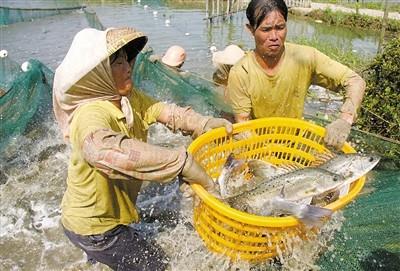
A sea bass farming expert shares the secret to seven consecutive years without losses
The secret behind a sea bass farming expert's seven consecutive years without losses
-

Tulips bloom for three consecutive years, blooming as promised year after year
Since 1998, I have used 8 commercially available tulip bulbs and planted them for three consecutive years; they bloom every year, and they have already multiplied to forty or fifty bulbs. Books say the planting time for tulips is late October and early November. The main producing country, the Netherlands, is a high-latitude country with a cold climate, so tulips need to grow in a cold environment. Potted plants should be placed outdoors, not indoors or in a warm shed, otherwise they will not bloom (this is also the conclusion I drew from a comparative experiment). In winter, outdoors, it only grows roots and does not sprout, until early spring in February
-
Five Considerations for Formulating Rabbit Feed
Select ingredients according to local conditions. The selected raw materials must not only meet the nutritional needs of domestic rabbits, but also be adapted to local conditions, using locally available forage as much as possible. Pay attention to the diversity of feed. Combining multiple feeds can play a role in nutritional complementation. Pay attention to seasonal differences. In most areas of China, green fodder is scarce in winter and spring, and domestic rabbits are prone to vitamin deficiency, so supplementation should be noted. Pay attention to the palatability of feed. Domestic rabbits like bitter chicory, alfalfa (Medicago sativa), and soybean, and refuse moldy-smelling and fishy-smelling forage. Pay attention to the
-
People with an allergic constitution need to be extra careful when eating crab
Autumn is the season when crabs come onto the market. Crab meat is tender and plump; especially the male crabs of September and the female crabs of October, which have thick meat and plenty of roe and taste delicious. However, traditional Chinese medicine experts remind you not to eat too much crab at one time, and people with an allergic constitution must also resist the temptation of this delicacy. Chief physician Lin Hexi of Quanzhou Municipal Hospital of Traditional Chinese Medicine says that crab is salty and cold in nature, and eating too much can easily accumulate cold in the abdomen and cause illness. One should not eat too much crab at a time, and it must be eaten with pungent, warm accompaniments such as ginger, scallion and vinegar. Patients with coronary heart disease, high blood pressure or hyperlipidemia should not eat crab roe, or should eat little of it, and should also eat less crab meat
-
Schisandra cultivation offers considerable economic benefits, with promising prospects
In recent years, the price of Schisandra, a genuine medicinal herb from Northeast China, has been rising year after year. From just over ten yuan per 1 kg, it rose to 100 yuan per 1 kg this autumn. And there is still an upward trend in the coming years. Schisandra cultivation experience: Seed selection. In late September, when the fruit is fully ripe, select fresh fruit with large clusters and tight berries, soak in clean water, rub off the shriveled grains, drain, mix with 2-3 times the volume of wet sand, and before the ground freezes, bury it outdoors in a high, dry spot. Site selection. For the seedling nursery, loose, fertile, well-drained sandy loam soil is best, preferably with irrigation available. Sowing
-
Technical Service Schedule for the Construction of the Golden Pear Base
I. Orchard Establishment Technical Service Schedule September: Centering on soil improvement and fertility building, carry out planning and layout, trench-style soil improvement and fertility building, and training on irrigation and ridging; October: Supervise and guide large-scale soil improvement and fertility building work to ensure high-quality completion of the soil improvement task; November: Centering on seedling planting, carry out technical training on pollinator tree arrangement, seedling planting, and watering-in after planting; December: Inspect the implementation of orchard establishment technical measures and point out existing problems. II. Post-Establishment Technical Service Schedule January: Winter pruning and shaping technical training; February: Inspect
-
Construction Method for a Multi-Layer Three-Dimensional Underground Snake House
The multi-layer three-dimensional underground snake house can be used year-round. Ordinarily it serves as a habitat for snakes, and in winter it can also become an ideal hibernation site for snakes. When this snake house is used in the provinces (regions) south of the Yangtze River, its underground coolness is especially evident in the hotter summer weather. It can also be built in a semi-underground, semi-above-ground mode according to the depth of the water table in different regions, to solve the problem in the south, where water resources are abundant and the water table is shallow, that deep digging easily reaches water. In the north, where winter is especially cold, in this season it is only necessary to increase the thickness of the soil layer on top of the snake house to ensure it is below the local frost
-
What are the considerations when formulating feed for rabbits
Pay attention to selecting ingredients according to local conditions. The selected raw materials must not only meet the nutritional needs of domestic rabbits, but also suit local conditions, using locally available forage as much as possible. Pay attention to feed diversity. Combining a variety of feeds can play a role in nutritional complementation. Pay attention to seasonal differences. In most regions of China, green succulent feed is scarce in winter and spring, and domestic rabbits are prone to vitamin deficiency, so supplementation should be noted. Pay attention to feed palatability. Domestic rabbits like bitter lettuce, alfalfa (Medicago sativa), and soybean, and dislike forage with a musty or fishy smell. Be economical and practical. Fish meal
-
How to Carry Out Selective Breeding and Breed Conservation in Jian Carp Farming
Any superior breed, if selective breeding and breed conservation are neglected, will often lead to breed degradation, reduced yield and deterioration of other traits. Jian carp has stable genetic traits and can, through within-breed reproduction, pass the superior traits of this breed on to its offspring. However, different carp breeds easily interbreed and become mixed, individuals within the same breed also differ, and the living environment can have a considerable effect on the traits of a breed. Therefore, attention must be paid to selective breeding of superior stock: according to the breed's standards, fish with good traits in all relevant respects should be selected as broodstock for rearing and allowed to reproduce.
条件筛选