-

What Are the Prospects for Gastrodia? Market Conditions and Development Potential Analysis
Question: What are the development prospects for Gastrodia? Answer: This is a question most enquirers care about. Simply put, Gastrodia, as a precious Chinese medicinal herb, has gone from wild harvesting to artificial cultivation, and from a yield of only 3 kg per unit area to more than 20 kg today; overall output has increased several hundredfold, yet the market remains tight. This shows at least three things: First, Gastrodia has moved from purely medicinal use into the ranks of health products, and the development and application market for health products is huge with unlimited potential. The hot sales of Gastrodia tea and Gastrodia drinks have opened up deep-processing channels for Gastrodia and absorbed
-
What kind of environmental conditions does Gastrodia elata need to grow?
I. The effect of temperature on the growth of Gastrodia elata. Temperature is the main factor affecting the growth of Gastrodia elata. Gastrodia elata prefers to grow in an environment that is relatively cool in summer and not too severely cold in winter. The longer the period of suitable temperature for its growth, the more favorable it is for the growth of Gastrodia elata. (1) The effect of temperature on the asexual reproduction of Gastrodia elata. The underground tubers of Gastrodia elata begin to grow when the ground temperature is around 14°C, grow faster at 20-25°C, and are inhibited at 30°C. Within one year, the total accumulated temperature over the entire growing season is about 3800°C. At an altitude of 1000
-
What temperature conditions does Gastrodia elata need to grow?
Q: What kind of temperature conditions does Gastrodia elata need to grow? What are the extreme temperatures? A: This question seems simple, but is actually rather complex. Based on the actual situation in our province, we might as well give a brief explanation from the following two aspects. First, the original intention of most farmer friends in asking this question should refer to the adaptability of Gastrodia elata tubers to temperature in asexual cultivation. As a plant, Gastrodia elata has no roots and no leaves, and its ability to adapt to and regulate temperature is weak, which is its growth disadvantage. However, since
-
What are the suitable humidity conditions for the growth of Gastrodia elata?
In addition to temperature, humidity is also an important factor in the growth of Gastrodia elata. The annual rainfall in Gastrodia elata-producing areas is generally above 1000 mm. In some producing areas in the southwest, rainfall is mostly around 1700 mm, and the average relative humidity is 70%-80%. The climate conditions are often continuous drizzle and rainy and humid, which are most suitable for the growth of Gastrodia elata. Therefore, in artificial cultivation of Gastrodia elata, the humidity during the growth period should be controlled at about 60%, and during the overwintering period at 30%-40%. When the temperature is high, it does not matter to Armillaria mellea, but the Gastrodia elata tubers are prone to rot; while when the humidity is low, Gastrodia elata
-
Conditions Required and Main Technical Requirements for Collective Rearing of Young Silkworms
I. The Purpose of Collective Rearing of Young Silkworms. As the saying goes, "Rearing young silkworms well is half the harvest," which fully illustrates the importance of rearing young silkworms. The purpose of collective rearing of young silkworms is to strengthen the constitution of young silkworms, ensure the safety of grown silkworms, and achieve high-quality and high-yield cocoons. Advantages of collective rearing of young silkworms: (1) It facilitates scientific silkworm rearing, adopts advanced silkworm rearing techniques and facilities, promotes uniform development and strong constitution of young silkworms, provides a guarantee for grown silkworm rearing, and lays the foundation for high and stable cocoon yields. (2) It facilitates disinfection and disease prevention. It overcomes the difficulties of young silkworms' weak resistance to adverse environments and susceptibility to pathogen infection, reduces lost silkworms, and ensures the number of silkworms. Collective rearing of young silkworms can achieve comprehensive disinfection of rearing rooms and equipment and strict disease prevention measures, reducing opportunities for pathogen infection and effectively controlling the occurrence of silkworm diseases. (3) It helps improve work efficiency. Collective rearing of young silkworms can save mulberry leaves, labor, fuel, equipment and housing, reduce silkworm rearing production costs, and improve economic benefits.
-
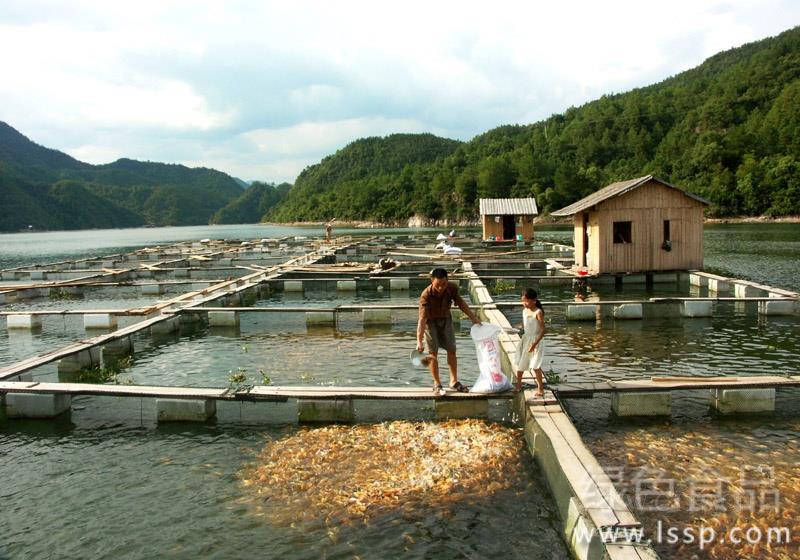
Cage fish farming in the dog days: humid and muggy conditions make skin rot likely, how to prevent it?
In the dog days, humid and muggy weather makes fish skin prone to rotting; how to prevent skin rot in cage fish farming
-
What are the suitable growing conditions for tea plants? A detailed explanation of the suitable growing environment
Heat: The heat condition is generally expressed by temperature, and what mainly affects the growth and development of tea plants is air temperature and soil temperature. The biological minimum temperature for tea plants is generally around 10°C (the growth starting temperature); early-budding varieties may have a minimum below 10°C, while late-budding varieties have one above 10°C. The optimum temperature for tea plant growth refers to the temperature at which tea plants grow most vigorously and actively; it varies with variety and place of origin, and is mostly 20°C-30°C. Temperature difference: the day-night temperature difference directly affects the accumulation of photosynthetic substances. When daytime temperatures are high, photosynthetic substances are synthesized
-
How is Gastrodia elata planted according to different temperature conditions?
The conditions required by Gastrodia elata and Armillaria mellea are mainly temperature. It can grow and develop normally under conditions of 2-28°C. How to control this condition is the most important factor in whether Gastrodia elata production succeeds. Temperatures across the country can be broadly divided into three major types: (1) Heilongjiang, Jilin, Liaoning, Inner Mongolia, Qinghai, **. In these areas, it must be ensured that the seedlings are not damaged by freezing in winter, and there is no need to consider the effect of high temperatures on Gastrodia elata growth in summer. The best plan is: plant Gastrodia elata indoors, with slight heating in winter, so that it is suitable if the room does not freeze. Outdoor planting of Gastrodia elata
-
A Preliminary Study on the Prevention Methods of Two Abnormal Garlic Conditions in Cangshan Garlic
Cangshan garlic is renowned worldwide for its large bulbs, thin skins, pure white and neatly arranged cloves, and its pungent, rich flavor, with excellent qualities such as aroma, pungency, and stickiness. In recent years, due to improper planting and management methods, two abnormal garlic conditions have appeared in Cangshan garlic production. One is that the garlic simultaneously produces small garlic leaves (commonly known as "little braids") when bolting, causing difficulties during the harvest of garlic scapes and affecting the yield and quality of garlic scapes. This condition accounts for 5%-10% of the total garlic. The causes are mainly two: one is excessive nitrogen fertilizer, and the other is the effect of low temperature.
-
What living conditions does the shiitake mushroom need to grow?
The living conditions required for the growth and development of the shiitake mushroom generally include water, nutrients, temperature, air, light, and pH level. 1. Nutrients. The shiitake mushroom is a wood-decaying fungus that lives by decomposing and absorbing the nutrients within wood. In sawdust cultivation, adding some nutrients to the substrate, such as rice bran, wheat bran, sugar, and trace elements, can promote good mycelial development and help achieve high quality and high yield of shiitake mushrooms. 2. Temperature. The shiitake mushroom is a low-temperature, temperature-variable fruiting fungus. The optimum temperature for its spore germination is 22-26°C; the mycelium
条件筛选