-
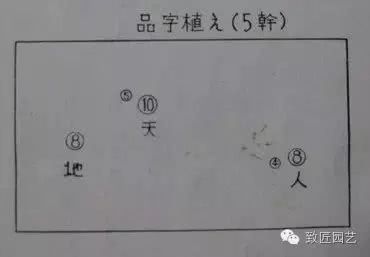
What are the common layout patterns used in Japanese grouped forest bonsai?
Grouped forests generally use an odd number of trees, with attention paid to the staggered balance of height, thickness and spacing, and most often adopt the heart shape and the three-point shape layout. (The numbered circles indicate the thickness of the trees; the thicker the circle, the taller the tree) 5-trunk three-point shape 7-trunk heart shape Featured content ...
-
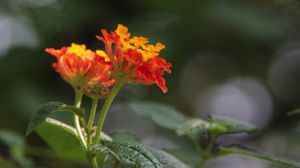
What is the difference between trailing lantana and common lantana? How to tell them apart
Appearance: The former grows about 0.7 to 1 m tall, with drooping branches. The latter is taller and larger, about 1 to 2 m tall, with both stems and branches four-angled. Leaves: The former has ovate leaves with an abruptly narrowed base, while the latter has leaves that are ovate to oblong, and the leaves are also broader and larger. Flowers: The former is pale purplish-red, while the latter is orange-yellow or yellow, turning deep red shortly after blooming.
-

Common mistakes in caring for household potted plants and the proper care know-how that only industry insiders understand
Stop caring for your household potted plants haphazardly; these tricks are understood only by industry insiders, and I regret that my family learned them too late. It turns out these green plants placed at home can bring good fortune, and the plants at home actually have such a big effect. The Earth we live on, ...
-
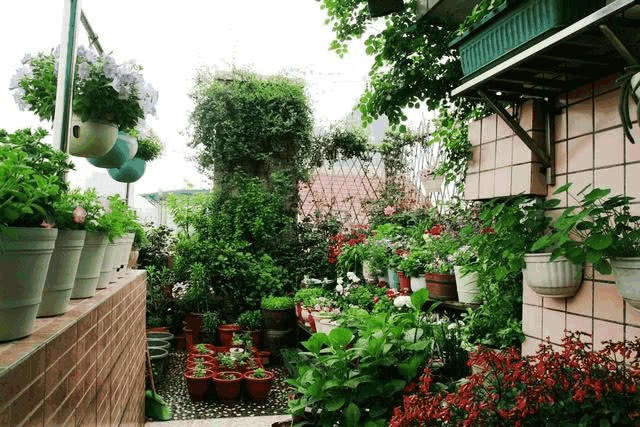
Balcony Gardening Notes: Introduction to Common Fertilizers for Home Gardening
Fertilizer is the "food" for flower growth and development. The purpose of fertilizing is to supplement the lack of nutrients in the soil and meet the needs of flowers for nutrient elements during their growth and development. So, do you know what fertilizers are commonly used for home gardening...
-

Common pest of flowers and plants: control methods for the Cynthia silk moth (Philosamia cynthia)
Philosamia cynthia Walker et Felder belongs to the order Lepidoptera, family Saturniidae. Its main host plants include walnut, pomegranate, citrus, castor bean, prickly ash, tree of heaven (chushu), Chinese tallow tree, ginkgo, Machilus, camphor tree, white michelia, pagoda tree, willow, and others
-
How to sow Podocarpus macrophyllus? Introduction to common varieties
Podocarpus macrophyllus, also known as Luohanshan and Tushan, belongs to the genus Podocarpus in the family Podocarpaceae. It is evergreen year-round, vigorous and elegant, and is a relatively precious landscaping tree species. What is magical and interesting about Podocarpus macrophyllus is that in summer, in the leaf axils of female trees, seed-like structures resembling little arhats are produced. The bald head part on top of the seed is a lateral ovule
-
Common Varieties of Pests and Diseases on Osmanthus and Their Control Methods
In natural environments, osmanthus trees planted sparsely rarely suffer from serious pests and diseases, so some people mistakenly believe that osmanthus does not require plant protection work. This is an incorrect view. Although the types of pests and diseases that can cause mass death of osmanthus trees are still uncommon
-
A Detailed Guide to Controlling Common Pests and Diseases of Photinia × fraseri (Red Robin)
Photinia × fraseri (Red Robin) has fairly strong resistance, but if it is managed improperly or the nursery environment is poor, gray mold, leaf spot, or damage from scale insects, cutworms and the like may occur. As a member of Yuanlin China Network, I would like to share some of my experience with fellow flower lovers, and I hope we can all exchange and learn more.
-
What are the common pests and diseases of golden privet (Ligustrum × vicaryi)? A detailed guide to prevention and control methods
Golden privet is widely used in landscaping projects in northern China thanks to its easy propagation, rapid growth and tolerance of pruning and shaping. Hengshui City, Hebei Province, has been growing golden privet for more than ten years, and as the planted area and the years of cultivation have increased, its pests and diseases have become increasingly serious. Based on many years of observation and research,
-

A complete guide to plants that were common in childhood but whose names we could not say, now we finally know what they are called
If you grew up in the countryside, you must still remember those all kinds of little flowers and grasses in the fields when you were a child. Can you still recall their names now? Today, let us recall them together. 0...
条件筛选