-
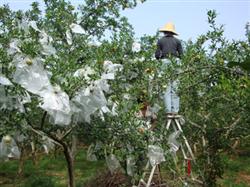
What should you pay attention to during the pomegranate coloring stage? Key points for growing pomegranate trees
Pomegranates are now beginning to enter the coloring stage. What should you pay attention to during the pomegranate coloring stage? Please let the experts give an introduction. Generally, from late August to early September, pomegranates begin to enter the coloring stage; during the pomegranate coloring stage, management should be carried out to avoid uneven coloring, fruit cracking and insect pests; the management methods can be carried out as follows....
-
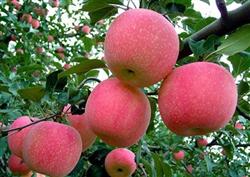
How to Improve the Color of Red Fuji Apples? A Full Breakdown of Practical Management Tips
How to improve the color of Red Fuji apples? Please explain: once the sun-facing side of the fruit has colored, promptly remove the leaves that shade the fruit and affect its coloring. For the uncolored side of the fruit or the touching surfaces of two twin fruits, they should be turned toward the sunny side at the right time. In the later stage of fruit growth, stakes and branch tying should be set up in time to prevent overlapping, squeezing, and drooping of fruiting branches that touch the ground and affect coloring.
-

What to Do About Poor Strawberry Coloration? Cause Analysis and Solutions
Causes of Poor Strawberry Coloration and How to Fix Them
-
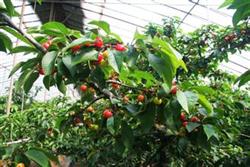
Key techniques for promoting coloration of cherries in greenhouses
Spraying fruit-surface film-free bagging agent: spraying it on the fruit surface acts like bagging, does not affect fruit respiration, and can also prevent fruit russeting and fruit cracking, improve fruit-surface coloration and glossiness, reduce pesticide residues and improve quality. Foliar spraying of Xin Gao Zhi Mo (new high-fat film) can prevent leaves from viral infection, make branches and leaves lush and green, and enhance the accumulation and directional transport of photosynthesis products...
-
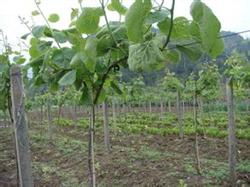
How to promote coloring in kiwifruit? Multiple measures help the fruit gain color
Spring management is an important stage in the growth-period management of a kiwifruit orchard, so doing a good job of spring management is especially important, and it should mainly start from the following aspects: 1. Supplementary pruning: due to the rain and snow last winter, some farmers pruned in a hurry, resulting in too many branches left and insufficiently thorough pruning of diseased and pest-infested branches...
-

-

What to Do About Poor Apple Coloring? Cause Analysis and Solutions
Causes of Poor Apple Coloring and Solutions
-

Six tricks for coloring Fuji apples to make the fruit color more evenly
The fruit of Red Fuji begins to color earlier than that of Guoguang (Ralls Janet), but the process is slow. It generally begins to color from mid to late August, and after early to mid September its coloring is still not as fast as that of Guoguang. To improve the coloring degree of Red Fuji, in addition to a series of work such as rational pruning and shaping and timely pest and disease control, the following measures can be implemented starting in early September: 1. Control nitrogen. After September, no more nitrogen fertilizer should be applied as a top dressing; a scientific water supply method of frequent and shallow irrigation should be adopted to maintain relatively stable soil and air temperatures. 2. Leaf removal. Remove the
-
What are the control methods for the pear bicolor aphid pest?
This insect, commonly known as the pear aphid, is a major pest of pear trees and is found in all pear-growing regions. After pear trees are infested, large numbers of leaves curl up, causing early defoliation, weakening of tree vigor, and impaired fruit development, seriously affecting yield and quality. [Occurrence pattern] About 10 or more generations occur per year. Overwintering eggs generally hatch in March and late March when pear buds swell and open. After the young aphids grow, they continuously give live birth to new young aphids. By late April, winged aphids begin to appear. During May, winged aphids form in large numbers and migrate to weeds to reproduce and cause damage. In October, winged aphids migrate back to pear trees
-
Using Guobaosu on peaches can promote coloring and ripening
Guobaosu is a new type of plant growth regulator, produced and supplied by Shanghai Solvent Factory. In 1991 and 1992, according to trials reported by Li Guangchen and others from the Department of Horticulture at Beijing Agricultural University on peach varieties such as "Zaofeng" and "Okubo", spraying Guobaosu on the leaves 4-3 weeks before the normal harvest period allowed the fruit to color 5-10 days earlier, extremely significantly increased the percentage of colored fruit, and also significantly increased the fruit coloring index. The fruit was very brightly colored, and the fruit ripening period was advanced by 3-10 days. Early harvest did not reduce fruit firmness or soluble solids content
条件筛选