-

How to care for and divide Clivia miniata after it finishes blooming?
Clivia miniata has an elegant, imposing plant shape, delicate emerald-green leaves, and also produces very beautiful flowers, making it deeply loved by flower enthusiasts. However, Clivia miniata generally blooms only once a year, and with good care it may bloom two or three times. So after Clivia miniata finishes blooming
-
How many leaves should a Clivia miniata keep? The latest answer is here
A Clivia miniata generally does well keeping 14 leaves. If you want a Clivia miniata to bloom, it needs at least 7 pairs, or 14 leaves, arranged in matching pairs. During care, diseased leaves and withered leaves should be pruned and removed promptly, and ventilation and light management should be done well, but if the leaves are not
-
What are the latest methods for watering a clivia (Clivia miniata)?
Watering flowers is actually a technical skill, so do not underestimate it. Most flower lovers water their beloved plants casually without ever considering whether their watering method is correct or whether watering this way will actually work. Today, regarding clivia, we will
-
What to Do When a Clivia Miniata Gets Stuck Flower Stems? The Latest Solutions Are Here
Clivia miniata is also known as sword-leaf stone garlic, large-leaf stone garlic, etc. It is a perennial herbaceous plant of the genus Clivia in the Amaryllidaceae family, native to southern South Africa, with very high ornamental value. In China it is often grown in pots in greenhouses for viewing. The so-called "stuck flower stem" refers to the phenomenon in which, when the Clivia miniata sends up its flower stem, the stem cannot emerge and is trapped inside the rosette when it blooms. Now let us take a look at what to do when a Clivia miniata gets a stuck flower stem!
-
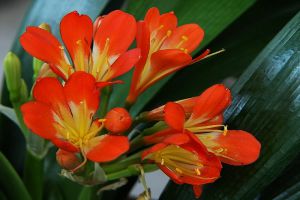
How to grow Clivia miniata with eggs? Sharing the correct method
This is a perennial herbaceous plant. Why is it called "Clivia"? That is because we generally believe this plant has the grace of a gentleman, and its flowers resemble orchids, hence the name. Besides being used for ornamental purposes, it is also very good for the environment and as a medicinal plant, so it is widely cultivated. If you want to grow it well, we can make use of one item - eggs. Some people may find this strange, so let's take a specific look below.
-
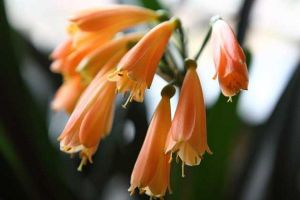
What are the main varieties of Clivia miniata var. citrina?
Clivia miniata var. citrina is also called garden clivia, and it has quite a few varieties, the main ones being the fine-leaved yellow-flowered clivia, the fine-leaved white-flowered clivia, and the fine-leaved red-flowered clivia. The names of these three flowers are based on the color of their petals, so we can distinguish them by the color of the flowers when they bloom.
-
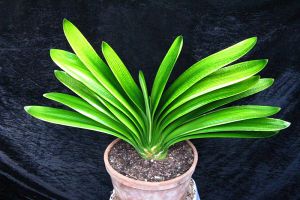
How do you grow a clivia (Clivia miniata) so it quickly grows leaves?
If a clivia has not grown new leaves for a long time, that means there is a problem with its care. To make it grow leaves faster, we need to adjust its growing conditions: first is the soil, we can mix leaf mold, horse manure soil (fully decomposed), river sand, and bone meal in a 6:2:1:1 ratio, and repot the soil regularly; next is temperature, it needs 20°C-25°C during the day and 10°C-20°C at night; then is light, which must be sufficient; finally is humidity, which is best adjusted to 60%.
-
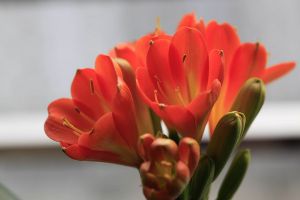
What are the flower language and symbolic meaning of the clivia (Clivia miniata)?
When it comes to its flower language, most people can probably guess it easily, right? Just by looking at its name, you can understand. It is, of course, related to the "junzi" (gentleman). Specifically, its flower language is "the modest gentleman," "gentle and courteous," and so on. As for its symbolic meaning, this has a great deal to do with its appearance. Because its leaves are tall and upright, its symbolic meaning includes such elements as "firm and resolute" and "unbending." Of course, that is not all; the details are introduced below.
-
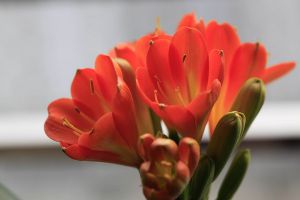
What should I do if the leaves of a clivia (Clivia miniata) grow too long?
When this happens, it greatly affects the ornamental value. If the plant is etiolated (leggy), the result is leaves that are too long. The most likely cause is that the surrounding environment is too dark. So the corresponding solution, first of all, is of course to place it in a spot with better light. Next, you can spray a little (KH2PO4) solution on the leaves at the right time, which helps increase the width and firmness of the leaves. However, there is another situation, which is a matter of variety. Some varieties simply have relatively longer leaves, so there is no need to worry.
-
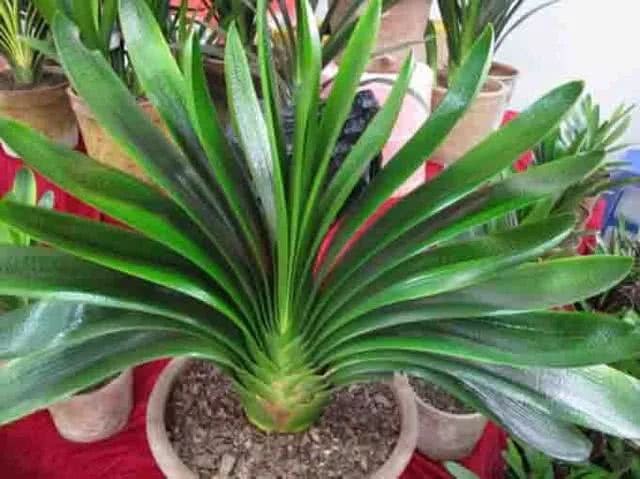
How many leaves does a Clivia miniata need to grow before it blooms? The answer is here
It generally takes three to four years for a Clivia miniata to grow from a seedling into a mature plant. When the total number of leaves usually reaches around fifteen or sixteen, a flower stalk will generally emerge. Of course, the growing conditions must be such that every aspect of care is handled perfectly. Other...
条件筛选