-
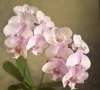
Sphagnum moss for Phalaenopsis needs replacing after long use: how beginners can clean out old moss, choose new moss, and solve yellowing leaves after repotting
Growers of Phalaenopsis know well that sphagnum moss becomes compacted and loses nutrients after long use, and only by promptly replacing it with fresh sphagnum moss can the roots breathe and the plant grow more vigorously. But changing the sphagnum moss is not as simple as just swapping the growing medium: you must first clean out the old sphagnum moss thoroughly, then give the roots a "trim + disinfect" treatment, and finally plant it properly with new sphagnum moss. Every step has its finer points.
-

Do Phalaenopsis Leaves Need Frequent Cleaning? Plus the Best Cleaning Time
When watering your Phalaenopsis in the early morning, you notice a thin layer of dust on the leaves, like a veil draped over fine silk - this is probably the little dilemma every orchid lover encounters: should I give it a bath? In fact, cleaning the leaves holds delicate wisdom for getting along with Phalaenopsis; you should neither neglect it nor be overly eager.
-

Can You Clean Phalaenopsis Leaves in High Temperatures? Here's the Best Way to Wash the Leaves
The weather has been getting hotter and hotter lately, and quite a bit of dust has settled on the Phalaenopsis leaves at home. Many flower lovers are worrying: can we take advantage of the high temperatures to clean the leaves? How should we wash them without harming these delicate flowers? Phalaenopsis is a delicate tropical plant, and it easily suffers heatstroke above 30°C. If you wipe the leaves with water at noon under 35°C
-

How do you clean silt from the leaf center of a Phalaenopsis orchid most thoroughly?
When growing Phalaenopsis orchids, have you ever noticed that silt and dust have accumulated in the leaf center at some point, looking dirty and really annoying? If you do not clean it out in time, it can easily cause crown rot and affect the health of the Phalaenopsis. Why does silt get into the leaf center? When watering and fertilizing, it accidentally splashes into the leaf center; when you open the window for ventilation,
-

How do you clean Phalaenopsis orchid leaves? What is best to wipe them with?
Anyone who grows Phalaenopsis orchids knows that if the leaves are dirty, their looks take a big hit, and it also affects their healthy growth. Today let's talk about how to clean Phalaenopsis orchid leaves and what to wipe them with. First, the simple and basic method - rinsing with clean water. Pick a mild, sunny day, move the Phalaenopsis orchid to the bath
-

How do you wipe down dirty Phalaenopsis (moth orchid) leaves so they come out clean and glossy?
As the saying goes, "You don't see the dust when you're standing in it." When growing Phalaenopsis, haven't we all had this experience: you feel like you've been taking good care of it, but when you look closely, a fine layer of dust has quietly built up on the leaves, or some grime has stuck to them. Although this bit of dust and dirt looks like it has no deadly effect on the Phalaenopsis, in reality it interferes with the orchid's normal photosynthesis, and its looks plummet too - a nice pot of beautiful flowers instantly loses that refined feel.
-

Why Phalaenopsis Orchid Flower Stalks Grow Slowly and How to Clean Dust Off the Leaves
If you were to pick out one flower with truly outstanding elegance, the Phalaenopsis orchid would certainly earn a place, looking like a work of art when placed at home, which is why its sales have ranked among the top this year. However, as more people buy them, everyone has encountered their own different problems in caring for them. On the journey of caring for Phalaenopsis orchids, you will always run into questions that books
-

What is the best way to wipe dirty Phalaenopsis leaves? Leaf surface cleaning methods
As the saying goes, you cannot see the dust when you are in it, and everyone who has cared for Phalaenopsis orchids surely knows this well: their leaves often easily accumulate a layer of fine dust or grime. Although this does not have much effect on the plant itself, it can also affect its normal photosynthesis and greatly reduce its ornamental appeal. So, when this situation mentioned above arises in daily care
条件筛选