-

How to Plant Water Chestnuts? A Detailed Guide to the Latest Planting Methods
The water chestnut, also known as Chinese water chestnut, has fruit that can be eaten directly as a fruit, and its seedlings, roots and fruit can all be used as medicine, with excellent healthcare effects, making it a food loved by many people. Although we know it, but do you know how it is grown? Below
-
How to carry out field management of Chinese water chestnut? A detailed explanation of the latest key points
The Chinese water chestnut is a plant native to China and is now distributed across most regions of the world. Its cultivation area is mainly concentrated in the tropical provinces of China. It can be eaten not only as a fruit but also stir-fried, and it also has certain medicinal effects, as it can promote gastrointestinal peristalsis. So how should we manage it when growing Chinese water chestnuts? Below, the editor brings you the key points of field management for Chinese water chestnut. Let's take a look!
-
Is the water chestnut a fruit or a vegetable? The latest answer is here
The water chestnut, also known as Chinese water chestnut, water chestnut, fuci, wuyu, puji, etc., is a perennial herbaceous plant with persistent roots of the Cyperus genus in the Cyperaceae family. It grows in ponds and marshes, with dark green stems growing in clusters above ground, and white, juicy, crisp and tasty flesh, earning it the reputation of "underground snow pear." People in the north
-
How to Grow Water Chestnuts? A Detailed Guide to the Latest Planting Methods
The water chestnut, also known as the Chinese water chestnut, has flesh that can be eaten as a fruit, crisp and refreshing, delicious and juicy. It can also be used as a medicinal herb, with many effects such as clearing heat and detoxifying, and removing dampness and stopping phlegm. It has a clear therapeutic effect on feverish patients. So how are water chestnuts
-
A Detailed Guide to the Latest Key Points for Water Chestnut Cultivation
The water chestnut is also called the Chinese water chestnut (Eleocharis dulcis). It is an aquatic herbaceous plant that can be harvested for many years. It is often eaten as a fruit, but it can also be used as a vegetable. It is deeply loved by everyone, but the only rather troublesome thing is peeling it, so a sales model of buying and peeling on the spot has appeared on the market.
-
How to Grow Chinese Water Chestnut (Eleocharis dulcis): Cultivating the "Underground Snow Pear" This Way
The Chinese water chestnut, also known as the horse's hoof, water chestnut, or spiny turtle, is both a fruit and a vegetable, crisp and delicious. So, what are the methods for growing Chinese water chestnut? Let's find out together! 1. Site selection. The Chinese water chestnut is not demanding about soil and can adapt to various soil environments.
-
How should water chestnuts (Chinese water chestnuts) be stored and kept fresh after harvest?
Water chestnuts are grown all over China and can be eaten raw or cooked. Moreover, the cultivation technique for water chestnuts is relatively simple, they have strong growth capacity and high yield, and sometimes after harvest they cannot all be sold on the market, so they need to be stored, otherwise they rot very easily and affect the planting returns. So
-
The Pathogenesis and Control Methods of Water Chestnut Stem Blight
Water chestnut, also known as Chinese water chestnut, water chestnut, shao, fuci, wuyu, puji, dili, belongs to the monocotyledonous Cyperaceae family, is a perennial root herbaceous plant, oblate, pointed at the top, smooth and glossy surface, purplish-red or dark brown, grows in ponds and marshes, with dark green
-
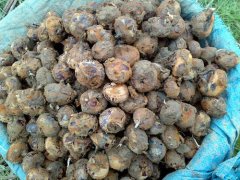
What Plant Is the Chinese Water Chestnut? Cultivation Methods and Nutritional Facts
Two plants are called water chestnut plants: Eleocharis dulcis and Trapa natans. One is generally considered invasive, while the other can be cultivated and eaten in many Asian dishes and stir-fries. Water chestnut facts Trapa natans, sometimes called Jesuit Nut or W
条件筛选