What Plant Is the Chinese Water Chestnut? Cultivation Methods and Nutritional Facts
Two plants are called water chestnut plants: Eleocharis dulcis and Trapa natans. One is generally considered invasive, while the other can be cultivated and eaten in many Asian dishes and stir-fries. Water chestnut facts Trapa natans, sometimes called Jesuit Nut or W
Two plants are called water chestnut plants: Eleocharis dulcis and Trapa natans. One is generally considered invasive, while the other can be cultivated and eaten in many Asian dishes and stir-fries.
Water chestnut facts
Trapa natans, sometimes called “Jesuit Nut” or “Water Caltrops”, is an aquatic plant that grows in ponds with large floating leaves. It is cultivated in China and commonly used in cooking, with smaller cultivation in southern Europe and Asia as well. This type is considered invasive in most areas
E. dulcis also grows in ponds mainly in China, and then the edible tubers are harvested as food. These water chestnut plants are members of the sedge family (Cyperaceae) and are true aquatic plants that grow only in water. In the body of this article, we will focus on the cultivation of this water chestnut plant.
Another water chestnut fact is its nutritional composition; water chestnuts have a fairly high sugar content of 2-3%, contain 18% starch, 4-5% protein and very little fiber (1%). These crunchy delicacies have many other common names, such as: waternut, horse hoof, matai, hon matai, Kweilin matai, pi chi, pi tsi sui matai and kuro-kuwai.
What is the Chinese water chestnut?
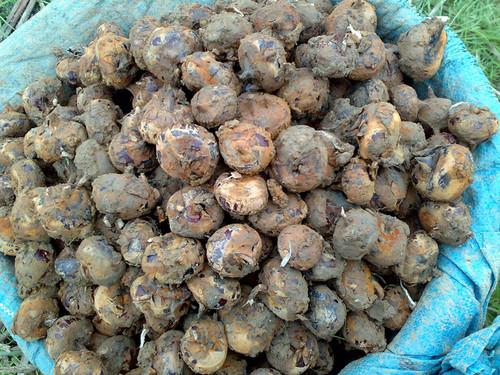
The growing Chinese water chestnut looks like other water plants, with four to six tubular stems, reaching 3-4 feet above the water surface. They are grown at a spacing of 1 to 2 inches and have crisp white flesh that is prized for its sweet, nutty flavor. The tubers look somewhat like gladiolus bulbs, brown on the outside.
They are a very valuable ingredient in many Asian cuisines and cultures. They can not only be found in stir-fries, where they retain a crunchy texture in sweet drinks or syrups thanks to the hemicellulose found in the tubers. Water chestnuts are also used for medicinal purposes in Asian cultures.
Can you grow Chinese water chestnuts?
Cultivated Chinese water chestnuts are mainly grown in China and imported to the United States and other countries. Few have attempted to grow them in the United States; however, it has been tried in the states of Florida, California and Hawaii, but with limited commercial success
Chinese water chestnuts require controlled irrigation and 220 frost-free days to reach maturity. The corms are planted 4-5 inches deep in the soil, in rows spaced 30 inches apart, and then the field is flooded for one day. After that, the field is drained and the plants are allowed to grow until they are 12 inches tall. Then, again, the field is flooded and kept that way throughout the summer. The corms reach maturity in late autumn, at which point the field is drained 30 days before harvest.
Unless there are ditches or dikes to control the water level, water chestnuts cannot exist in marshy or swampy land. That is to say, the question “can you grow water chestnuts?” has a different meaning. Home gardeners are unlikely to achieve much success in growing water chestnuts. But do not despair. Most grocery stores of any size will carry canned water chestnuts to satisfy the craving for a bit of crunch in the next stir-fry.